Myth vs Reality: Digital Gate Pass Systems in Housing Societies
By MyKutir Editorial Team — 2026-09-09

Uncover the myths and realities surrounding digital gate pass systems in housing societies, and learn how they truly enhance security and efficiency.

As Indian housing societies evolve, they face increasing demands for security, efficiency, and convenience. Traditional manual entry systems at the gates are being replaced with digital gate pass systems. These systems are designed to streamline the entry process, manage visitor data, and enhance overall security. Despite their growing popularity, there's still a considerable amount of skepticism and misunderstanding surrounding digital gate pass systems. This article aims to dissect these myths and present the realities of how these systems function in housing societies. We'll discuss the advantages of digital gate pass systems, debunk common myths, and provide guidance on implementing them effectively. By navigating through these aspects, we hope to provide clarity on whether a digital gate pass system is right for your housing society.

Introduction to Digital Gate Pass Systems

Digital gate pass systems in housing societies serve the primary purpose of enhancing security and streamlining the management of visitors. These systems are designed to replace the obsolete manual entry logs typically maintained by security guards at the entrance of housing societies. By leveraging technology, these systems manage and record visitor information efficiently, ensuring that only authorized individuals gain access to the premises.

At a fundamental level, a digital gate pass system integrates various components such as mobile applications, desktop interfaces, and sometimes even physical hardware like tablets or dedicated kiosks at the gate. Residents can pre-authorize visitors through a mobile app, providing them with unique digital passes that security personnel can verify upon arrival. This not only ensures that visitors are expected but also alerts the residents when their guests check in and out.

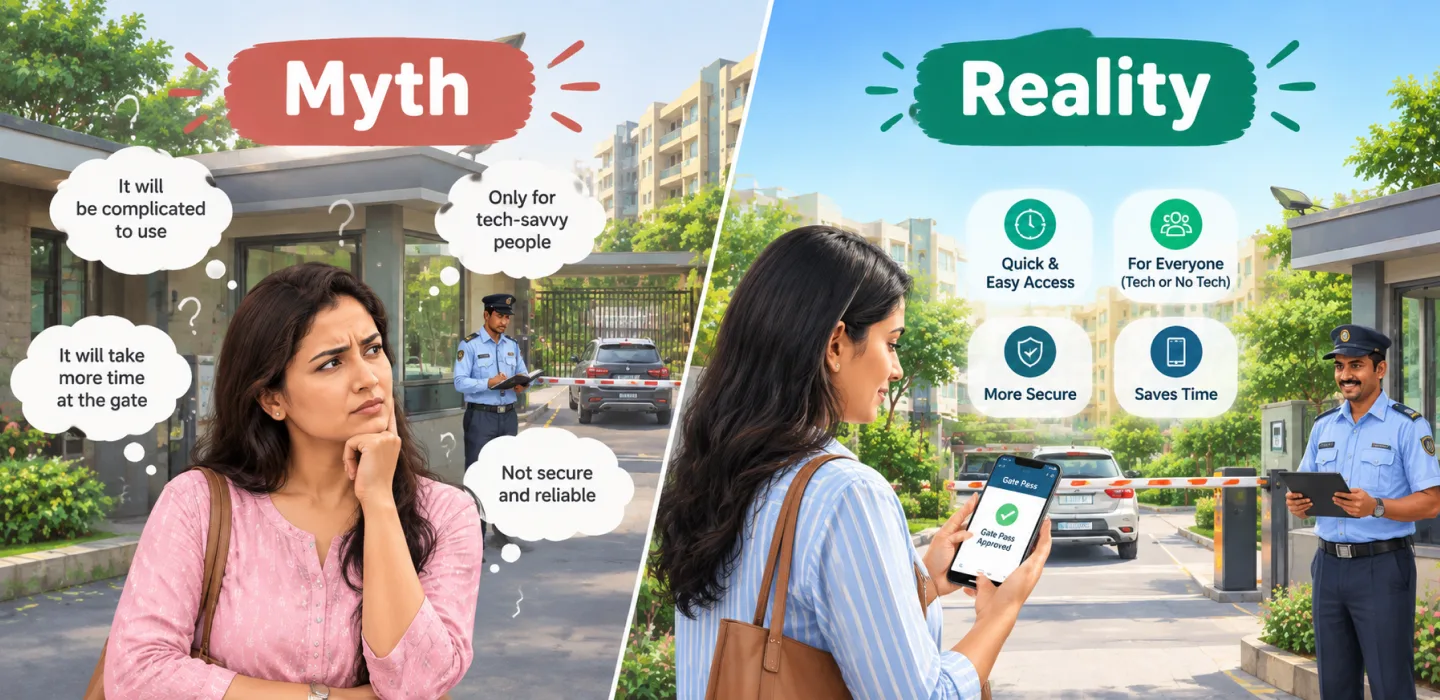
Despite their numerous benefits, digital gate pass systems are often misunderstood. They are sometimes perceived as costly, complex, and intrusive with regard to privacy. Many housing societies are hesitant to make the transition due to these prevailing myths. However, the reality is often quite different, and these systems can be tailored to fit the specific needs and budgets of various housing societies.

The purpose of this article is to disentangle these myths from reality and provide a factual understanding of digital gate pass systems. Whether you are an association member evaluating such an implementation or a resident seeking clarity, the insights presented here will aid in making an informed decision.

Common Myths About Digital Gate Pass Systems

Despite the technological advancements and the undeniable benefits digital gate pass systems offer, several myths persist. These misconceptions can deter housing societies from adopting these systems, leading them to stick with outdated and less efficient manual methods.

One prevalent myth is that digital gate pass systems are prohibitively expensive. Many societies believe that the cost of technology, frequent updates, and maintenance would significantly outweigh any potential benefits. However, this perception often fails to consider the long-term savings and increased efficiency that these systems bring. When viewed from a broader perspective, including the costs associated with manual record-keeping errors, unauthorized access, and potential security breaches, digital systems may actually prove to be more economical.

Another myth concerns the complexity of these systems. There is a widespread belief that digital gate pass systems require extensive technical knowledge to operate and manage. In reality, most modern systems are designed with user-friendliness in mind, offering intuitive interfaces for both residents and security personnel. Training modules are often provided by vendors, ensuring a smooth transition for all users.

Privacy concerns also emerge as a significant myth. Many residents worry that digital systems could lead to unauthorized surveillance or data misuse. However, credible digital gate pass providers implement stringent data security measures, including encryption, access controls, and regular audits, to protect user information. Furthermore, these systems typically comply with relevant data protection regulations, offering residents peace of mind.

Reliability is another aspect shrouded in myth. Some fear that digital systems might crash or malfunction, leaving the society vulnerable at critical moments. While no system is immune to technical issues, modern solutions are built to be robust and reliable, with fail-safes and support services ensuring minimal disruption.

These myths, while pervasive, can be dispelled by understanding the realities of digital gate pass systems. By addressing these misconceptions, housing societies can better evaluate the true value and efficacy of these technological solutions.

The Reality: How Digital Gate Pass Systems Actually Work

Understanding the actual workings of digital gate pass systems can help dispel the myths and reveal their true potential. These systems are designed to integrate seamlessly into the daily operations of a housing society, enhancing security and operational efficiency.

Cost-effectiveness is a major factor often misunderstood. While the initial investment might seem substantial compared to traditional methods, digital gate pass systems can lead to long-term savings. Reduced paperwork, lower manpower requirements, and fewer security breaches all contribute to cost savings. Moreover, many service providers offer scalable solutions, allowing societies to choose a package that suits their specific needs and budget constraints.

In terms of user-friendliness, digital gate pass systems are designed with the end-user in mind. Whether it's a resident using an app to pre-authorize a visitor or a security guard verifying entry at the gate, the interfaces are typically intuitive and require minimal training. Walk-through tutorials and support services are often provided to ensure that every user can operate the system with ease.

Addressing data privacy concerns, vendors often comply with stringent data protection standards. Features such as end-to-end encryption, role-based access, and regular security audits are standard practices. These measures ensure that resident and visitor data remains secure, fostering trust in the system.

Reliability is also a key feature of digital gate pass systems. With robust infrastructure and regular updates, these systems are designed to withstand technical glitches. Additionally, most providers offer 24/7 support and maintenance services to address any issues promptly, ensuring continuous operation without significant downtime.

Key functionalities of these systems include visitor and guard management modules, real-time notifications for residents, and advanced search options like the RAG (Red-Amber-Green) search over notices. These features not only enhance security but also improve the overall experience for residents and visitors alike.

Benefits of Implementing Digital Gate Pass Systems

The implementation of a digital gate pass system can revolutionize the security and operational dynamics of a housing society. The benefits extend beyond simple gate management, impacting various facets of community living.

One of the primary advantages is enhanced security. Digital systems ensure that only authorized individuals enter the premises, reducing the risk of unauthorized access. Real-time notifications inform residents when visitors arrive and leave, creating a transparent and secure environment. Additionally, the ability to track visitor history provides valuable data that can be used for security audits and in case of incidents.

Streamlined visitor management is another significant benefit. Residents can easily authorize guests via a mobile app, eliminating the need for multiple phone calls or physical log entries. This feature is particularly beneficial for large societies with frequent visitor traffic. Security personnel can focus on verifying entries instead of maintaining cumbersome manual logs, improving their efficiency and effectiveness.

Real-time access logs are a critical feature of digital gate pass systems, providing a comprehensive overview of who is on the premises at any given time. This data is invaluable for security and management purposes, allowing for swift action in emergency situations and informed decision-making for community policies.

Advanced AI features further enhance the efficiency and accuracy of digital gate pass systems. AI algorithms can detect patterns and anomalies in visitor behavior, providing proactive security insights. For instance, if a particular visitor is flagged for frequent unscheduled visits, the system can notify security personnel to take appropriate action. This proactive approach ensures that potential security threats are identified and addressed swiftly.

Moreover, digital gate pass systems contribute to a more sustainable and eco-friendly approach by reducing the reliance on paper-based logs and records. This not only helps in reducing the carbon footprint but also aligns with the growing trend towards digitalization and smart living.

Worked Example: A Day in the Life of a Society with Digital Gate Pass

To illustrate the real-world impact of digital gate pass systems, let's consider an illustrative scenario of a typical day in a housing society utilizing such a system.

It's a Monday morning, and at the crack of dawn, Prashant, the security guard at Shantivan Residential Complex, begins his shift. He logs into the digital gate pass system tablet, which provides him with a list of pre-scheduled visitors for the day. This list is auto-generated from requests made by residents the previous day via the society's mobile app.

At 8:00 AM, Mrs. Kumar, a resident, receives a notification on her phone. Her daily newspaper delivery person has checked in at the gate. The digital gate pass system automatically logs the entry, and Prashant verifies the visitor's ID against the pre-existing entry in the system. Mrs. Kumar feels secure knowing her visitor has been authenticated and is on the way to deliver her newspaper.

A little later, a delivery agent from a popular e-commerce platform arrives at the society. He has a digital pass sent by Mr. Sharma, who ordered a package. Upon arrival, the delivery agent presents his QR code to Prashant, who scans it using the system’s interface. The system verifies the code and automatically notifies Mr. Sharma of the delivery agent's presence. The process is quick, secure, and efficient, minimizing wait times and confusion at the gate.

Throughout the day, the system processes multiple entries: a maintenance worker scheduled by the society manager, a cab driver picking up a resident, and guests arriving for an evening gathering. Each interaction is smooth, with entries logged accurately and residents notified in real-time.

By the end of the day, the society manager accesses the system's dashboard to review the day's visitor logs. The data provides insights into visitor patterns, helping the management plan resources and security protocols better. This digital approach ensures transparency and accountability, significantly enhancing the society's overall security and operational efficiency.

Common Mistakes When Implementing Digital Gate Pass Systems

Implementing a digital gate pass system can be a transformative step for any housing society, but it's not without challenges. Avoiding common mistakes during implementation can ensure a successful transition and optimal utilization of the system.

One frequent mistake is inadequate training for the users. While digital gate pass systems are designed to be user-friendly, they require some level of familiarity to operate effectively. Societies often underestimate the importance of comprehensive training sessions for residents, security personnel, and management staff. Without proper training, the system's full potential may not be realized, leading to frustration and underuse.

Another common pitfall is relying on outdated software. Technology evolves rapidly, and using outdated systems can lead to inefficiencies and security vulnerabilities. Societies should ensure that their digital gate pass system is regularly updated and maintained to incorporate the latest features and security protocols.

Underestimating the importance of stakeholder buy-in is another critical mistake. For a digital gate pass system to be effective, it must have the support of all stakeholders, including residents, security personnel, and management. Clear communication about the benefits, functionalities, and importance of the system is essential to gain this support. Engaging stakeholders early in the decision-making process can facilitate smoother implementation and higher adoption rates.

Additionally, some societies fail to customize the system to their specific needs. A one-size-fits-all approach may not be effective. Societies should work closely with providers to tailor the system's features and functionalities to meet their unique requirements. This customization can include setting specific access permissions, configuring notification settings, and integrating the system with other society management tools.

Finally, neglecting to plan for contingencies can lead to disruptions. Societies should have a plan in place for potential system downtime or technical issues. This includes having manual log-keeping procedures as a backup and ensuring that support services are readily available from the provider.

Digital vs. Manual Gate Pass Systems: A Comparison

When choosing between digital and manual gate pass systems, societies need to consider various factors such as security, efficiency, cost, and user experience. Below is a comparison table highlighting key differences:

Aspect Digital Systems Manual Systems
Security High – Real-time access logs, visitor verification, automated alerts Moderate – Reliant on manual logs, prone to human error
Efficiency High – Streamlined processes, minimal wait times, automated data processing Low – Time-consuming, dependent on guard vigilance
Cost Initial investment required, but cost-effective long-term Low initial cost, but potentially higher ongoing security costs
User Experience Intuitive – User-friendly apps and interfaces Less intuitive – Manual entries can be cumbersome
Data Accuracy High – Automated entry reduces errors Variable – Prone to human errors

While manual systems may seem appealing due to lower upfront costs, the long-term benefits of digital systems, such as enhanced security and operational efficiency, often justify the initial investment. Additionally, the user experience and data accuracy offered by digital systems significantly enhance the overall management of visitor access.

Step-by-Step Guide to Implementing Digital Gate Pass Systems

Implementing a digital gate pass system in a housing society involves several steps. Proper planning and execution can ensure a smooth transition and maximum benefits from the system.

Step 1: Evaluate Needs – The first step involves assessing the specific needs of the society. This includes understanding the number of residents, average daily visitors, security concerns, and existing infrastructure. This evaluation helps in choosing a system that is tailored to the society's requirements.

Step 2: Select a Provider – Research and select a reputable service provider who offers robust, reliable, and secure digital gate pass systems. Consider factors such as cost, features offered, customer support, and the provider's experience in the housing society sector.

Step 3: Plan the Rollout – Develop a comprehensive rollout plan. This should include setting up the necessary infrastructure, scheduling training sessions, and creating awareness among residents and staff. Communication is key to ensure everyone understands the benefits and functionality of the new system.

Step 4: Train Users – Conduct thorough training sessions for all users, including residents, security personnel, and management staff. Provide user manuals, conduct live demonstrations, and ensure support is available for queries. This training is crucial for smooth operation and user adoption.

Step 5: Go Live – Launch the system on a predetermined date. Monitor the implementation closely, ensuring that any issues are addressed promptly. Encourage feedback from users to identify areas of improvement.

Step 6: Continuous Evaluation and Improvement – Regularly evaluate the system's performance and make necessary adjustments. Stay updated with advancements in technology to ensure the system remains efficient and secure. Periodic reviews and upgrades can enhance the system's functionality over time.

FAQs About Digital Gate Pass Systems

What is a digital gate pass system?

A digital gate pass system is an advanced technological solution designed to manage and monitor visitor access in housing societies efficiently. It replaces traditional manual entry logs with digital records that can be accessed and managed via mobile apps or desktop interfaces. These systems typically include features such as visitor pre-authorization, real-time notifications, and access logs, enhancing the overall security and operational efficiency of the society.

How do digital gate pass systems improve security?

Digital gate pass systems enhance security by ensuring that only authorized individuals gain access to the premises. Features like real-time visitor verification, notifications, and comprehensive access logs allow for meticulous monitoring of who enters and leaves the society. The automated processes reduce the risk of human error, providing a more reliable and secure method of managing visitor access than traditional manual systems.

Are digital gate pass systems cost-effective for small societies?

While the initial investment in digital gate pass systems might seem significant, they can be cost-effective for small societies in the long run. By reducing reliance on manpower, minimizing security breaches, and offering scalable solutions, these systems can adapt to the specific needs and budgetary constraints of smaller housing societies. Furthermore, the enhanced security and operational efficiencies can result in long-term savings and increased resident satisfaction.

How do these systems handle data privacy?

Digital gate pass systems prioritize data privacy through multiple security measures such as encryption, access control, and regular audits. Reputable providers ensure compliance with relevant data protection regulations, safeguarding resident and visitor information from unauthorized access or misuse. Additionally, role-based access within the system ensures that only authorized personnel can view or manage specific data, further enhancing privacy protection.

What should we consider when choosing a digital gate pass provider?

When selecting a digital gate pass provider, consider factors such as the provider's reputation, range of features offered, customer support, and experience within the housing society sector. Evaluate how well the system can be customized to meet your society's specific needs, including budget constraints and security requirements. Additionally, ensure that the provider offers robust data privacy measures and regular updates to keep the system secure and efficient.

Key Takeaways

← Back to Blog