Embracing Digital Gate Pass Systems: An Expert Opinion for Residential Communities
By MyKutir Editorial Team — 2026-08-09
Gain expert insights on adopting digital gate pass systems. Discover how this technology enhances security and convenience in residential communities.
In today's residential communities, maintaining a secure and convenient living environment is paramount. As the need for robust security grows, digital gate pass systems have emerged as a vital tool for housing societies. These systems effectively replace traditional manual entry methods, offering a modern solution to control and monitor visitor access. Traditional systems, often reliant on physical registers and manual identification by security personnel, are not only time-consuming but also prone to human error. Such systems typically involve visitors filling out forms, waiting for approvals, and going through a cumbersome verification process, which can lead to long queues and potential security breaches.
Digital gate pass systems, on the other hand, provide a streamlined approach, enhancing both security and convenience. By leveraging technology, these systems automate the entry process, ensuring that only authorized individuals gain access to the premises. They allow residents to pre-authorize visitors digitally, thereby reducing waiting times and improving the overall visitor experience. Importantly, these systems maintain comprehensive digital logs, offering an auditable trail that is invaluable for security purposes. With the increasing adoption of these systems, many communities are witnessing significant improvements in their security protocols, reducing unauthorized entries while enhancing the convenience for both residents and visitors alike.
How Digital Gate Pass Systems Work
Digital gate pass systems operate through a combination of modern technologies designed to streamline visitor management. These systems typically involve components such as QR codes, visitor authentication processes, and integration with existing security frameworks. On platforms like MyKutir, these features come together to enhance the efficiency of visitor management significantly.
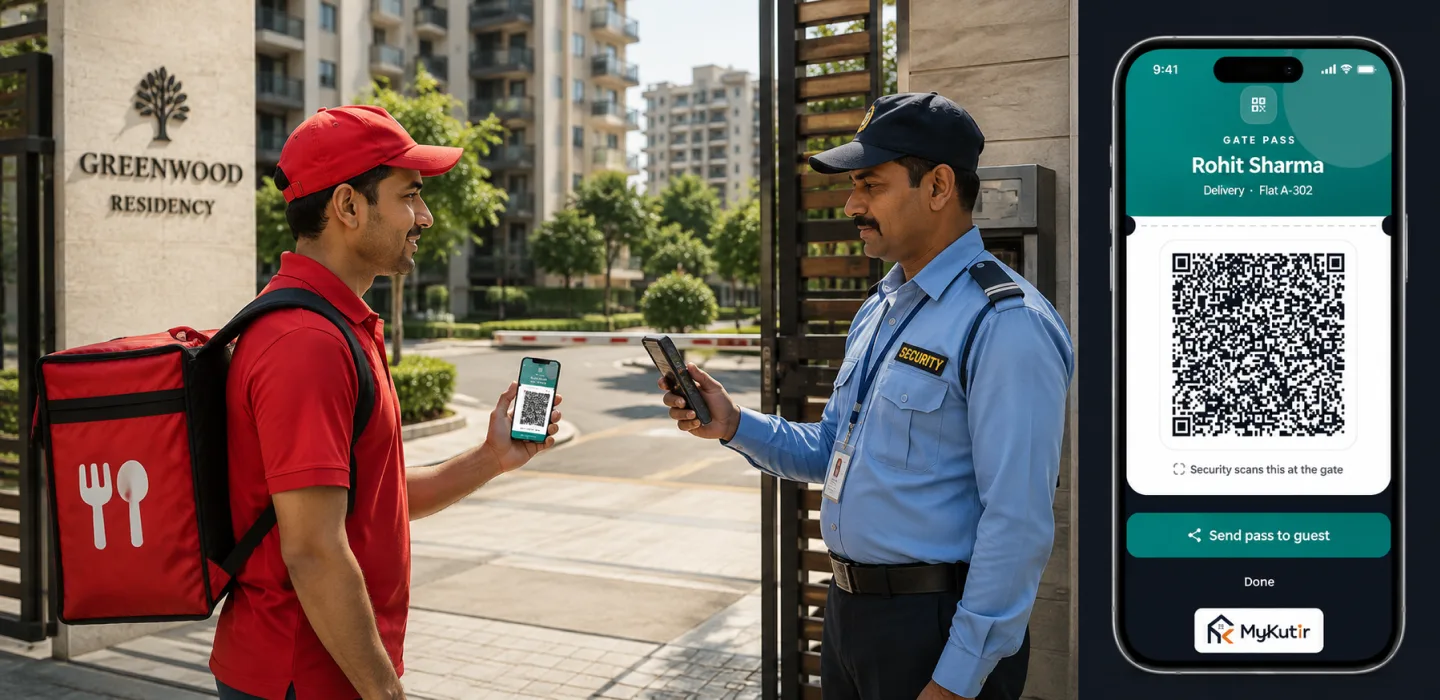
When a visitor plans to enter a community, the resident can pre-authorize their entry through the system's dedicated application. This triggers the generation of a unique QR code or a digital pass that the visitor can present at the entry. This code is scanned at the gate, either by the security personnel or an automated scanner, verifying the visitor's identity in an instant. This not only speeds up the entry process but also ensures that the visitor's arrival is logged within the system, providing a real-time update that can be accessed by the residents and management alike.
For additional security, these systems often integrate with existing CCTV and access control systems. This integration allows for immediate cross-referencing of entry data with visual records, ensuring that any discrepancies can be quickly identified and addressed. Platforms like MyKutir, which offer comprehensive visitor management features, can integrate these aspects seamlessly, offering a holistic security solution. This integration is particularly beneficial in providing real-time alerts to residents and management about unauthorized access attempts, thereby enhancing the overall security posture of the community.
Expert Insights on Security Improvements
Security experts unanimously agree that digital gate pass systems significantly bolster community security. By providing real-time tracking and comprehensive visitor logs, these systems address many vulnerabilities inherent in manual methods. Traditional approaches often fail to maintain accurate records, which can become problematic when tracking previous entries or auditing visitor logs.
The introduction of digital systems ensures that every visitor is accounted for, with each entry meticulously logged in the system. Real-time tracking capabilities mean that security personnel can monitor visitor movements more effectively, responding swiftly to any irregularities or unauthorized entry attempts. This capability is a significant improvement over manual systems where such incidents might go unnoticed until much later, if at all.
Furthermore, digital systems minimize human errors associated with manual record-keeping. By automating the entry and tracking process, these systems reduce the likelihood of erroneous entries or missed logs. This precision is crucial in maintaining a secure environment, as any lapse in record-keeping can be exploited by individuals seeking unauthorized access.
Another critical aspect of digital systems is their ability to integrate with broader security infrastructures, such as CCTV and alarm systems. This integration creates a layered security framework, where various components work together to enhance overall security. Security experts often highlight the value of such a multi-layered approach, as it provides multiple points of verification and alert, ensuring that no single failure compromises the community’s safety.
Convenience and Efficiency for Residents and Guards
For many residents and security personnel, digital gate pass systems represent a significant leap forward in terms of convenience and efficiency. These systems streamline the visitor entry process, removing many of the bottlenecks associated with traditional methods.
Residents benefit from the ability to pre-authorize visitor entry through a simple app interface. This capability means they no longer need to be physically present at the gate or rely on phone calls to verify a visitor's identity. Instead, residents can approve or deny entry with a few taps on their smartphone, a feature particularly appreciated by those with busy schedules or mobility challenges.
Security personnel also find their jobs simplified with digital systems. The automated entry logs and visitor verification processes reduce the administrative burden, allowing them to focus on more critical security tasks. The ability to quickly scan a QR code or digital pass means that queues at the entry are minimized, improving traffic flow and reducing frustration for visitors. Feedback from guards who have transitioned to digital systems often highlights the reduced stress and increased efficiency of their roles.
Moreover, the digital record-keeping allows for easy retrieval of visitor history. Should a security issue arise, guards and management can quickly access detailed logs, complete with timestamps and authorization statuses, aiding in swift resolution of any incidents. In essence, digital systems not only improve the visitor experience but also enhance the operational efficiency of the community's security personnel, making them an invaluable tool in modern residential security management.
Real-World Scenario: Implementing a Digital Gate Pass System
Consider the hypothetical case of "Greenview Apartments," a mid-sized residential community that decided to implement a digital gate pass system using MyKutir. Initially, the community faced several challenges typical of manual entry systems: long queues at the entrance, frequent unauthorized entries, and the cumbersome task of maintaining physical visitor logs.
The management committee, recognizing the need for improvement, conducted a thorough analysis of available digital systems. They chose MyKutir for its comprehensive set of features tailored to housing societies, including visitor management, notifications, and integration with existing security systems. The transition began with a pilot program, targeting one of the entry gates, allowing the community to assess the system's effectiveness before full implementation.
During the initial phase, Greenview Apartments encountered several challenges, such as ensuring that all residents understood the new system and addressing technological resistance from some elderly residents. To overcome these hurdles, the management arranged a series of workshops and training sessions, guiding residents through the app and demonstrating its advantages. They also established a helpline for residents needing additional assistance, ensuring that support was always available.
As the system was fully implemented, residents and security personnel witnessed significant improvements. The average visitor processing time was halved, freeing up security personnel to focus on other duties. The system's automatic logging and real-time notifications greatly reduced unauthorized entries, enhancing overall security. Feedback from residents was overwhelmingly positive, with many appreciating the newfound convenience and efficiency.
The successful implementation at Greenview Apartments highlights the potential benefits of digital gate pass systems, offering valuable insights for other communities considering a similar transition. By addressing initial challenges with strategic solutions, Greenview demonstrated that with the right approach and support, digital systems can greatly enhance the living experience in residential communities.
Common Mistakes to Avoid
Adopting a digital gate pass system involves several critical factors that, if neglected, can lead to complications and suboptimal outcomes. Here, we explore common pitfalls that residential communities may encounter and provide suggestions to circumvent them.
A frequent mistake is the failure to provide adequate training to staff and residents. A digital system, while user-friendly, requires a level of familiarity to use effectively. Without proper training, users may struggle to navigate the new system, leading to frustration and reluctance to fully embrace the technology. Providing comprehensive training sessions for both residents and security personnel is essential, as is ongoing support to address any issues as they arise.
Poor integration with existing security measures is another common oversight. A digital gate pass system should complement the current security infrastructure, not operate in isolation. Ensuring that the digital system integrates seamlessly with CCTV, alarm systems, and other security protocols is crucial for maximizing security benefits. This integration often requires a clear understanding of the existing infrastructure and may necessitate technical adjustments or updates.
Another potential pitfall is underestimating the importance of data privacy and security. Digital systems rely on collecting and storing personal data, which must be protected against unauthorized access and breaches. Implementing strong cybersecurity measures, such as encryption and regular security audits, is vital to safeguard sensitive information and maintain residents' trust.
Lastly, communities sometimes rush the implementation process without conducting a thorough pilot test. A phased rollout allows for testing the system's capabilities, identifying potential issues, and making necessary adjustments. By taking the time to evaluate and refine the system before full implementation, communities can significantly improve the likelihood of a successful transition.
Comparison: Digital Gate Pass vs Manual Entry Systems
To understand the advantages of digital gate pass systems, it's essential to compare them with traditional manual entry systems. Below is a comparison table outlining key aspects such as security, convenience, and efficiency:
| Aspect | Digital Gate Pass System | Manual Entry System |
|---|---|---|
| Security | High, with real-time tracking and comprehensive logs | Moderate, relies on manual logs prone to errors |
| Convenience | High, with quick pre-authorization and digital access | Low, requires physical presence and manual verification |
| Efficiency | High, automated processes reduce wait times | Low, manual processes lead to longer queues |
| Data Management | Automated and stored securely for easy access | Manual logs can be difficult to organize and retrieve |
| Cost-Effectiveness | Long-term savings with reduced manpower and errors | Higher ongoing costs due to manpower needs |
From the table, it's clear that digital systems offer significant improvements in security, convenience, and efficiency. While the initial investment may be higher, the long-term benefits, including cost savings and enhanced security, make digital systems an attractive option for modern residential communities.
Step-by-Step Guide to Adopting a Digital Gate Pass System
Transitioning to a digital gate pass system can seem daunting, but with a structured approach, it becomes manageable. Here's a step-by-step guide to help residential communities adopt this technology smoothly:
- Assess Community Needs: Begin by evaluating your community's specific requirements. Consider factors such as the size of the community, current security challenges, and resident expectations. This assessment will guide the selection of an appropriate digital system.
- Select a Suitable Platform: Research and choose a digital gate pass system that aligns with your community's needs. Platforms like MyKutir offer comprehensive solutions tailored to housing societies, complete with features for visitor management and system integration.
- Plan the Implementation: Develop a detailed implementation plan, outlining phases, timelines, and responsibilities. Consider starting with a pilot program to test the system's functionality and gather preliminary feedback.
- Engage and Educate Residents: Communication is key to successful adoption. Conduct information sessions and provide training materials to educate residents about the benefits and usage of the new system. Address concerns and encourage open feedback.
- Train Security Personnel: Provide comprehensive training to your security team, focusing on how to use the digital system effectively. Ensure they are comfortable with the technology and understand the integration with existing security measures.
- Conduct a Pilot Test: Launch the digital system on a smaller scale, such as at one entry gate, to test its effectiveness. Monitor performance, collect user feedback, and make necessary adjustments before full-scale implementation.
- Implement and Monitor: Once the system is refined, proceed with full implementation. Continuously monitor the system's performance, address any issues promptly, and remain open to resident feedback for ongoing improvements.
By following these steps, communities can effectively transition to a digital gate pass system, enhancing security and resident satisfaction.
FAQs on Digital Gate Pass Systems
What is a digital gate pass system?
A digital gate pass system is a technology-driven solution designed to manage visitor access to residential communities. Instead of relying on manual entry logs or physical visitor sign-in sheets, it automates the process using digital tools such as QR codes or digital passes. Visitors are pre-authorized by residents through an app, and their access is verified at the community entrance using these digital identifiers. This system ensures accurate visitor tracking and enhances security by maintaining detailed digital logs of all entries and exits.
How does a digital gate pass system enhance security?
Digital gate pass systems significantly enhance security by eliminating many vulnerabilities associated with manual entry processes. They provide real-time visitor tracking and generate comprehensive logs that are easily accessible for audits. Unauthorized entries are minimized because the system requires pre-authorization from residents, and integration with existing security systems adds an additional layer of protection. Moreover, these systems can instantly alert security personnel and residents to any suspicious activities, allowing for prompt responses.
What are the benefits of digital gate passes for residents?
For residents, digital gate passes offer numerous benefits. They provide the convenience of pre-authorizing visitors remotely through an app, thus reducing the need for physical presence at entry gates. This capability is particularly useful for busy individuals or those with mobility constraints. Additionally, digital passes streamline the entry process, reducing wait times and enhancing the overall visitor experience. Residents also benefit from increased security, knowing that unauthorized access is more challenging with a digital system in place.
How can communities implement a digital gate pass system effectively?
Effective implementation begins with assessing the community's unique needs and selecting a suitable digital system. Communities should engage residents early, encouraging feedback and addressing concerns through informative sessions and hands-on training. Establishing a phased implementation strategy, starting with a pilot program, allows for testing and refinement before full deployment. Continuous monitoring and support are essential to address any issues and ensure the system operates smoothly over time.
What challenges might arise when adopting digital gate passes?
Several challenges can arise during the adoption of digital gate passes. Resistance from residents unfamiliar with technology is common, highlighting the need for comprehensive training and support. Integration issues with existing security infrastructure can also pose difficulties, requiring careful planning and possible technical adjustments. Additionally, maintaining data privacy and securing sensitive information is critical, necessitating robust cybersecurity measures. Addressing these challenges proactively ensures a smoother transition.
Are digital gate pass systems cost-effective?
Digital gate pass systems can be cost-effective in the long term, despite the initial investment. They reduce the need for manual labor, decrease errors associated with manual logging, and enhance security, potentially lowering insurance premiums. The automation of visitor management processes reduces operational costs over time, leading to significant savings. While the upfront cost may be a consideration, the long-term benefits and efficiencies often offset these initial expenses.
How does MyKutir support digital gate pass implementation?
MyKutir offers comprehensive support for digital gate pass implementation in residential communities. The platform provides a user-friendly interface for residents to manage visitor access, alongside robust integration capabilities with existing security systems. MyKutir also offers resources and support for training residents and security personnel, ensuring a smooth transition. With features designed for the unique needs of housing societies, MyKutir facilitates efficient and secure visitor management solutions.
Key Takeaways
- Digital gate pass systems offer significant improvements over traditional manual methods, enhancing security and convenience.
- These systems utilize technologies such as QR codes and digital passes to streamline visitor entry processes.
- Expert insights highlight the enhanced security offered by digital systems through real-time tracking and comprehensive logs.
- Residents and security personnel both benefit from the increased convenience and efficiency of digital systems.
- Implementing a digital system requires careful planning, resident engagement, and ongoing support.
- Common pitfalls include inadequate training and poor integration with existing systems, which can be mitigated with proactive strategies.
- Despite initial costs, digital systems are cost-effective in the long run due to reduced labor and enhanced security.
- Platforms like MyKutir provide essential support and features for successful digital gate pass implementation.