Implementing Digital Gate Pass in Housing Societies: An Ultimate Guide
By MyKutir Editorial Team — 2026-09-20
Learn the step-by-step process of implementing a digital gate pass system in housing societies to enhance security and streamline visitor management.
Managing visitor entry and exit is a critical aspect of maintaining security and convenience in housing societies. Traditional methods such as paper logs and verbal approvals are no longer sufficient in the face of modern-day challenges like increased foot traffic and heightened security concerns. This is where digital gate pass systems come into play, offering a technologically advanced approach to visitor management. By digitizing the process, these systems provide a host of benefits, from enhanced security measures to improved efficiency and accuracy in recording visitor data.
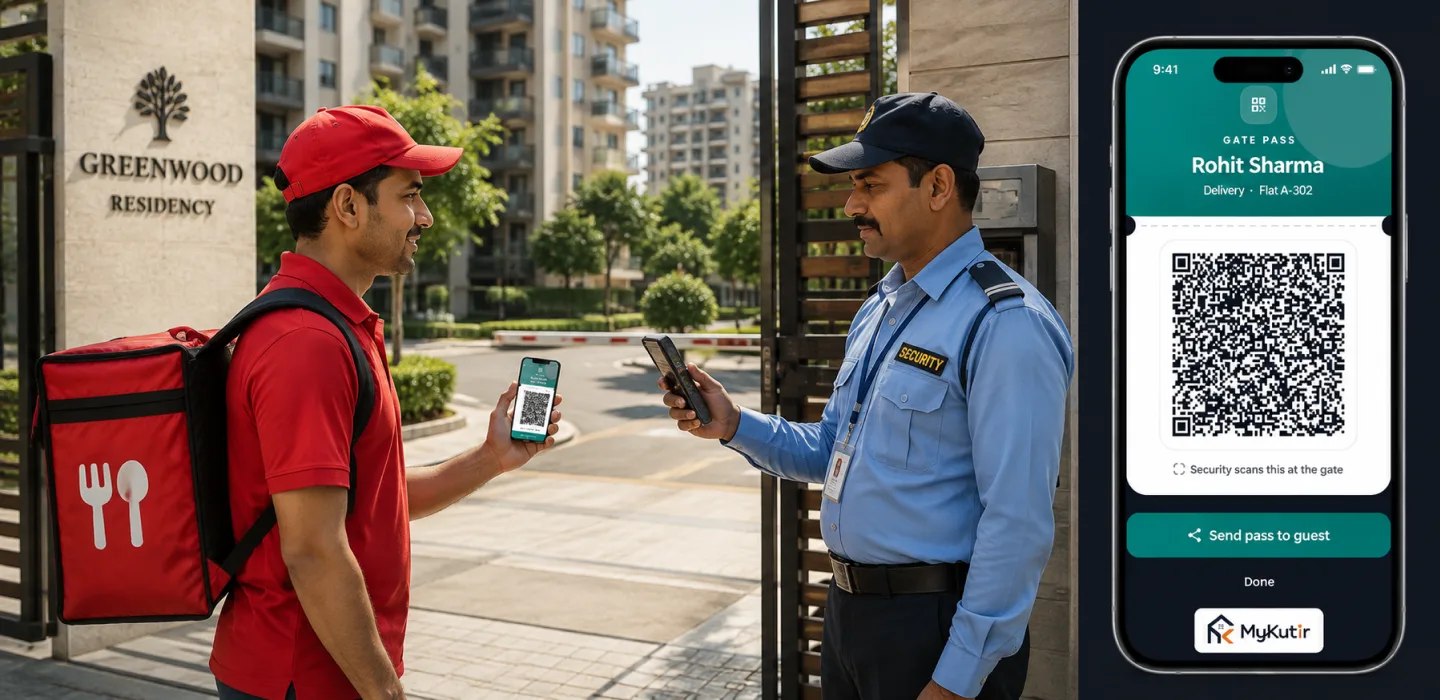
Digital gate pass systems differ significantly from traditional methods. Instead of relying on manual entry, these systems automate the process, often using QR codes or digital IDs that can be scanned upon entry. This ensures that all visitor information is recorded accurately and in real-time, minimizing the risk of human error. Additionally, digital systems can send immediate notifications to residents, allowing them to approve or deny entry remotely, thus enhancing the overall security of the premises.
Beyond security, digital systems offer convenience for both residents and visitors. Pre-registration options mean visitors can be approved before they even arrive, reducing waiting times at the entrance. Furthermore, these systems generate comprehensive data analytics, providing valuable insights into visitor patterns and potential security threats. This is a significant upgrade from traditional logs, which are often prone to inaccuracies and are cumbersome to manage.
Why Housing Societies Need Digital Gate Passes
Housing societies face numerous challenges when managing visitors. The manual recording of visitor data is time-consuming and often inaccurate, leading to potential security breaches. In a scenario where a visitor needs to be verified quickly, traditional methods fall short, as they lack the ability to provide immediate, verifiable information about past entries or exits. This is particularly concerning in large societies where the volume of visitors can be overwhelming.
Digital gate passes solve these problems by allowing for real-time tracking of all visitor movements. This capability ensures that data is not only accurate but also immediately available. Security personnel can access a digital log to verify visitor information swiftly, reducing the risk of unauthorized access. Moreover, digital systems minimize manual errors by automating the entry process, which is not possible with handwritten logs.
Another significant advantage is the ability to manage visitor data centrally. Digital systems can integrate with mobile and web applications, providing a holistic view of all entries and exits in the society. This integration is crucial for generating reports and analytics that help identify trends and anomalies, which are invaluable for enhancing security measures.
In addition to improving security, digital gate pass systems offer operational benefits. The automation of visitor management allows security personnel to focus on more critical tasks, enhancing their efficiency. Reduced paperwork also means less physical storage is required, and because everything is digital, records are easily retrievable when needed.
Key Features of a Digital Gate Pass System
A robust digital gate pass system should be equipped with several essential features to effectively manage visitor entries and ensure security. QR code generation is a fundamental feature, as it allows quick scanning and verification of visitor credentials at the gate. This ensures a streamlined entry process and eliminates the need for manual checks.
Visitor pre-registration is another crucial feature. Societies can allow residents to pre-approve their guests via a mobile app or web interface. This not only speeds up the entry process but also enhances security, as only verified individuals are permitted access. Real-time notifications are equally important, providing residents with instant updates about their guests’ arrival, allowing for immediate action if necessary.
Integration with mobile apps is vital for accessibility and ease of use. Residents should be able to manage their visitor list, approve entries, and receive notifications all through a smartphone app. This enhances user experience and ensures that the system is used efficiently by all members of the society.
Data analytics is another feature that cannot be overlooked. By analyzing visitor data, societies can identify patterns and potential security threats. This information is key for making informed decisions about security protocols and resource allocation. Additionally, a cloud-based storage system ensures that all data is securely stored and easily accessible when needed, enhancing both security and convenience.
How MyKutir Facilitates Digital Gate Pass Implementation
MyKutir is a comprehensive platform designed to facilitate the implementation of digital gate pass systems in housing societies. Its capabilities extend beyond basic visitor management, offering a range of features tailored to enhance security and operational efficiency. The platform supports both visitor and guard management, providing a seamless interface for both residents and security personnel.
The user-friendly interface of MyKutir is accessible through both web and mobile apps, making it convenient for residents to manage visitor entries and receive notifications. Real-time notifications are a standout feature, allowing residents to stay updated on visitor arrivals and take action if necessary. This feature enhances the security of the society and ensures that residents have control over who enters their premises.
MyKutir's integration capabilities also include data analytics, which provide societies with valuable insights into visitor patterns and behaviors. This information can be used to optimize security measures and ensure that resources are allocated appropriately. The platform's ability to generate detailed reports is invaluable for managing security protocols and addressing any issues that may arise.
Moreover, MyKutir's cloud-based system ensures that all data is securely stored and easily accessible, minimizing the risk of data loss and ensuring compliance with data protection regulations. This is particularly important in today's digital age, where data security is a top concern for housing societies.
Step-by-Step Implementation Guide
Implementing a digital gate pass system using MyKutir involves several key steps to ensure successful integration and operation. The first step is the initial setup, which involves configuring the system to meet the specific needs of the society. This includes setting up user profiles for residents and security personnel, as well as integrating the system with any existing security infrastructure.
Training is a crucial component of the implementation process. Staff and residents need to be educated on how to use the system effectively, including app navigation, visitor pre-registration, and notification management. Conducting training sessions can significantly enhance user adoption and ensure the system's successful implementation.
Configuring notifications is another important step, as it ensures that residents receive timely updates about visitor arrivals. Customizing notification settings according to individual preferences can enhance user satisfaction and improve overall communication within the society.
Ongoing management of the system involves regular monitoring and maintenance to ensure that the system operates smoothly. This includes software updates, which are necessary to keep the system up-to-date with the latest security features and technological advancements. Regular feedback loops with residents and security personnel can provide valuable insights into system performance and areas for improvement.
Common Implementation Challenges and Solutions
While digital gate pass systems offer numerous benefits, there are common challenges that societies may encounter during implementation. Technical issues such as connectivity problems and software glitches can arise, affecting system performance. To address these issues, societies should ensure that they have a reliable IT support team in place to handle technical difficulties promptly.
Resistance to change is another challenge that can impact the successful implementation of a digital system. Residents and staff may be accustomed to traditional methods and reluctant to transition to a new system. Overcoming this resistance requires effective communication about the benefits of the digital system, as well as comprehensive training to ensure users are comfortable with the new technology.
Data privacy concerns are also prevalent, particularly in the context of digital systems that store sensitive information. Societies must implement robust data protection measures to ensure that resident information is secure and complies with relevant regulations. This includes encrypting data and ensuring that access is restricted to authorized personnel only.
By anticipating these challenges and implementing the appropriate solutions, societies can ensure a smooth transition to a digital gate pass system and enjoy its numerous benefits.
Comparison: Manual vs. Digital Gate Pass Systems
| Aspect | Manual System | Digital System |
|---|---|---|
| Efficiency | Time-consuming paperwork; prone to errors | Automated processes; real-time data |
| Cost | Lower upfront cost but higher long-term operational costs | Higher initial investment; lower ongoing costs |
| Security | Limited verification; easily bypassed | Enhanced security measures; real-time tracking |
| User Experience | Inconvenient and slow for both residents and visitors | User-friendly interface; convenience and speed |
| Data Management | Paper logs; difficult to access and analyze | Centralized data; easy access and analytics |
Manual gate pass systems have been the traditional choice for many housing societies. However, they come with several drawbacks, including inefficiency, higher long-term costs, and limited security features. These systems rely on human intervention, which can lead to errors and inconsistencies in data recording.
In contrast, digital gate pass systems offer a modern solution that addresses these issues effectively. They automate many of the manual processes involved in visitor management, resulting in greater efficiency and accuracy. The initial investment may be higher, but the long-term operational costs are significantly reduced since the need for extensive paperwork and manual labor is minimized.
Security is a major concern for housing societies, and digital systems offer enhanced security measures that traditional methods cannot match. Real-time tracking and verification ensure that only authorized visitors gain access, reducing the risk of security breaches. Additionally, the user experience is vastly improved, with faster, more convenient access for residents and visitors alike.
Best Practices for Managing Digital Gate Pass Systems
Effective management of a digital gate pass system requires adherence to several best practices. Regular software updates are essential to ensure that the system continues to operate smoothly and is protected against emerging security threats. Societies should establish a routine schedule for updates and maintenance, which can prevent potential issues before they arise.
Data security measures are another critical component of effective management. Societies must implement robust security protocols to protect sensitive resident information. This includes encrypting data, restricting access to authorized personnel, and regularly reviewing security policies to ensure compliance with relevant regulations.
Feedback loops with residents and security personnel are invaluable for identifying areas for improvement and ensuring that the system meets the needs of its users. Regular surveys and feedback sessions can provide insights into user satisfaction and highlight any issues that need to be addressed.
Training and education are ongoing processes that should not end with the initial implementation. As technology evolves, so too should the knowledge and skills of those using the system. Societies should provide regular training sessions to ensure that all users are proficient in using the system and aware of any new features or updates.
Future Trends in Digital Gate Pass Technology
The future of digital gate pass technology is promising, with several emerging trends set to revolutionize visitor management in housing societies. One such trend is the integration of artificial intelligence (AI) for enhanced security measures. AI can analyze visitor patterns and detect anomalies that may indicate a security threat, allowing societies to respond proactively.
Biometric authentication is another trend gaining traction, offering an additional layer of security by verifying visitor identity through fingerprint or facial recognition. This technology reduces the risk of unauthorized access and enhances the overall security of the premises.
Advanced analytics are also set to play a significant role in the future of digital gate pass systems. By leveraging big data, societies can gain deeper insights into visitor behaviors and trends, enabling more informed decision-making regarding security protocols and resource allocation.
These trends highlight the potential for digital gate pass technology to continue evolving and improving the security and efficiency of visitor management in housing societies. By staying abreast of these developments, societies can ensure that they remain at the forefront of technological advancements in this field.
FAQ
What is a digital gate pass system?
A digital gate pass system is an automated solution for managing visitor entries and exits in housing societies. Unlike traditional paper logs, digital systems use technology such as QR codes and mobile apps to streamline the visitor management process. This system allows for real-time tracking, data accuracy, and provides enhanced security measures to ensure that only authorized visitors gain access to the premises.
How does a digital gate pass improve security in housing societies?
Digital gate pass systems enhance security by automating the verification process and ensuring real-time monitoring of visitor entries and exits. They eliminate the manual errors common in traditional paper-based methods and provide immediate notifications to residents about visitor arrivals. This enables residents to quickly approve or deny entry, reducing the risk of unauthorized access.
What features should I look for in a digital gate pass system?
When selecting a digital gate pass system, consider features such as QR code generation for quick visitor verification, visitor pre-registration to streamline the entry process, real-time notifications to keep residents informed of visitor arrivals, integration with mobile apps for convenience, and data analytics to provide insights into visitor patterns and enhance security.
Can MyKutir be used to implement a digital gate pass system?
Yes, MyKutir is an effective platform for implementing digital gate pass systems in housing societies. It offers a user-friendly interface accessible via web and mobile apps, supports visitor and guard management, and provides real-time notifications to residents. MyKutir's integration capabilities also include data analytics, which are crucial for optimizing security measures and ensuring efficient visitor management.
What are the steps to implement a digital gate pass in my society?
To implement a digital gate pass system using MyKutir, begin with the initial setup, configuring the system to meet the society's specific needs. Train staff and residents on system usage, configure notifications for timely updates, and establish a routine for ongoing management and maintenance. Regular feedback loops with residents and security personnel can help identify areas for improvement and ensure the system operates effectively.
What challenges might I face when implementing a digital gate pass?
Common challenges include technical issues, resistance to change, and data privacy concerns. Societies should have IT support to handle technical difficulties and provide comprehensive training to overcome resistance. Implementing robust data protection measures is crucial for addressing privacy concerns and ensuring compliance with regulations.
How do digital gate pass systems compare with manual methods?
Digital gate pass systems offer greater efficiency, accuracy, and security compared to manual methods. They automate processes, reduce manual errors, and provide real-time data and analytics. While the initial investment may be higher, digital systems reduce long-term operational costs and improve the user experience by offering faster, more convenient access for residents and visitors.
What are the future trends in digital gate pass solutions?
Future trends in digital gate pass technology include AI integration for enhanced security, biometric authentication for verifying visitor identities, and advanced analytics for deeper insights into visitor behaviors. These developments promise to further enhance the efficiency and security of visitor management in housing societies.
Key Takeaways
- Digital gate pass systems significantly enhance security and efficiency in housing societies.
- They offer real-time tracking, accurate visitor data, and reduce manual errors associated with traditional methods.
- Key features to look for include QR code generation, visitor pre-registration, real-time notifications, and data analytics.
- MyKutir is a comprehensive platform supporting digital gate pass implementations with robust features and integration capabilities.
- Effective management includes regular software updates, strong data security measures, and ongoing training and feedback loops.
- Future trends promise continued advancements in AI, biometrics, and data analytics to further improve visitor management systems.