Enhancing Society Security: Best Practices Guide
By MyKutir Editorial Team — 2026-09-18
Discover effective strategies to boost security in housing societies, blending both digital and traditional methods.
Ensuring security in housing societies is of paramount importance. Not only does it guarantee the safety of residents, but it also enhances the overall quality of life within the community. In modern urban settings, housing societies face distinct challenges in maintaining a secure environment. Common concerns include unauthorized access, theft, vandalism, and ensuring the safety of children and the elderly. These challenges necessitate a vigilant approach to security that goes beyond traditional methods.
Security in housing societies has traditionally been about deploying guards and installing physical barriers. While these methods have their place, the evolving landscape of threats requires integrating digital tools with these conventional measures. Digital tools can provide real-time monitoring, automated alerts, and more sophisticated access controls. This integration allows for a comprehensive approach to security, addressing both immediate physical threats and longer-term strategic vulnerabilities.
Incorporating technology into society security not only automates processes but enhances decision-making capabilities. For example, digital surveillance systems can offer continuous monitoring with alerts for suspicious activities, reducing the need for constant manual oversight. Similarly, digital visitor management systems can streamline entry processes, making them both quicker and more secure. The key is finding the right balance between traditional and digital methods to create a robust security infrastructure.
The Role of Technology in Security Management
Technology plays a crucial role in modernizing security management within housing societies. With advancements in AI and machine learning, security systems are becoming more intelligent and effective. Real-time surveillance, for instance, offers unparalleled monitoring capabilities. Cameras equipped with AI can not only stream live footage but can also analyze video feeds to detect unusual patterns or behaviors that might indicate a security threat.
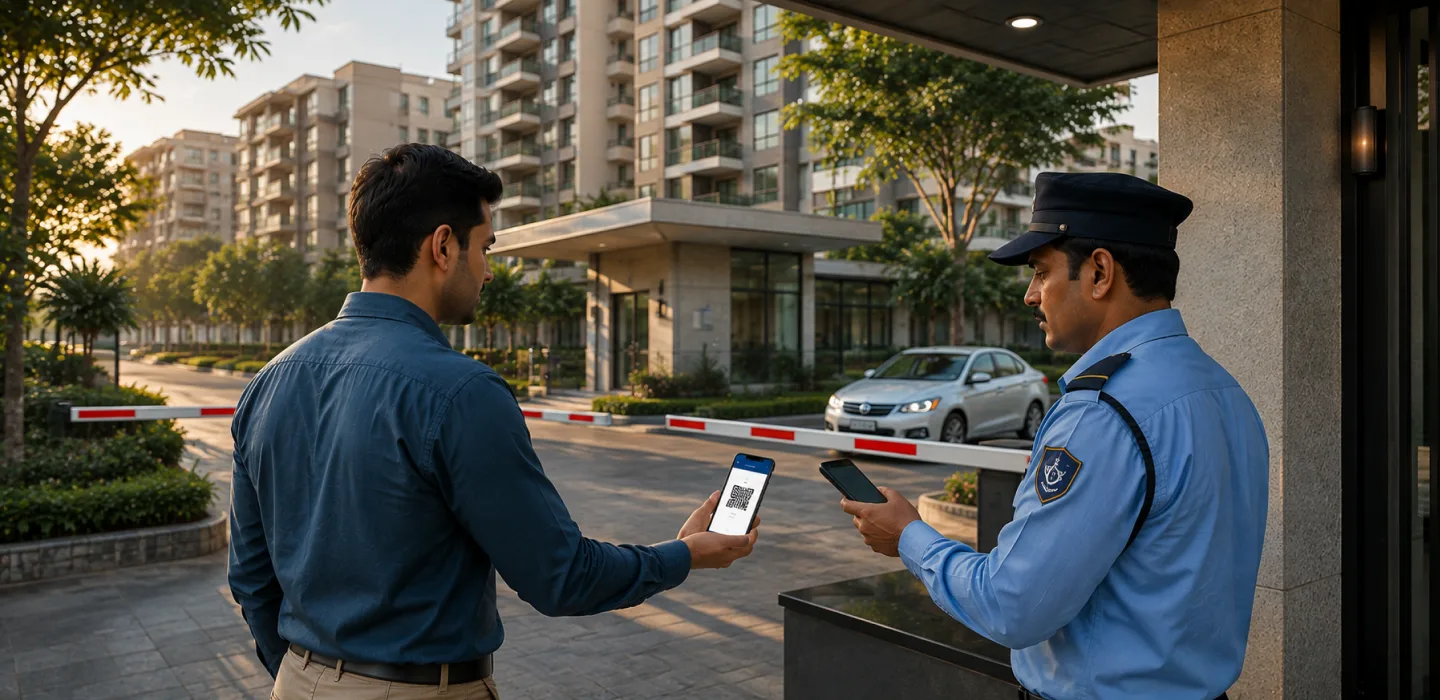
Digital gate passes further illustrate how technology can bolster security. These passes can replace manual entry logs, offering a high level of accuracy and ease. Residents can generate digital passes for their visitors through apps, which security personnel can verify quickly upon arrival, reducing the time spent logging details manually.
Additionally, AI-assisted features like face-recognition attendance systems reduce reliance on manual checks and improve accuracy. These systems can automatically log attendance for staff and regular visitors, enhancing both security and operational efficiency. For example, MyKutir's visitor management feature allows for seamless entry and exit tracking, ensuring that only authorized individuals have access.
Another innovative feature provided by MyKutir is the RAG (Red-Amber-Green) search, which categorizes visitors based on risk levels. This feature can alert security personnel to potentially high-risk individuals, allowing them to respond promptly and appropriately. This proactive approach ensures that potential threats are addressed even before they materialize.
Overall, the incorporation of technology in security management not only enhances protection but also streamlines processes, making them more efficient and reliable. By using tools like MyKutir's visitor management and RAG search, housing societies can significantly improve their security posture, ensuring a safer environment for all residents.
Traditional Security Measures
Despite the advent of digital technology, traditional security measures remain a cornerstone of security management in housing societies. These measures, including guard patrols, manual visitor logs, and emergency response drills, provide a human touch and can deter potential threats through visible and active presence.
Guard patrols are perhaps the most recognized form of traditional security. The presence of trained security personnel patrolling the premises serves as a visible deterrent to potential intruders. Regular patrols ensure that every corner of the society is monitored, reducing blind spots and providing a quick response in case of incidents.
Manual visitor logs, though seemingly archaic, still have their place in security management. They offer a tangible record of all entries and exits and can be vital during audits or investigations. When combined with digital records, they offer a comprehensive trail of activity within the premises.
Emergency response drills are another critical traditional measure. They prepare residents and staff for potential emergencies, such as fires or intrusions, ensuring everyone knows their roles and responsibilities. These drills can significantly reduce panic and confusion during actual emergencies, leading to more effective and timely responses.
While digital tools offer efficiency, traditional measures provide reliability and a personal touch that technology alone cannot replicate. For example, a security guard can assess situations in real-time and make judgment calls based on human intuition and experience. By complementing these with digital tools, societies can create a robust security strategy that covers more bases and offers layered protection.
Ultimately, the most effective security strategy is one that blends both traditional and digital methods. This ensures comprehensive coverage, leveraging the strengths of each approach to create a secure environment for all residents.
Common Mistakes in Society Security
Managing security in a housing society is a complex task, and there are several common oversights that can undermine efforts to keep residents safe. One of the primary mistakes is poor communication among residents and security personnel. Without clear channels of communication, vital information can be lost or misunderstood, leading to delayed responses to potential threats.
Reliance on outdated technology is another common issue. Older security systems might lack the capabilities of newer models, such as high-resolution cameras or integrated digital systems. These outdated systems can become liabilities if they fail to detect or deter threats effectively. Upgrading to modern technology can significantly enhance security capabilities.
Inadequate training for security personnel is a critical oversight. Guards need to be well-versed not only in traditional security measures but also in operating digital tools. Without proper training, the effectiveness of even the most advanced technological solutions can be compromised. Regular training sessions can ensure that security staff are equipped to handle both routine tasks and unexpected challenges.
Another common mistake is not having a clear, actionable security plan. Without a structured plan, responses to incidents can be disorganized and ineffective. Societies should develop detailed security plans that include risk assessments, emergency protocols, and regular audits to ensure all aspects of security are covered.
To avoid these pitfalls, housing societies should establish clear communication channels, regularly update technology, ensure comprehensive training for security personnel, and maintain a well-documented security plan. By addressing these areas, societies can enhance their security measures and provide a safer environment for all residents.
Comparison: Digital vs. Manual Security Approaches
| Feature | Digital Security | Manual Security |
|---|---|---|
| Monitoring | Real-time, automated, AI-enhanced | Human oversight, requires shifts |
| Access Control | Automated gate passes, biometric systems | Manual checks by security personnel |
| Response Time | Instant alerts and notifications | Depends on human presence |
| Data Management | Automated logs, easy to audit | Manual logs, prone to errors |
| Cost | Initial investment, lower ongoing costs | Continuous labor costs |
Digital security systems provide advantages in efficiency and accuracy, notably with real-time monitoring and automated data management. They are most effective in situations requiring constant vigilance and detailed record-keeping. However, initial setup costs can be higher, and systems must be maintained and updated regularly.
Manual security methods, on the other hand, provide a human touch that technology cannot replicate. They are effective in scenarios where human judgment is essential, such as identifying suspicious behavior based on intuition. However, they rely heavily on the availability and competence of security personnel, which can vary.
The best security approach often combines both methods, leveraging the strengths of digital tools while maintaining the critical human element that manual security provides. For instance, while digital systems can handle surveillance and automated checks, human guards are invaluable for patrolling and making immediate in-the-moment decisions. This hybrid approach ensures that societies are covered comprehensively, addressing both technological and human factors.
Step-by-Step Guide to Implementing a Security Plan
Implementing a robust security plan for a housing society involves several key steps to ensure comprehensive coverage and preparedness. Here's a detailed guide:
-
Risk Assessment:
Begin by assessing potential threats unique to your society. This includes analyzing past incidents, the society's layout, and survey feedback from residents. Identify areas with the highest risk and prioritize them in your security strategy.
-
Selecting the Right Technology:
Based on your risk assessment, choose appropriate digital tools that address your society's specific needs. Consider systems for surveillance, access control, and visitor management. Evaluate options like MyKutir for their integrated and customizable features.
-
Integrating Traditional Measures:
Complement technology with traditional security methods. Ensure you have well-trained guards, clear visitor protocols, and regular patrols to provide a human presence that can assess situations in real-time.
-
Training:
Conduct regular training sessions for security personnel to ensure they are familiar with both digital tools and traditional procedures. Training should cover system operations, emergency response, and communication protocols.
-
Communication Channels:
Establish clear channels of communication between residents and security personnel. Consider a digital platform or app to facilitate quick alerts, announcements, and feedback from residents.
-
Regular Audits and Updates:
Schedule regular security audits to evaluate system effectiveness and identify areas for improvement. Keep all technology up to date to ensure optimal performance and security.
By following these steps, societies can create a comprehensive security plan that effectively combines both digital and traditional methods. Regular evaluations and updates ensure the plan remains relevant and effective in facing new challenges.
Scenario: Managing a Security Breach
Imagine a scenario where a security breach occurs in a housing society. An unauthorized individual gains access to the premises, raising immediate concerns for resident safety. Here's how both digital and traditional security measures can be employed to manage the situation effectively:
Upon detecting suspicious activity through CCTV surveillance, an alert is sent via the digital security system. This immediate notification allows security personnel to respond swiftly, reducing the time the intruder has to cause any harm. Security guards, already briefed on potential breach scenarios, quickly mobilize to the identified area.
Meanwhile, the digital visitor management system cross-references the intruder's image against the database, confirming the absence of an entry pass and escalating the alert to a higher risk level. Simultaneously, the RAG search feature of MyKutir quickly categorizes the intruder as high-risk, prompting additional support from security personnel on duty.
Security guards, using both their training and the information provided by the digital system, apprehend the individual and conduct a swift check. The integration of technology and traditional vigilance ensures that the breach is contained without escalation, and residents remain safe.
Post-incident, a detailed report is generated by the digital system, which includes time-stamped footage, logs of actions taken, and a summary of the breach. This report aids in analyzing the breach and enhancing future response strategies. It also serves as a record for auditing purposes and helps in identifying any lapses in the existing security protocol that can be addressed in future training sessions.
This scenario highlights the importance of a coordinated approach that combines the responsiveness of digital systems with the tactical presence of human guards. Such an integrated strategy not only addresses immediate threats but also strengthens the overall security framework, providing peace of mind to residents.
Case Study: A Society's Successful Security Overhaul
In one inspiring example, a housing society in Mumbai decided to overhaul its security strategy by integrating MyKutir's digital tools with its existing measures. Prior to the revamp, the society relied heavily on manual logs and sporadic guard patrols, which left gaps in security coverage and response times.
Recognizing the need for a more robust system, the society initiated a comprehensive security plan that began with a thorough risk assessment. They identified key areas of concern, including unauthorized entry and slow response to incidents. With these insights, they turned to MyKutir for digital solutions, particularly for its visitor management feature and RAG search capability.
The implementation started with installing high-definition CCTVs integrated with the digital system, ensuring real-time surveillance and automated alerts. The visitor management system streamlined entry and exit, reducing congestion at gates and enhancing accuracy in record-keeping. Security guards were trained extensively to operate these systems, ensuring a smooth transition from manual to digital processes.
Over time, the society observed a significant improvement in its security posture. Instances of unauthorized entry dropped drastically, and the response time to incidents was reduced, thanks to instant alerts and coordinated actions between digital systems and human personnel. Regular audits and feedback loops using MyKutir's analytics further refined their security measures.
The success of this overhaul is attributed to the careful integration of technology with traditional methods. By leveraging digital tools to enhance security operations and maintaining the invaluable presence of trained guards, the society not only improved safety but also fostered a sense of trust and community among residents.
This case study underscores the importance of adopting a balanced approach to society security, one that embraces innovation while valuing the human elements that contribute to a safer living environment.
Frequently Asked Questions
How can digital tools enhance society security?
Digital tools can significantly enhance society security by providing real-time monitoring and automated alerts, thus increasing responsiveness and reducing human error. Features such as digital gate passes streamline access control, while AI-assisted surveillance can detect unusual activities automatically. With integrated systems like those offered by MyKutir, societies can maintain comprehensive records of all entries and exits, which simplifies audits and investigations. Ultimately, digital tools provide a more efficient, accurate, and scalable approach to managing security in housing societies.
What are key components of a comprehensive security plan?
A comprehensive security plan should include risk assessment, technology selection, integration of traditional security measures, thorough training programs, and communication channels. Risk assessment helps identify potential threats specific to the society, guiding the selection of appropriate digital tools. Integrating traditional measures ensures human oversight and judgment remain part of the security framework. Regular training programs keep security personnel adept at using both digital and manual methods. Clear communication channels facilitate timely information exchange between residents and security personnel. Regular audits and updates ensure the plan remains effective and up-to-date.
How do digital and manual security methods complement each other?
Digital and manual security methods complement each other by combining the efficiency and accuracy of technology with the intuition and adaptability of human oversight. Digital systems provide constant surveillance, automated alerts, and comprehensive data management, which enhance monitoring and record-keeping. Manual methods, such as guard patrols and visual checks, offer the human touch needed for nuanced decision-making and immediate incident response. Together, they create a holistic security approach that leverages both strengths, ensuring more comprehensive coverage for housing societies.
What common mistakes should societies avoid in security management?
Common mistakes in society security management include poor communication among residents and security personnel, outdated technology, inadequate training for security staff, and lack of a structured security plan. Such oversights can lead to slow response times, undetected threats, and inefficient operations. Societies should prioritize establishing clear communication channels, regularly updating and maintaining digital systems, ensuring comprehensive and ongoing training for security personnel, and developing a well-documented security plan. Addressing these areas can significantly enhance the overall security framework and protection for residents.
How often should security audits be conducted in housing societies?
Security audits in housing societies should be conducted regularly to ensure that systems remain effective and up-to-date. Many experts recommend conducting audits at least twice a year. However, the frequency can vary based on the society's risk profile, recent incidents, and updates in technology or protocols. Regular audits help identify vulnerabilities and opportunities for improvement, ensuring that security measures adapt to evolving threats and maintain high standards of protection. Societies should work closely with security professionals to determine an audit schedule that best suits their specific needs.
How can societies ensure effective communication between security personnel and residents?
Effective communication between security personnel and residents can be achieved by establishing clear channels and platforms for information exchange. Digital tools, such as mobile apps or portals, can facilitate quick alerts, announcements, and feedback. Regular meetings and newsletters can also keep residents informed about security practices and updates. Training security personnel to communicate efficiently and address residents' concerns promptly is critical. By fostering an environment of openness and collaboration, societies can ensure that vital information flows smoothly and that everyone is aligned on security protocols.
What training do security guards need to effectively use digital tools?
Security guards need comprehensive training to effectively use digital tools, covering both the technical and operational aspects of these systems. Training should include modules on operating surveillance cameras, managing digital visitor logs, and responding to automated alerts. Additionally, guards should be trained in cybersecurity practices to protect against data breaches and unauthorized access. Operational training should focus on integrating digital tools into daily tasks, ensuring guards understand how technology can aid their duties without replacing the critical human element. Regular refresher courses and updates on new technologies are essential for maintaining high proficiency levels.
Key Takeaways
- Integrating digital tools with traditional security measures provides a comprehensive approach to society security.
- Technology such as AI-enhanced surveillance and digital visitor management significantly boosts security capabilities.
- Traditional methods like guard patrols and emergency drills remain essential for effective security management.
- Avoid common security oversights by ensuring clear communication, regular training, and updated technology.
- A balanced combination of digital and manual security methods offers the most robust protection for housing societies.
- Regular security audits and updates are crucial to maintaining an effective security framework.
- Training security personnel to integrate digital tools with traditional methods enhances overall security effectiveness.