Enhancing Society AGMs with Digital Transformation: An Ultimate Guide
By MyKutir Editorial Team — 2026-09-15
Explore how digital transformation can revolutionize society AGMs, making them more efficient and engaging for all members.
Annual General Meetings (AGMs) are a critical component of housing society governance in India. They serve as a platform for residents to gather, discuss, and make decisions on matters concerning their community. The primary purpose of an AGM is to provide transparency, accountability, and an opportunity for members to voice their concerns and exercise their voting rights on various issues affecting the society. These meetings typically cover topics such as financial reports, election of office bearers, adoption of budgets, and statutory compliance matters, among others.
Despite their importance, AGMs have traditionally been fraught with challenges. Organizing and conducting them can be a cumbersome task, often plagued by logistical difficulties. Ensuring that all members are adequately informed and able to participate is a significant hurdle. Attendance can be low due to inconvenient meeting times or lack of interest. Moreover, manual processes for voting and recording minutes can be time-consuming and prone to errors. The repetitive nature of these tasks, compounded by the need to comply with legal documentation requirements, can make the AGM process inefficient and stressful for society committees.
Communication is another major challenge. Disseminating information about the AGM and its agenda to a large number of society members can be difficult, especially in larger societies. Many societies still rely on physical notices and word-of-mouth, which can lead to misinformation or selective dissemination of information. Additionally, capturing the consensus of the group in real-time, especially during heated debates, can be challenging without the aid of modern technology.
In light of these challenges, there is a growing recognition of the need for digital transformation in conducting society AGMs. By leveraging technology, societies can streamline processes, improve member engagement, and ensure more efficient governance. This transformation not only addresses the traditional pain points but also opens up new possibilities for enhancing member participation and ensuring the seamless execution of AGMs.
The Role of Technology in Transforming AGMs
Technology plays a pivotal role in addressing the myriad challenges associated with traditional AGMs. By adopting digital solutions, societies can make their meetings more efficient, transparent, and accessible to all members. Several tools and platforms have emerged to support the digital transformation of AGMs, offering features that significantly enhance their conduct.
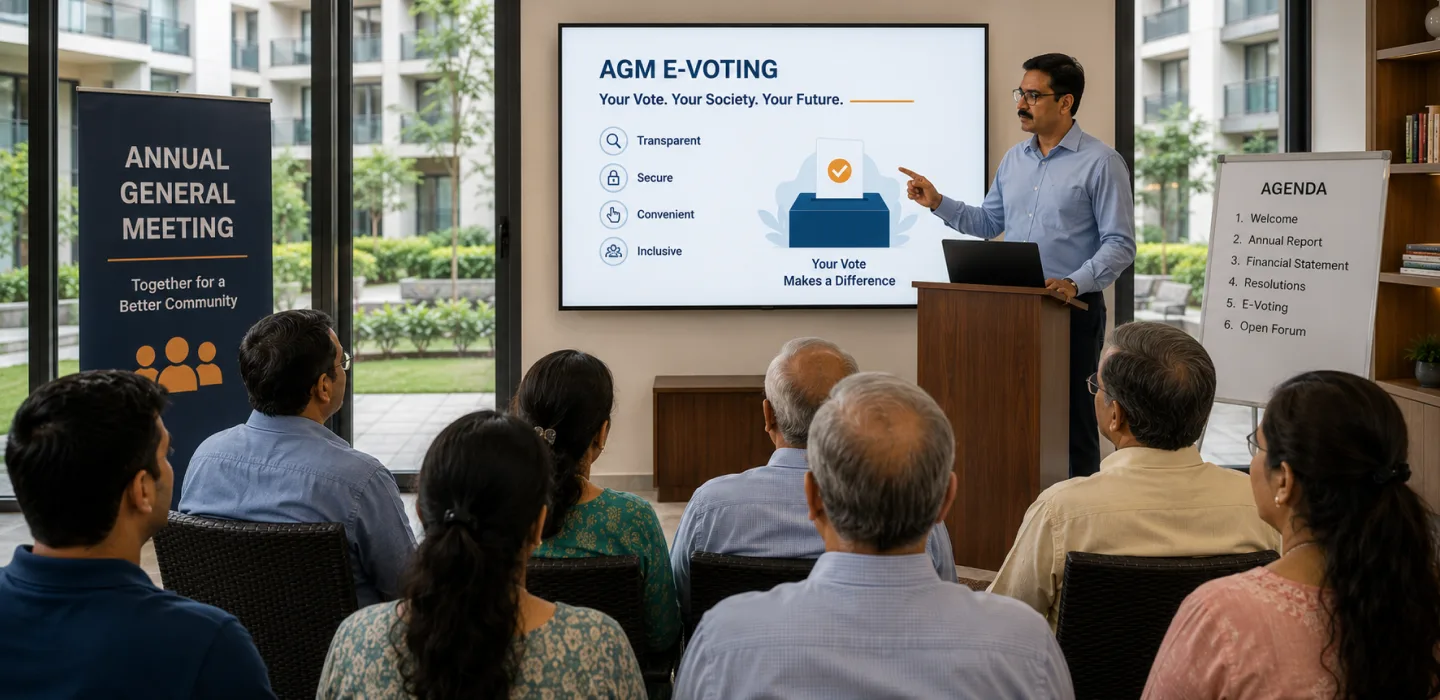
A key technological advancement is the use of digital voting systems. These systems eliminate the need for physical ballots, making the voting process quicker and more accurate. Digital voting also encourages higher participation rates, as members can cast their votes remotely and at their convenience. Furthermore, automated vote counting reduces the potential for human error and ensures the integrity of the election process.
Platforms like MyKutir provide specialized features tailored to the needs of housing societies. MyKutir's notice authoring assist, for example, enables committees to create and distribute AGM notices swiftly and efficiently. This feature ensures that all members receive accurate and timely information about the meeting agenda, thereby improving attendance and engagement. The RAG (Read, Acknowledge, and Go) search feature further enhances communication by allowing committee members to track who has read and acknowledged important documents, ensuring that critical information is not overlooked.
Additionally, technology can facilitate interactive participation during AGMs. Tools that allow members to submit questions, participate in polls, and engage in discussions remotely can lead to more dynamic and productive meetings. These capabilities support a more inclusive decision-making process, ensuring that all voices are heard and considered.
Beyond the meeting itself, technology enhances the overall governance of housing societies. Automated systems for managing agendas, recording minutes, and maintaining records streamline administrative tasks, freeing up committee members to focus on more strategic initiatives. By harnessing the power of technology, societies can not only improve the efficiency of their AGMs but also strengthen community governance as a whole.
How to Implement Digital Solutions for AGMs
Implementing digital solutions for society AGMs requires a structured approach to ensure a smooth transition from traditional methods. Here is a step-by-step guide on how societies can effectively integrate technology into their AGM processes.
1. Assess Technological Needs: Begin by evaluating your society's current AGM practices and identifying areas where technology can add value. Consider factors such as the size of your society, member demographics, and existing infrastructure. This assessment will help in choosing the right digital tools and platforms.
2. Choose the Right Platform: Select a platform that offers features aligned with your society's needs. For example, MyKutir provides tools for notice authoring, digital voting, and member communication, making it a comprehensive solution for digital AGMs. Ensure that the platform is user-friendly and supports both desktop and mobile access, catering to different member preferences.
3. Set Up Digital Voting: Implement a digital voting system to streamline the election process. Ensure that the system is secure and complies with legal requirements. Provide members with clear instructions on how to use the voting platform, and conduct a test run to address any technical issues before the AGM.
4. Utilize Notice Embedding: Take advantage of notice embedding features to improve communication. Embed AGM notices and agenda items within the society's digital platform, ensuring that they are easily accessible to all members. This approach reduces the reliance on physical notices and ensures timely dissemination of information.
5. Integrate AI-Assist Tools: Leverage AI-assist tools to automate administrative tasks such as minute-taking and record-keeping. These tools can capture and organize meeting discussions, reducing the burden on committee members and enhancing the accuracy of records.
6. Provide Training and Support: Conduct training sessions to familiarize members with the digital tools and ensure they are comfortable using them. Offer technical support for any issues that may arise, particularly for members who may be less tech-savvy.
7. Review and Iterate: After conducting the digital AGM, gather feedback from members to identify areas for improvement. Use this feedback to refine your digital processes and enhance future AGMs. Continuous iteration will ensure that your society keeps pace with technological advancements and member expectations.
By following these steps, housing societies can successfully integrate digital solutions into their AGM processes, leading to more efficient and effective meetings.
Case Study: Successful Digital Transformation of an AGM
Let us consider a hypothetical scenario of the Shree Krishna Residency, a medium-sized housing society, which successfully transformed its AGM through digital tools. The society had long struggled with low attendance and inefficient manual processes that hampered decision-making.
The Society Committee decided to implement MyKutir's digital platform to address these challenges. They began by assessing their needs and identifying the specific features that would benefit their AGM processes. With MyKutir, they adopted digital voting, notice authoring, and RAG search functionalities to enhance governance efficiency.
Prior to the AGM, the committee conducted training sessions to familiarize members with the new digital tools. This proactive approach ensured that members were comfortable navigating the platform and participating in the digital AGM. Key to their success was the use of MyKutir's notice authoring assist, which streamlined the distribution of AGM notices and agendas. Members received timely updates, and the RAG search feature allowed the committee to track who had acknowledged the critical documents.
On the day of the AGM, the society witnessed a significant increase in attendance. Digital voting enabled members to cast their votes remotely, resulting in higher participation and engagement. The process was seamless, with automated vote counting ensuring accuracy and transparency.
Throughout the meeting, members actively participated in discussions and polls using the platform's interactive features. The integration of AI-assist tools facilitated real-time minute-taking, reducing the committee's administrative burden and ensuring that all discussions were accurately recorded.
The transformation led to a more inclusive and dynamic AGM, where members felt empowered to contribute and voice their opinions. Post-AGM feedback was overwhelmingly positive, with members appreciating the convenience and accessibility of the digital format. The success of this initiative reinforced the committee's commitment to digital transformation, prompting them to explore additional ways to leverage technology for society governance.
This case study illustrates how a housing society can overcome traditional challenges and enhance its AGM processes through digital transformation. By embracing technology, societies can foster greater member engagement, improve transparency, and streamline operations for better governance outcomes.
Common Mistakes to Avoid in Digital AGMs
Transitioning to digital AGMs can offer numerous advantages, but societies often encounter pitfalls that can undermine their efforts. Avoiding these common mistakes is crucial to ensuring a successful digital transformation.
1. Inadequate Member Training: A common oversight is failing to provide adequate training and support to members. Without proper guidance, members may struggle with using digital platforms, leading to frustration and reduced participation. Societies should invest in comprehensive training sessions and user guides to ensure members are comfortable with the technology.
2. Neglecting Security Measures: Digital AGMs necessitate robust security protocols to protect sensitive information. Societies may overlook the importance of cybersecurity, leaving their systems vulnerable to breaches. Implementing strong encryption, two-factor authentication, and regular security audits are essential to safeguarding member data.
3. Ignoring Technical Infrastructure: Societies sometimes fail to assess their technical infrastructure before digitizing AGMs. Inadequate internet connectivity or outdated devices can hinder member access and participation. Societies should evaluate and upgrade their infrastructure to accommodate digital AGMs effectively.
4. Overlooking Member Engagement: While digital tools can enhance participation, they can also lead to disengagement if not used effectively. Societies must leverage features such as interactive Q&A sessions, polls, and discussion forums to keep members engaged and encourage active involvement.
5. Failing to Test Systems: Not conducting thorough testing of digital platforms prior to the AGM can result in technical glitches and disruptions. Societies should perform test runs to identify and address potential issues, ensuring a seamless experience for all participants.
6. Lack of Feedback Mechanisms: Without feedback mechanisms, societies may miss opportunities for improvement. Post-AGM surveys and feedback forms can provide valuable insights into member experiences and areas for enhancement.
7. Relying Solely on Digital Communication: While digital communication is vital, some members may prefer traditional methods. Societies should maintain a balance by using multiple communication channels to reach all members effectively.
By being aware of these common pitfalls and taking proactive steps to address them, housing societies can ensure a successful transition to digital AGMs and realize the full benefits of technology in their governance processes.
Comparison: Manual vs Digital AGMs
The transition from manual to digital AGMs presents a wide array of benefits for housing societies. To better understand these advantages, let's compare the two approaches across several key dimensions.
| Aspect | Manual AGMs | Digital AGMs |
|---|---|---|
| Efficiency | Time-consuming, manual processes for voting and minute-taking. | Streamlined with digital voting and automated record-keeping. |
| Participation | Limited by location and timing; lower attendance rates. | Remote access increases participation and inclusivity. |
| Transparency | Prone to errors and disputes over manual counting. | Accurate and transparent with automated processes. |
| Communication | Rely on physical notices; potential for misinformation. | Enhanced with digital notices and real-time updates. |
| Engagement | Limited interaction during meetings. | Interactive tools encourage active participation. |
| Cost | Expenses for printing, physical logistics, and venue. | Reduced costs with digital tools and online meetings. |
As illustrated in the table, digital AGMs offer tangible benefits in terms of efficiency, transparency, and participation. The ability to conduct meetings remotely and leverage interactive tools enhances member engagement and fosters a more inclusive decision-making process. Societies can also realize cost savings by reducing expenses associated with physical logistics and materials.
Moreover, the automated nature of digital processes minimizes human errors and ensures the integrity of the AGM proceedings. By transitioning to digital AGMs, societies can overcome the limitations of traditional methods and achieve improved governance outcomes.
Preparing Your Society for a Digital AGM
Preparing your housing society for a digital AGM requires careful planning and coordination. This guide will help you navigate the process and ensure a successful digital transformation.
1. Assess Technological Infrastructure: Begin by evaluating your society's existing technological infrastructure. Ensure that you have reliable internet connectivity and that both the committee and members have access to devices compatible with your chosen digital platform. Consider potential upgrades to accommodate digital AGMs effectively.
2. Select the Right Digital Platform: Choose a digital platform that offers features tailored to your society's needs. Platforms like MyKutir provide robust solutions with features such as digital voting, notice authoring, and AI-assist tools, which can enhance your AGM processes.
3. Establish Clear Communication Channels: Develop a comprehensive communication strategy to keep members informed about the transition to digital AGMs. Utilize multiple channels, including email, messaging apps, and printed notices, to reach all members and provide clear instructions on how to access and use the digital platform.
4. Provide Training and Support: Offer training sessions and user guides to help members navigate the digital platform. Address any concerns or questions they may have, and ensure that technical support is readily available during the AGM.
5. Set Up and Test Systems: Before the AGM, set up the digital systems you will use and conduct test runs to identify and resolve any technical issues. Testing ensures that the systems function smoothly and that participants have a positive experience during the AGM.
6. Develop a Contingency Plan: Prepare for potential technical difficulties by developing a contingency plan. This plan should outline alternative methods for conducting the AGM, such as using backup systems or rescheduling if necessary.
7. Encourage Member Participation: Actively encourage members to participate in the digital AGM by highlighting the benefits of the new format. Use interactive features like polls and Q&A sessions to engage members and foster a sense of involvement.
By following these steps, your society can effectively prepare for a digital AGM, maximizing the benefits of technology and enhancing overall governance outcomes.
FAQs on Digital Transformation of Society AGMs
As societies transition to digital AGMs, several questions and concerns often arise. Here are some frequently asked questions and comprehensive answers to guide you through the process.
What is the benefit of digital tools in society AGMs?
Digital tools offer numerous benefits for society AGMs, including increased efficiency, enhanced transparency, and improved member engagement. By automating processes such as voting and record-keeping, societies can reduce the time and effort required to conduct AGMs. Digital platforms also facilitate remote participation, allowing more members to attend and contribute, regardless of their location. Furthermore, interactive features enable real-time discussions and decision-making, resulting in more dynamic and inclusive meetings. Overall, digital tools help societies overcome the limitations of traditional methods, leading to better governance outcomes.
How can MyKutir assist in conducting AGMs?
MyKutir offers a comprehensive suite of tools designed to streamline AGM processes for housing societies. Its notice authoring assist feature allows committees to efficiently create and distribute AGM notices and agendas, ensuring timely communication with members. The digital voting system simplifies the election process, enabling remote participation and accurate vote counting. Additionally, the RAG search feature enhances communication by tracking member engagement with important documents. By leveraging MyKutir's AI-assist tools, societies can automate administrative tasks such as minute-taking and record-keeping, reducing the burden on committee members and improving overall efficiency.
What are the common challenges faced in digital AGMs?
Despite their advantages, digital AGMs can present several challenges. Technical issues, such as poor internet connectivity or incompatible devices, can hinder member participation and disrupt meetings. Societies may also encounter resistance from members who are less comfortable with technology. Ensuring robust security measures to protect sensitive information is another critical concern. Additionally, without effective engagement strategies, digital AGMs may struggle to maintain member interest and participation. To address these challenges, societies should invest in training, technical support, and comprehensive security protocols, as well as develop strategies to actively engage members during digital AGMs.
How can societies ensure member participation in digital AGMs?
To ensure member participation in digital AGMs, societies should first focus on clear and effective communication. Inform members about the transition to digital AGMs well in advance and provide detailed instructions on how to access and use the digital platform. Offering training sessions and technical support can help members feel more comfortable and confident with the technology. Societies can also employ interactive features such as live Q&A sessions, polls, and discussion forums to engage members and encourage active involvement. Highlighting the convenience and benefits of digital AGMs, such as the ability to participate remotely, can further motivate members to attend and contribute.
What security measures should be taken for digital AGMs?
Security is a critical consideration for digital AGMs to protect member data and maintain the integrity of the meeting process. Societies should implement strong encryption protocols to safeguard sensitive information. Two-factor authentication can be used to ensure secure access to the digital platform. Regular security audits and updates are essential to address potential vulnerabilities and prevent unauthorized access. Additionally, societies should educate members about best practices for online security, such as using secure passwords and avoiding the sharing of login credentials. By prioritizing security measures, societies can build trust and confidence among members in their digital AGM processes.
What are the technology requirements for conducting a digital AGM?
Conducting a digital AGM requires certain technological infrastructure to ensure a seamless experience for both the committee and members. Reliable internet connectivity is essential to facilitate remote participation and prevent disruptions. Societies should ensure that both committee members and participants have access to compatible devices, such as computers, tablets, or smartphones, that can run the chosen digital platform. The platform itself should be user-friendly and support various operating systems to accommodate different member preferences. Societies may also need to invest in software licenses or subscriptions for digital tools and platforms, such as MyKutir, to access the necessary features and functionalities for their AGM processes.
Conclusion: The Future of Society AGMs
The digital transformation of society AGMs marks a significant shift in how housing societies conduct their governance processes. By leveraging technology, societies can overcome the limitations of traditional methods and unlock new potential for efficiency, transparency, and member engagement. Digital AGMs offer numerous benefits, including streamlined processes, increased participation, and enhanced communication, ultimately leading to better governance outcomes.
As technology continues to evolve, the future of society AGMs holds exciting possibilities. Emerging trends such as AI-driven analytics and virtual reality could further revolutionize AGM processes, enabling more immersive and data-driven decision-making. Additionally, advancements in blockchain technology may offer new ways to enhance the security and transparency of voting and record-keeping.
While the transition to digital AGMs requires careful planning and consideration, the long-term benefits make it a worthwhile investment for societies committed to improving their governance practices. By embracing digital transformation, societies can foster a more inclusive and dynamic community, where members are empowered to actively participate and contribute to the well-being of their community.
In conclusion, the digital transformation of society AGMs represents a positive step toward more effective and efficient governance. As societies continue to adopt and adapt to new technologies, they can look forward to a future where AGMs are not only streamlined and accessible but also serve as a powerful tool for community building and empowerment.
- Society AGMs are crucial for housing society governance, but traditional methods face challenges.
- Technology, such as MyKutir, can enhance AGM efficiency, transparency, and member engagement.
- Implementing digital solutions requires careful planning, training, and a focus on security.
- Digital AGMs offer significant advantages over manual processes, including cost savings and higher participation.
- Societies should prepare for digital AGMs by assessing infrastructure, selecting platforms, and providing member support.
- Common challenges include technical issues and security concerns, but they can be mitigated with proactive measures.
- The future of AGMs will likely involve advanced technologies like AI and blockchain, further enhancing governance.