Effective Visitor Management in Housing Societies: An Expert Opinion
By MyKutir Editorial Team — 2026-09-11
Discover expert insights into optimizing visitor management systems in housing societies, ensuring both security and convenience.
Visitor management in housing societies is a critical aspect that ensures the safety and convenience of residents. As societies expand and welcome more visitors, ensuring efficient visitor management becomes increasingly essential. Robust visitor management systems can provide oversight on who enters the premises, thus enhancing security and creating a welcoming environment for legitimate visitors. Moreover, an effective system saves time and reduces the workload for security personnel, streamlining community administration processes significantly.
The Importance of Visitor Management
Visitor management is crucial for maintaining the security of a housing society. With the rise of incidents related to unauthorized access, it has become imperative for societies to adopt stringent measures to monitor visitor entry and exit. A well-implemented visitor management system acts as the first line of defense against potential security breaches by verifying the identity of outsiders before granting access.
Beyond security, visitor management also contributes to the convenience of residents. For instance, when residents are expecting guests, a system that allows pre-registration can expedite the entry process. This convenience extends to service personnel such as delivery drivers and domestic help, whose visits need to be monitored yet facilitated efficiently to avoid inconvenience.
Furthermore, effective visitor management supports the administrative functions of a society. By automating visitor logs and eliminating cumbersome manual entry processes, digital solutions provide real-time data that can be accessed for analysis and audit purposes. These systems help in ensuring compliance with any legal or regulatory requirements, even though specifics like GST thresholds or the Societies Registration Act need to be verified with a local registrar or CA.
In essence, a comprehensive visitor management approach not only safeguards the community but also enhances the quality of life for all residents by ensuring a seamless operation of daily activities.
Traditional vs. Digital Visitor Management
Traditionally, housing societies have relied on manual registers and logbooks to manage visitors. While this method is straightforward, it is often prone to errors, inefficiencies, and security vulnerabilities. Handwritten logs can be difficult to read, easy to falsify, and challenging to manage over time. In contrast, digital visitor management systems provide a more secure and efficient solution.
Digital systems like those offered by MyKutir simplify the visitor management process by automating entry logs and enabling real-time tracking. These systems provide accurate records that can be easily accessed and verified, reducing the likelihood of errors associated with manual entries. Moreover, digital platforms offer features such as visitor pre-registration, which allows residents to notify security in advance about expected guests, speeding up the entry process.
Additionally, digital systems enhance security by capturing detailed visitor data, including photographs and identification information, at the point of entry. This information is securely stored and can be quickly retrieved in case of any security incidents. By contrast, logbooks often lack the capability to capture such detailed information reliably.
The transition from traditional to digital methods offers numerous advantages, especially in terms of operational efficiency and data accuracy. While the cost of implementing digital systems may initially be higher than maintaining a ledger, the long-term benefits of enhanced security, convenience, and data management far outweigh these costs.
| Aspect | Traditional Method | Digital Method |
|---|---|---|
| Data Accuracy | Prone to errors | Highly accurate |
| Security | Limited | Robust |
| Efficiency | Manual and slow | Automated and fast |
| Record Keeping | Manual logs | Digital logs |
| Cost | Low initial cost | Higher initial investment |
Key Features of Modern Visitor Management Systems
A modern visitor management system such as MyKutir is equipped with a host of features designed to enhance both security and efficiency. At the heart of these systems is visitor pre-registration, which allows residents to schedule and authorize guest visits in advance. This feature streamlines the check-in process, reducing wait times at security gates and improving the guest experience.
Real-time notifications are another critical feature, providing residents with instant updates when their guests arrive. This ensures that residents are well-prepared to receive their guests and can coordinate with security to facilitate quick entry. Such systems may also provide notifications to security personnel, enabling them to handle visitor entry more efficiently.
Automatic entry logs are generated to keep a precise record of all visitor activities. These logs can be accessed anytime for security audits or administrative reviews. Such automatic documentation minimizes human error and provides an accurate account of who is entering and exiting the premises.
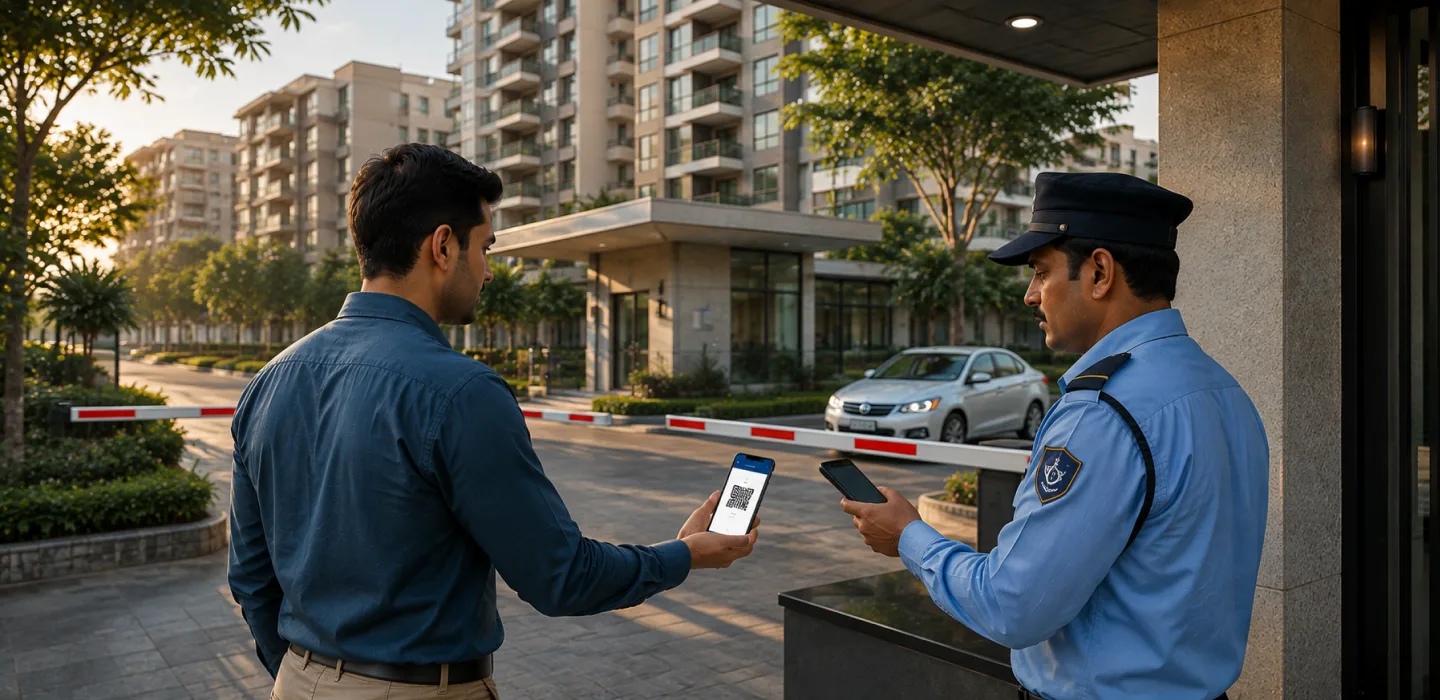
In addition to these features, integration with resident apps allows seamless communication between residents and security staff. Residents can use their apps to manage visitor authorizations or receive updates, creating a cohesive and user-friendly experience. These integrations also facilitate the use of unique visitor passes, which can be scanned by security for instant verification of identity and authorization status.
Overall, these features not only enhance the security of a housing society but also promote a culture of transparency and accountability, which is vital for fostering trust among residents.
How MyKutir Enhances Visitor Management
MyKutir stands out in the digital visitor management domain by delivering a comprehensive suite of features tailored to meet the unique needs of housing societies. One of the standout features of MyKutir is its gate entry flows, which streamline the visitor check-in process. By automating visitor verification and entry logging, these flows ensure that visitors are authenticated quickly and accurately, reducing wait times and enhancing overall security.
Visitor passes issued through MyKutir further bolster security by providing a tangible medium of visitor verification. These passes, which can be digital or printed, contain key visitor information and can be verified by security personnel using their digital systems. The integration of these passes with the overall visitor management system ensures that all visitor data remains centralized and easily accessible.
Another significant advantage of MyKutir is its seamless integration with resident apps. This enables residents to receive real-time notifications about visitor arrivals, manage visitor permissions, and communicate directly with society security from their smartphones. Such integration not only enhances user convenience but also fosters a collaborative security environment where residents play an active role in managing visitor access.
Through its intelligent reporting and analytical tools, MyKutir provides housing societies with valuable insights into visitor patterns and security trends. These insights enable societies to make informed decisions about resource allocation and security measures, ensuring that they continually adapt to changing security needs.
By offering these robust features within a user-friendly platform, MyKutir empowers housing societies to elevate their visitor management to new heights, providing both security and convenience to residents and visitors alike.
Case Study: A Successful Implementation
Consider a hypothetical situation where a mid-sized housing society in Mumbai made the shift from a traditional visitor management system to MyKutir’s digital platform. Initially, the society faced issues with inefficiencies and frequent errors in manual logbook entries, leading to dissatisfaction among residents and security concerns.
Upon implementing MyKutir, the society observed significant improvements in security and operational efficiency. The gate entry flows reduced the average visitor check-in time from five minutes to less than two minutes, as automated systems efficiently handled verifications and logging.
Additionally, the society utilized MyKutir’s visitor pass feature to enhance security. All entries were verified against digital passes, which drastically reduced unauthorized access. Simultaneously, residents enjoyed the convenience of pre-registering guests, which led to smoother operations at the security gate.
Real-time notifications provided residents with peace of mind, as they were instantly informed about their guests’ arrivals. This proactive communication enabled them to coordinate smoothly with security personnel for quick visitor access.
The society's management found the analytics tools particularly beneficial in monitoring visitor trends and optimizing security manpower. By identifying peak traffic times, they could adjust staffing to ensure efficient operations without compromising on security.
This transition not only improved the day-to-day management of visitors but also enhanced the community’s perception of safety and efficiency, showcasing the tangible benefits of adopting a digital visitor management solution like MyKutir.
Common Pitfalls in Visitor Management and How to Avoid Them
While implementing a digital visitor management system offers numerous benefits, there are common pitfalls that societies must be aware of to avoid potential issues. One such pitfall is inadequate training for security staff and residents. Without proper training, even the most advanced systems can become ineffective. It’s crucial for societies to invest time in comprehensive training sessions that cover all aspects of the system’s functionality.
Poor data management is another issue that can undermine the effectiveness of a visitor management system. Ensuring that data is accurately entered, securely stored, and easily retrievable is essential. Societies should establish protocols for data handling and conduct regular audits to ensure compliance with privacy regulations.
Over-reliance on digital systems without adequate backup can also pose risks. Societies should have contingency plans in place to handle system outages or technical failures. This might include maintaining a minimal manual log to ensure that security operations continue smoothly in case of a digital system failure.
Another pitfall is failing to consider user experience in the system’s design. An overly complicated system can frustrate both residents and visitors, leading to resistance in adoption. Ensuring a user-friendly interface that is intuitive and easy to navigate can greatly enhance user satisfaction and engagement.
By recognizing these potential pitfalls and proactively addressing them, societies can ensure a successful implementation of their visitor management systems, maximizing their benefits while minimizing disruptions.
Best Practices for Security and Convenience
When it comes to visitor management, balancing security with convenience is key. One best practice is to implement multi-tiered authentication processes. By requiring visitors to provide identification and allowing residents to pre-approve visitors, societies can significantly enhance security without sacrificing convenience.
Data privacy must also be a priority. Housing societies should ensure that their visitor management systems comply with data protection laws to safeguard visitor and resident information. Implementing encrypted data storage and maintaining strict access controls are essential measures to protect sensitive information.
Designing intuitive user interfaces can greatly enhance the user experience. Systems should be straightforward for both residents and visitors to navigate, reducing the likelihood of errors and ensuring that the system is widely adopted. Providing self-service options for residents to manage their visitor permissions can further enhance convenience and engagement.
Regular system updates and maintenance checks are crucial to ensure the system’s reliability and security. Keeping software up-to-date with the latest features and security patches can prevent vulnerabilities and improve overall system performance.
By adhering to these best practices, housing societies can ensure that their visitor management systems are both effective and user-friendly, creating a secure and welcoming environment for all residents and visitors.
Step-by-Step Guide to Implementing a Digital Solution
Implementing a digital visitor management system involves several key steps that need to be carefully planned and executed. First, societies should conduct a needs assessment to determine the specific features and capabilities they require. This assessment should involve input from management, residents, and security staff to ensure that all perspectives are considered.
Once the requirements are established, the next step is to select a suitable platform. Societies should carefully evaluate different solutions, considering factors such as ease of use, integration capabilities, and cost. It’s also important to consider the level of customer support offered by the provider during and after implementation.
After selecting a platform, the society should develop a comprehensive implementation plan. This plan should outline the timeline for deployment, including key milestones and responsibilities. Training sessions should be scheduled for all users, ensuring that they are familiar with the system’s features and functionalities.
The system should be piloted with a small group of users before full-scale deployment. This allows for the identification and resolution of any issues that may arise, ensuring a smoother transition. Feedback from the pilot phase should be used to refine the system and address any user concerns.
Finally, societies should continuously monitor the system’s performance and make adjustments as needed. Regular evaluations can help identify areas for improvement and ensure that the system continues to meet the evolving needs of the community.
Frequently Asked Questions
What are the benefits of digital visitor management over traditional methods? Digital visitor management systems offer several advantages over traditional methods such as logbooks. They provide increased accuracy, automated entry logs, and enhanced security features like real-time notifications and visitor pre-registration. These systems reduce the likelihood of manual errors and provide valuable data insights for better decision-making. Residents and security personnel find these systems more convenient and efficient, as they streamline visitor entry processes and improve overall community safety.
How does a system like MyKutir enhance visitor management? MyKutir enhances visitor management by offering comprehensive features such as gate entry flows and visitor passes, which improve security and efficiency. The system integrates seamlessly with resident apps, allowing for real-time notifications and easy management of visitor permissions. These features not only streamline the visitor check-in process but also provide accurate record-keeping and valuable insights into visitor patterns, which can help societies optimize their security resources.
What security measures are in place for digital visitor management systems? Digital visitor management systems employ various security measures to protect sensitive data and ensure secure operations. These include encryption of data, strict access controls, and secure data storage. Regular security audits and software updates are conducted to address vulnerabilities and enhance system security. Additionally, multi-tiered authentication processes ensure that all visitors are properly vetted before entering the premises, further enhancing security.
How can housing societies ensure a smooth transition to a digital system? To ensure a smooth transition, housing societies should conduct a thorough needs assessment and select a platform that meets their requirements. Comprehensive training for security staff and residents is crucial for effective system use. Piloting the system with a small group before full implementation can help identify and resolve any issues. Additionally, seeking feedback from users and making necessary adjustments can improve the system's effectiveness and acceptance by the community.
What are the costs involved in implementing a digital visitor management system? The costs of implementing a digital visitor management system can vary based on factors such as the size of the society, the features required, and the provider chosen. While the initial investment may be higher than traditional methods, the long-term benefits of increased security, efficiency, and data accuracy often justify the cost. Societies should obtain detailed quotes from providers and consider the potential return on investment when making their decision.
How does visitor pre-registration work in a digital system? Visitor pre-registration allows residents to authorize and schedule visitor entries in advance. Residents can use an app or online platform to enter visitor details, which are then communicated to security personnel. This process expedites the check-in process upon the visitor's arrival, as security can quickly verify pre-authorized guests. Pre-registration enhances convenience for both residents and visitors, reducing wait times and improving overall efficiency.
What privacy concerns should be considered with digital visitor management? Privacy concerns in digital visitor management systems revolve around the collection, storage, and use of personal data. Societies must ensure compliance with data protection laws and implement measures such as data encryption and access controls to safeguard information. Clear privacy policies and transparent communication with residents about data practices are essential to maintaining trust. Periodic audits and evaluations can help ensure that privacy standards are upheld.
Key Takeaways
- Visitor management is essential for the security and convenience of housing societies.
- Digital systems offer significant advantages over traditional methods in terms of accuracy and efficiency.
- Modern systems feature pre-registration, real-time notifications, and automatic logs for enhanced management.
- MyKutir provides robust visitor management through innovative features like gate entry flows and resident app integration.
- A successful digital transition requires careful planning, training, and ongoing evaluation.
- Societies should be mindful of privacy concerns and adhere to best practices for data security.