Effective Maintenance Billing in Housing Societies: An Ultimate Guide
By MyKutir Editorial Team — 2026-09-11
Streamline maintenance billing in housing societies with AI-driven solutions and effective practices. Learn more in our comprehensive guide.
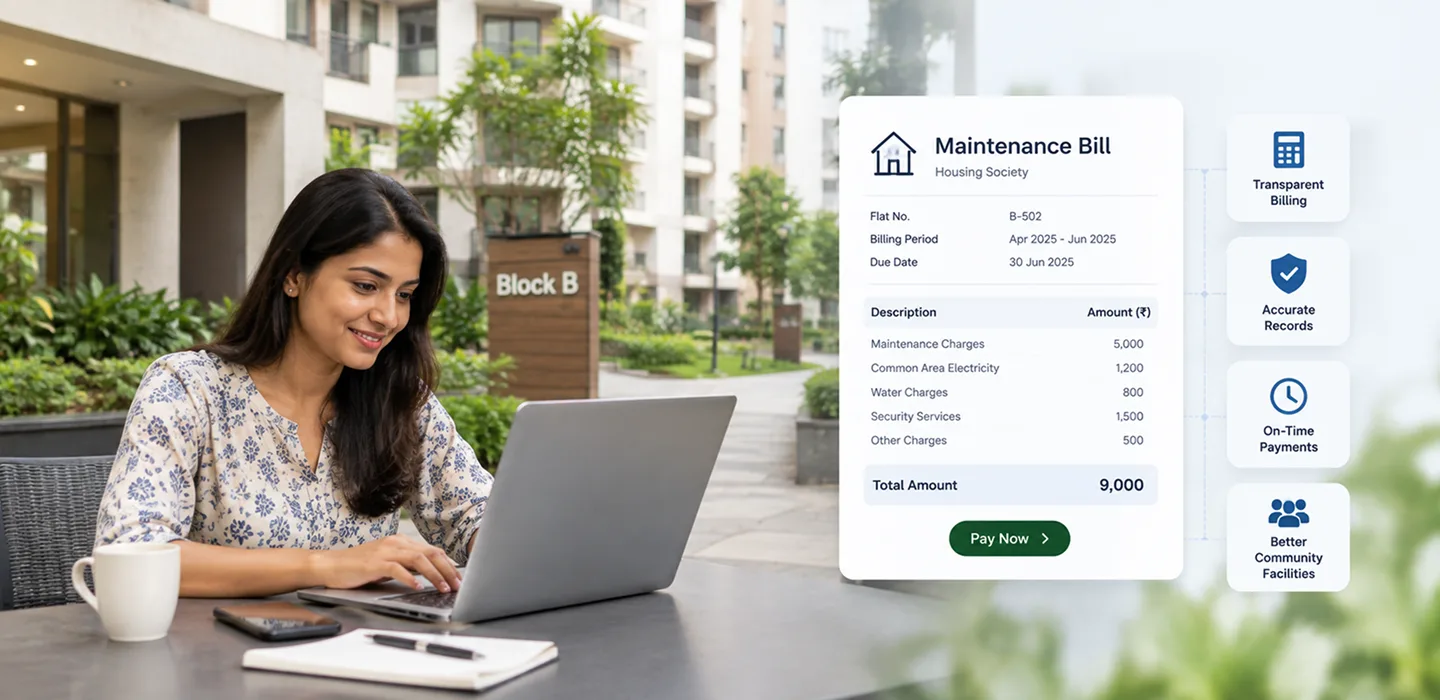
In the complex ecosystem of Indian housing societies, effective maintenance billing is a cornerstone of smooth operations. Maintenance billing refers to the systematic approach of collecting fees from society members to cover shared expenses like security, maintenance of common areas, utilities, and other essential services. These charges ensure that the society functions efficiently, providing a high standard of living for all its members.
However, managing maintenance billing is no simple task. It involves tracking numerous transactions, dealing with various payment methods, and ensuring compliance with ever-changing regulatory frameworks. Mismanagement can lead to financial discrepancies, disputes among residents, and even potential legal issues. Therefore, understanding the intricacies of maintenance billing is crucial for society administrators.
Understanding Maintenance Billing in Housing Societies
Maintenance billing is the financial heartbeat of a housing society, ensuring that the collective needs of the community are met. In essence, it is the process by which societies levy charges on members for the upkeep of common facilities and services. These charges can vary widely depending on the amenities offered, the maintenance level chosen by the society, and the geographical location of the society.
One of the primary reasons maintenance billing is so critical is that it directly affects the quality of life of the residents. With adequate funds, societies can ensure regular upkeep of common areas, timely repair of infrastructure, and provision of amenities such as swimming pools, gyms, and parks. Without a consistent billing process, these services can quickly degrade, leading to dissatisfaction among residents.
Managing these billings, however, presents several challenges. One common issue is ensuring timely collection of dues. Residents may delay payments due to forgetfulness or disputes over billing accuracy. Another challenge is maintaining transparency in how funds are utilized, which can lead to mistrust if not managed well. Additionally, regulatory compliance adds another layer of complexity, as societies must adhere to various state-level cooperative housing laws and tax regulations.
These challenges underscore the necessity for a robust system capable of handling the nuances of maintenance billing. Traditional manual methods, such as maintaining handwritten ledgers or using generic accounting software, often fall short due to the high risk of human error and inefficiency. This has led many societies to explore digital solutions offering more automation and precision.
How MyKutir's AI-Driven Platform Transforms Maintenance Billing
MyKutir revolutionizes the way housing societies handle maintenance billing by leveraging cutting-edge AI technology. This AI-driven platform introduces a level of automation and accuracy that significantly reduces the administrative burden on society managers and enhances transparency for residents.
One of the standout features of MyKutir is its automated invoice generation system. The platform automatically compiles and generates invoices based on preset billing cycles and predefined parameters. This reduces the risk of errors associated with manual data entry and ensures that residents receive accurate bills on time. Moreover, the system can automatically adjust invoices based on changes to maintenance fees or additional charges, maintaining consistency and transparency.
MyKutir also integrates sophisticated payment reminder functionalities. Through its AI capabilities, the platform can send timely reminders to residents via multiple channels, including email and SMS. This not only aids in reducing late payments but also improves cash flow for the society. Payment reminders are customized according to each resident's payment history, making them more effective.
A key benefit of MyKutir's AI-driven approach is error reduction. By automating complex calculations and data entries, the platform minimizes human errors that commonly occur in manual maintenance billing systems. This precision helps in building trust among residents, as they can be assured that the billing process is fair and accurate.
Furthermore, the platform's dashboard provides real-time insights into collected and pending payments, enabling society managers to make informed decisions quickly. MyKutir also seamlessly integrates with popular payment gateways such as Razorpay, allowing residents to choose from various payment methods and thereby improving the convenience and efficiency of the payment process.
Overall, MyKutir's AI-driven platform not only streamlines maintenance billing but also transforms it into a more transparent, efficient, and resident-friendly process. The use of technology reduces both the effort and time required to manage billing, allowing society managers to focus on enhancing the quality of life within the community.
Step-by-Step Guide to Setting Up Maintenance Billing with MyKutir
Implementing MyKutir's maintenance billing system may initially seem daunting, but following a structured approach can simplify the setup process. Here’s a step-by-step guide designed to assist society managers in efficiently configuring the system.
Step 1: Sign-Up and Initial Setup
Begin by creating an account on the MyKutir platform. This involves filling out basic society information, registering key management personnel, and setting up user permissions. The platform guides you through each step, ensuring a smooth onboarding process.
Step 2: Configure Society Details
Once the initial setup is complete, input detailed information about your society. This includes details about the number of units, amenities available, and any special charges applicable to certain facilities. This data is crucial for generating accurate invoices tailored to your society’s specific structure.
Step 3: Define Billing Parameters
Next, configure your billing cycles. Societies typically opt for monthly, quarterly, or annual billing, depending on their cash flow needs. Set these parameters along with grace periods for late payments, interest rates on overdue amounts, and any other relevant charges.
Step 4: Integrate Payment Gateways
MyKutir facilitates integration with popular payment gateways such as Razorpay. This allows members to pay their bills through various methods including debit/credit cards, UPI, and net banking. Simply follow the platform’s instructions to link your society’s bank account with the preferred payment gateway.
Step 5: Generate and Customize Invoices
Utilize the platform’s invoice generation features to create sample invoices. Customize these invoices to include society-specific details, such as logos and contact information, ensuring they reflect your society’s identity. MyKutir allows you to preview and adjust invoices before finalizing them for distribution.
Step 6: Set Up Automated Reminders
Configure the platform to send automatic payment reminders to residents. Choose from various reminder schedules to align with your society’s payment policies. Automated reminders can significantly reduce late payments and improve collection rates.
Step 7: Launch and Monitor
Once everything is configured, launch the billing system. Regularly monitor the dashboard for real-time insights into payment statuses and outstanding dues. Adjust your strategies as needed based on the data provided by the platform.
By carefully following these steps, housing society managers can ensure that their maintenance billing process is efficient, streamlined, and resident-friendly. MyKutir’s platform, with its user-centric design and robust functionalities, makes this transition seamless.
Common Mistakes in Maintenance Billing and How to Avoid Them
Maintenance billing is a crucial component of housing society management, but it is also one fraught with potential pitfalls. Recognizing common mistakes and knowing how to leverage tools like MyKutir to avoid them can save societies from unnecessary conflicts and financial discrepancies.
1. Inaccurate Invoice Generation
A frequent error in maintenance billing is the generation of incorrect invoices due to manual data entry mistakes. Such inaccuracies can lead to disputes and delays in payments. MyKutir addresses this by automating the invoice generation process, ensuring that all calculations are precise and consistent with the society's predefined parameters.
2. Lack of Communication
Another common oversight is inadequate communication with residents regarding billing policies and changes. This can foster dissatisfaction and mistrust. By using MyKutir’s communication tools, societies can regularly update members through emails or notifications, ensuring that everyone is informed about any changes in billing structures or charges.
3. Delayed Payment Follow-ups
Failure to promptly follow up on overdue payments can lead to cash flow issues. MyKutir’s automated reminder system helps societies keep track of pending dues by notifying residents at regular intervals, thus minimizing delays and maintaining steady cash flow.
4. Non-Compliance with Regulatory Requirements
Housing societies sometimes overlook critical regulatory requirements, risking penalties or legal issues. While MyKutir cannot provide legal advice, its comprehensive reporting features can assist societies in maintaining records required for compliance with local laws and audits.
5. Overcomplicating the Billing Process
Overly complex billing systems can confuse both the management and residents. MyKutir’s intuitive platform simplifies the process by offering clear, user-friendly interfaces and customizable templates that streamline all aspects of billing.
By understanding these common mistakes and utilizing MyKutir’s advanced features, societies can significantly enhance their maintenance billing processes, ensuring a smooth and effective operation.
Digital vs. Manual Billing: A Comparison
The shift from manual to digital billing systems represents a significant evolution in housing society management. Each method has its own set of advantages and drawbacks, which can influence a society's decision based on its unique needs and resources.
Manual Billing
Historically, many societies have relied on manual billing methods, involving physical ledgers and hand-written invoices. While this approach may work for smaller societies with limited transactions, it is often labor-intensive and prone to errors. Manual systems also lack the capability to automatically track payments or send reminders, which can lead to inefficiencies and delayed collections.
Digital Billing
In contrast, digital billing platforms like MyKutir offer a streamlined, efficient approach to managing society finances. These systems automate critical tasks such as invoice generation, payment tracking, and reminder notifications, greatly reducing the risk of human error.
The table below highlights key differences between manual and digital billing systems:
| Criteria | Manual Billing | Digital Billing (e.g., MyKutir) |
|---|---|---|
| Accuracy | Prone to human errors | Automated and precise |
| Efficiency | Time-consuming | Time-saving automation |
| Payment Tracking | Manual and cumbersome | Instant and real-time |
| Communication | Limited and delayed | Instant notifications |
While manual billing may offer a sense of familiarity, the benefits of digital systems like MyKutir are hard to ignore. They provide enhanced accuracy, efficiency, and transparency, which are crucial for maintaining harmony and trust within the society.
Case Study: Successful Implementation of Maintenance Billing with MyKutir
To illustrate the impact of implementing a digital maintenance billing system, consider the case of Green Meadows Society, a mid-sized housing community in Pune. Prior to adopting MyKutir, Green Meadows faced several challenges with their manual billing process.
Before Implementation
Green Meadows relied on a manual system for managing maintenance bills, which involved hand-written ledgers and physical invoices. This method posed multiple issues: invoices were often delivered late, calculations were prone to errors, and residents frequently complained about inconsistencies in billing amounts. Moreover, the management team found it difficult to track payments and follow up on overdue accounts.
The Transition
The society decided to transition to MyKutir’s AI-driven platform to address these issues. The setup process was straightforward, involving the configuration of society details, billing cycles, and integration with payment gateways like Razorpay. Within a month, Green Meadows had fully transitioned to digital billing, supported by the platform’s comprehensive training resources and customer support.
After Implementation
The transformation was remarkable. With MyKutir, Green Meadows automated their invoice generation and payment tracking processes, which significantly reduced errors and administrative workload. Residents received timely invoices and automated payment reminders, resulting in improved cash flow and fewer delayed payments. The management team could easily access real-time insights into payment statuses, enhancing their decision-making capabilities.
Outcomes
The implementation of MyKutir resulted in a 30% reduction in overdue payments within the first quarter. Resident satisfaction improved as the billing process became more transparent and reliable. Moreover, the management team was able to redirect their focus from administrative tasks to community development projects.
This case study of Green Meadows Society highlights how adopting MyKutir can successfully streamline maintenance billing, leading to enhanced efficiency and resident satisfaction.
Best Practices for Maintenance Billing in Housing Societies
Effective maintenance billing is pivotal to the smooth functioning of a housing society. Implementing best practices can help societies enhance their billing process, ensuring timely collection of dues and maintaining resident satisfaction.
Timely Invoicing
One of the most crucial aspects of maintenance billing is ensuring that invoices are generated and distributed on time. Late invoices can disrupt cash flow and lead to delayed payments. MyKutir’s automated invoice generation ensures that residents receive bills promptly according to the established billing cycle.
Regular Account Reconciliation
It’s essential for societies to regularly reconcile their accounts to ensure that all payments are accurately recorded and any discrepancies are promptly addressed. MyKutir offers real-time payment tracking and reporting, making it easier for societies to maintain accurate financial records.
Clear Communication
Societies should maintain clear and open communication with residents regarding billing policies, changes in fees, and payment deadlines. Utilizing MyKutir’s integrated communication tools, societies can send regular updates and reminders, fostering transparency and trust.
Building Resident Trust
Transparency in financial matters is key to building trust among residents. Societies should provide clear breakdowns of how maintenance funds are utilized. MyKutir’s detailed reporting features can help managers share this information with residents, reinforcing transparency.
Utilizing Technology
Leveraging technology is vital for efficient maintenance billing. Digital platforms like MyKutir automate routine tasks, offering a user-friendly interface for both society managers and residents. This technology reduces errors, saves time, and enhances the overall billing process.
By adopting these best practices, housing societies can improve their maintenance billing processes, ensuring smooth operations, financial stability, and resident satisfaction.
FAQs About Maintenance Billing in Housing Societies
What is maintenance billing in housing societies?
Maintenance billing in housing societies refers to the process of charging society members fees to cover shared expenses, such as the upkeep of common areas, security, utilities, and other collective amenities. These fees are critical to ensuring the seamless operation and maintenance of society infrastructure, directly impacting the quality of life of all residents.
How does MyKutir simplify maintenance billing?
MyKutir simplifies maintenance billing by offering an automated, AI-driven platform that handles the billing process end-to-end. It automates invoice generation, incorporates customizable templates, sends automated payment reminders, and integrates with popular payment gateways. These features collectively reduce the administrative burden on society managers, minimize errors, and enhance transparency.
What are the common mistakes in maintenance billing?
Some common mistakes in maintenance billing include generating inaccurate invoices due to manual errors, poor communication with residents regarding billing policies, delayed follow-ups on overdue payments, and overlooking regulatory compliance. Leveraging digital platforms like MyKutir can help societies avoid these pitfalls by automating processes and ensuring transparency and accuracy.
How can societies transition from manual to digital billing?
Transitioning from manual to digital billing involves selecting a robust digital platform like MyKutir, setting up the system by inputting society data, configuring billing parameters, and integrating with payment gateways. Training sessions for management personnel and clear communication with residents about the new system can facilitate a smooth transition.
What are the best practices for managing maintenance billing?
Best practices for managing maintenance billing include ensuring timely invoicing, regular account reconciliation, maintaining clear communication with residents, building trust through financial transparency, and leveraging technology to automate and streamline billing processes. Implementing these practices can enhance efficiency and improve resident satisfaction in housing societies.
Future Trends in Maintenance Billing for Housing Societies
As technology continues to evolve, maintenance billing in housing societies is poised for transformation. Several trends are shaping the future of this critical aspect of society management, driven by advancements in artificial intelligence and digital technologies.
AI and Machine Learning
AI and machine learning are at the forefront of transforming maintenance billing. These technologies enable predictive analytics, allowing societies to forecast future maintenance needs and budget accordingly. AI-driven platforms like MyKutir can automate complex billing tasks, offer predictive insights, and enhance decision-making through data-driven strategies.
Blockchain Technology
Blockchain offers promise in enhancing the security and transparency of maintenance billing. By recording transactions on a decentralized ledger, societies can ensure tamper-proof records of all financial activities. This transparency can increase trust among residents, as they have verifiable access to the society's financial activities.
Mobile Payment Solutions
With the growing popularity of mobile payment solutions, housing societies are increasingly adopting platforms that support a wide range of payment methods, including UPI, digital wallets, and mobile banking. This trend improves convenience for residents and enhances collection efficiency for societies.
Integration with IoT
The integration of Internet of Things (IoT) devices can revolutionize maintenance billing by providing real-time data on resource usage, such as water and electricity consumption. This data can be used to create more accurate billing models and encourage sustainable usage practices among residents.
These trends indicate a future where maintenance billing is not only streamlined but also significantly enhanced by technology, leading to more efficient, transparent, and resident-friendly society management processes.
Key Takeaways
- Maintenance billing is essential for the proper functioning of housing societies, ensuring funding for shared amenities and services.
- Digital platforms like MyKutir offer significant advantages over manual methods, automating processes and reducing errors.
- Common billing mistakes can be avoided with proper use of technology and adherence to best practices.
- The transition from manual to digital billing involves careful planning and communication with residents.
- Future trends such as AI, blockchain, and IoT will continue to enhance maintenance billing processes, making them more efficient and transparent.