Digital Transformation in Visitor Management: A Comprehensive Guide
By MyKutir Editorial Team — 2026-09-16
Uncover how digital tools like MyKutir revolutionize visitor management in housing societies, enhancing security and efficiency.
Visitor management is a critical aspect of housing society administration. It involves monitoring and managing the entry of visitors to ensure the security and smooth operation of the community. Traditionally, this has been achieved through manual methods such as sign-in sheets and intercom systems, where guards are primarily responsible for recording visitor details. These conventional methods, while functional to a point, come with significant limitations. They are often time-consuming, prone to human error, and provide limited visibility into visitor data for residents and management alike.
In the manual system, the process is largely reliant on the presence and attentiveness of the security staff. This dependency not only creates potential security vulnerabilities if staff are not vigilant but also often results in delays and inefficiencies. For instance, during peak hours, such as evenings when residents are returning from work, the queue at the gate can become unmanageable. Furthermore, these traditional systems offer little in the way of visitor data analytics, making it difficult for societies to monitor patterns or respond to incidents swiftly and effectively.
Moreover, manual logs are challenging to maintain and retrieve, especially during urgent situations where quick access to historical data is necessary. They also lack the ability to alert residents in real-time when their guests arrive, causing unnecessary waiting and potential inconvenience for both guests and hosts. In today's digital age, relying solely on manual methods can also diminish the perceived security of a society, as residents increasingly expect seamless and technology-driven solutions for their communities. This evolving expectation highlights the need for a transition to more sophisticated, efficient, and reliable visitor management systems that leverage digital technologies.
Digital Transformation: What It Means for Visitor Management
Digital transformation in visitor management refers to the integration of digital technologies into all aspects of the visitor management process, fundamentally changing how societies operate and deliver security and convenience to residents. In the context of housing societies, digital transformation involves moving away from paper-based and manual processes to automated and smart solutions that enhance the visitor experience while significantly boosting security and operational efficiency.
MyKutir, an advanced digital visitor management platform, exemplifies the power of this transformation. By leveraging technologies such as AI-driven management systems and real-time data analytics, MyKutir provides a robust framework that redefines traditional visitor management approaches. Unlike manual systems that are prone to errors and inefficiencies, MyKutir automates the visitor registration process with features like DigitalStickerPass, which allows pre-registered guests to swiftly enter the premises upon arrival.
With MyKutir, societies can implement a system that not only tracks visitor entry and exit seamlessly but also ensures that all data is logged accurately and can be accessed in real-time for analytical purposes. This capability is crucial for security teams to identify unusual patterns and enhance the overall safety of the community. Additionally, the platform facilitates better communication through features like VisitorChat, enabling residents to interact directly with security teams or provide instructions regarding their guests.
Another significant advantage of digital transformation is enhanced user experience. Residents can be notified instantly when a visitor arrives, eliminating the waiting time and confusion common in traditional systems. Moreover, MyKutir's integration capabilities mean that the visitor management system can work alongside existing security infrastructure like CCTV and access control systems, providing a more holistic and layered security approach. This integration not only aids in real-time monitoring but also ensures that the society is well-prepared against potential security breaches.
Digital transformation in visitor management is not just about adopting technology for efficiency; it’s about redefining the entire visitor experience to align with modern living expectations. This shift offers housing societies a significant opportunity to enhance security, improve operational efficiency, and increase resident satisfaction through a more streamlined and reliable visitor management process.
Features of Modern Visitor Management Systems
Modern visitor management systems come equipped with a host of features designed to enhance security, streamline operations, and improve the visitor experience. At the forefront of these systems is MyKutir, an innovative platform that has set a new standard for visitor management in housing societies. One of the most notable features of MyKutir is its AI-driven visitor management, which uses sophisticated algorithms to automate and refine the process of visitor validation and entry.
Among its standout features is the DigitalStickerPass, a digital gate pass system that allows visitors to pre-register their details before arriving at the society. This feature not only accelerates the check-in process, reducing wait times at security gates, but also enhances security by ensuring that potential threats are screened before they enter the premises. MyKutir also includes a comprehensive visitor log feature, maintaining detailed records of all visitors which can be easily accessed and reviewed when needed, providing valuable insights and historical data for audits and security reviews.
Another key feature is MyKutir's automated notification system, which enhances communication between the security staff and residents. As soon as a visitor arrives, residents receive a notification via the app, allowing them to approve or deny entry with just a few taps. This system significantly reduces the chances of unauthorized entries and ensures that residents are always informed about who is visiting them.
Integration capabilities are another hallmark of modern visitor management systems like MyKutir. The platform seamlessly integrates with existing security systems such as access control devices and CCTV cameras, providing a layered security approach that enhances overall safety. MyKutir's facial recognition attendance feature further augments security by ensuring that only authorized personnel are managing sensitive areas within the society.
Furthermore, MyKutir's interface is designed to be user-friendly, ensuring that all stakeholders, including security personnel, residents, and visitors, can navigate the system with ease. This user-centric design is crucial in ensuring widespread adoption and efficient operation of the system within the society. MyKutir not only meets the current demands of digital transformation in visitor management but also anticipates future needs, providing a scalable solution that can adapt as technology evolves and security requirements become more complex.
How MyKutir Revolutionizes Visitor Management
MyKutir is at the forefront of revolutionizing visitor management in housing societies by offering a suite of innovative features that cater to the modern needs of security and convenience. By focusing on digital innovation, MyKutir transforms how societies manage and interact with visitors, making the entire process more efficient and secure.
Central to MyKutir's revolutionary approach is the DigitalStickerPass, a pivotal feature that allows visitors to be pre-registered and verified before they arrive. This proactive measure significantly reduces the waiting time at gates and minimizes the risk of unauthorized entries. With the digital sticker pass, approved guests can pass through security with minimal interruption, enhancing the overall visitor experience and freeing up security personnel to focus on more critical tasks.
Another groundbreaking feature of MyKutir is VisitorChat, a real-time communication tool that enables residents to communicate directly with security teams. This function allows for immediate query resolution and provides a platform for residents to give specific instructions regarding their visitors. Through the interface available at /visitor-pass/:token, MyKutir ensures that all communication is streamlined and easily manageable.
MyKutir's system is also deeply integrated with advanced technological tools such as AI-driven analytics and facial recognition attendance. These features not only improve operational efficiency but also enhance the society’s security framework. AI-driven analytics allow for predictive insights and trend analysis, enabling societies to identify potential security threats and respond proactively. Facial recognition further ensures that only authorized individuals manage sensitive areas, thereby bolstering the society's overall security measures.
Additionally, MyKutir offers seamless integration with existing infrastructure, such as CCTV systems and automated barriers. This capability ensures that societies can enjoy the benefits of a comprehensive security solution without the need for extensive overhauls. By providing a holistic approach to visitor management, MyKutir not only streamlines operations but also aligns with modern security expectations and technological advancements.
MyKutir’s impact on visitor management is profound, offering societies an opportunity to adopt a future-ready approach that prioritizes both security and resident satisfaction. Its features provide a robust, scalable, and adaptable solution that can grow with the needs of the society, ensuring long-term efficacy and resilience in visitor management.
Scenario: A Day in a Digitally Transformed Society
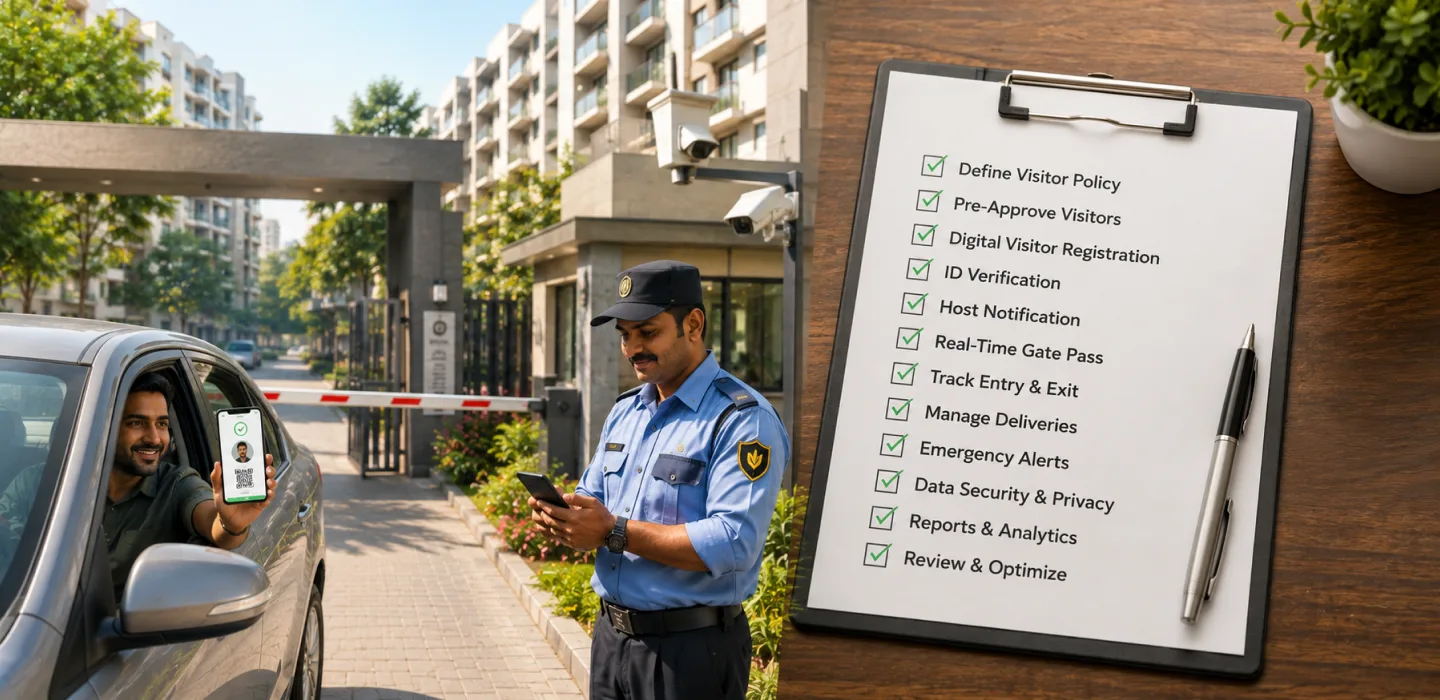
Imagine a typical day in a digitally transformed housing society using MyKutir's visitor management platform. The day begins with the arrival of a delivery person at the society's gates, armed with a DigitalStickerPass. As the delivery person approaches the gate, the security personnel scans the digital pass using a handheld device linked to MyKutir's system. Instantly, the visitor's information appears on the guard's screen, allowing for swift verification and entry approval. This process, quick and efficient, contrasts sharply with traditional methods that often involve lengthy manual log entries.
As the day progresses, a resident is expecting a guest. The resident uses the MyKutir app to pre-register their guest, sending them a digital invitation that includes a unique entry code. Upon arrival, the guest presents this code to the security staff, who verifies it through MyKutir's system, ensuring that only authorized guests gain entry. The resident receives an instant notification, informing them of their guest’s arrival, allowing for seamless coordination and reducing the need for cumbersome security checks.
Later in the afternoon, a maintenance worker arrives to perform scheduled repairs in one of the apartments. The worker’s entry has been pre-approved by the facility manager using the MyKutir platform. As with other visitors, the worker's details are pre-registered, and their identity is verified using facial recognition technology, ensuring that only verified personnel gain access to sensitive areas.
Throughout the day, MyKutir's integration with the society's CCTV and other security systems ensures that all entry and exit points are monitored in real-time. This constant surveillance, combined with the proactive visitor management features, means that the society maintains high security without sacrificing convenience. In case of any suspicious activity, the MyKutir system immediately alerts security personnel, enabling them to take swift and decisive action.
The day concludes with a resident hosting a family gathering. With several guests arriving at once, the efficiency of MyKutir becomes evident. Each guest's entry is pre-planned, minimizing delays at the gate and ensuring a smooth flow of traffic without compromising security protocols. As the gathering proceeds, the host can focus on enjoying their time rather than dealing with entry issues.
This hypothetical day illustrates the profound impact of digital transformation on visitor management in housing societies. The benefits, from reduced wait times to enhanced security measures, showcase how platforms like MyKutir can redefine the visitor experience, aligning it with modern expectations of efficiency and safety.
Common Mistakes in Implementing Digital Visitor Management
The transition to digital visitor management systems offers numerous benefits, but its implementation is not without challenges. Housing societies often encounter several common pitfalls during the transition, which can hinder the effectiveness of the system and create additional hurdles. Understanding these mistakes and learning how to avoid them can ensure a smoother and more successful adoption of digital technologies.
One of the most common mistakes is inadequate training for staff and residents. Without proper training, users may find it difficult to navigate the new system, which can lead to resistance from both security personnel and residents. To avoid this, societies should invest in comprehensive training sessions that cover all aspects of the new visitor management system, including its features, benefits, and troubleshooting processes. Adequate training ensures that all stakeholders are comfortable and proficient with the system, leading to higher adoption rates and fewer operational issues.
Data privacy is another significant concern that societies often overlook. With the implementation of digital systems, large volumes of personal data are collected and stored, which can become a target for cyber threats if not adequately protected. Societies must ensure that the digital visitor management platform they choose adheres to strict data security standards and complies with relevant privacy laws. Implementing robust cybersecurity measures, such as encryption and regular audits, can help safeguard sensitive information and build trust among residents.
Another mistake is the misalignment of the digital system with existing infrastructure. Societies may fail to consider how the new digital system will integrate with their current security measures, leading to compatibility issues that can complicate operations. To avoid this, a thorough assessment of the society’s current infrastructure should be conducted before choosing a digital visitor management platform. Selecting a system like MyKutir, which offers seamless integration capabilities, can prevent these issues and ensure that all security components work together harmoniously.
Finally, societies may underestimate the importance of gathering feedback and making iterative improvements. After initial implementation, it is crucial to continually assess the system’s performance and gather input from residents and staff. This feedback can provide valuable insights into potential issues and areas for improvement, enabling societies to make necessary adjustments and enhancements over time. By remaining open to change and committed to continuous improvement, societies can fully realize the benefits of digital visitor management systems.
Comparison: Digital vs. Manual Visitor Management
The decision to transition from manual to digital visitor management systems is significant for housing societies, as it impacts security, efficiency, and resident satisfaction. Understanding the differences between these two approaches can help societies make informed decisions about upgrading their visitor management processes.
| Criteria | Manual Visitor Management | Digital Visitor Management |
|---|---|---|
| Efficiency | Time-consuming, often leading to long wait times at security gates. | Highly efficient with pre-registration and quick verification processes. |
| Security | Prone to errors and unauthorized entries due to reliance on human vigilance. | Enhanced security with features like digital passes and facial recognition. |
| Data Management | Challenging to maintain and retrieve information; prone to loss or damage. | Automated logging with easy access to historical data and analytics. |
| User Experience | Inconvenient for visitors and residents; often involves manual processes. | Seamless experience with automated notifications and real-time updates. |
| Integration | Limited integration with existing security systems. | Easy integration with CCTV, access control, and other security systems. |
Manual visitor management systems are largely dependent on human intervention, which can result in inefficiencies and security vulnerabilities. For instance, security personnel must manually record visitor details, leading to potential errors and time delays, especially during peak hours. Moreover, manual logs make it difficult to track and analyze visitor data, posing challenges in incident response and security audits.
In contrast, digital visitor management systems like MyKutir automate the entire process, from visitor registration to exit. Pre-registration and digital passes streamline entry procedures, minimizing wait times and enhancing the visitor experience. Digital systems also offer superior security measures, such as facial recognition and automated alerts, which significantly reduce the risk of unauthorized access.
Another key advantage of digital systems is their ability to manage data efficiently. Automated logging provides easy access to historical data, allowing societies to monitor visitor patterns and quickly retrieve information during emergencies. Integration capabilities further enhance the system's effectiveness, enabling it to work in tandem with existing security infrastructure for a comprehensive security solution.
Ultimately, digital visitor management systems provide a more sophisticated, reliable, and user-friendly approach compared to manual methods. By embracing digital transformation, societies can enhance their security posture, improve operational efficiency, and deliver a better experience for residents and visitors alike.
Step-by-Step Guide to Implementing MyKutir for Visitor Management
Implementing MyKutir for visitor management in your housing society can significantly enhance security and efficiency. Here is a step-by-step guide to help you navigate the process and ensure a seamless transition to this digital platform.
- Initial Assessment: Start by conducting a thorough assessment of your society’s current visitor management processes and infrastructure. Identify areas of improvement and determine how MyKutir can address these needs. Engage stakeholders, including management, security personnel, and residents, to gather insights and expectations.
- Selecting the Right Plan: Choose a MyKutir plan that best suits your society’s size and needs. Consider factors such as visitor volume, security requirements, and any existing infrastructure you wish to integrate with MyKutir. A tailored plan will ensure you maximize the benefits of the platform.
- System Setup: Once the plan is selected, proceed with the technical setup. MyKutir's support team will assist in configuring the system, ensuring it aligns with your society’s requirements. This involves setting up user accounts, configuring security protocols, and integrating with existing security systems such as CCTV and access control devices.
- Training and Onboarding: Conduct comprehensive training sessions for security personnel, management, and residents. These sessions should cover all aspects of the MyKutir platform, including its features, benefits, and troubleshooting methods. Adequate training will ensure that all users are comfortable with the system and can utilize it effectively.
- Launch and Monitoring: Launch the MyKutir system and monitor its performance closely during the initial days. Encourage feedback from users to identify any issues or areas for improvement. MyKutir provides analytics and reporting tools that can help you track the system’s effectiveness and make data-driven decisions for further optimization.
- Continuous Improvement: Regularly review and update the visitor management processes as needed. Utilize the insights gained from MyKutir’s reporting tools to make informed decisions about security policies and system enhancements. Engage with MyKutir’s support team for updates and new feature implementations, ensuring your system stays up-to-date with the latest advancements in digital visitor management.
Implementing MyKutir requires careful planning and execution, but the benefits of enhanced security, operational efficiency, and improved resident experience make it an investment worth pursuing. By following these steps, societies can successfully transition to a digital visitor management system that meets modern demands for safety and convenience.
FAQs on Digital Visitor Management
What is digital visitor management?
Digital visitor management refers to the use of technological solutions to manage and monitor visitor access in a more efficient and secure manner. Unlike traditional manual systems that rely on physical logbooks and verbal communication, digital systems automate the visitor registration and monitoring process. They employ features like digital passes, real-time notifications, and analytics to streamline operations, enhance security, and improve the overall visitor experience. Digital visitor management systems are particularly beneficial in large housing societies where managing visitor flow is critical to maintaining security and convenience.
How does MyKutir ensure data security in visitor management?
Data security is a paramount concern for MyKutir, and the platform is designed with stringent security measures to protect sensitive information. MyKutir employs advanced encryption techniques to secure data both during transmission and storage. The platform also adheres to best practices in cybersecurity, including regular audits, access control measures, and compliance with relevant data protection laws. Additionally, MyKutir's system is configured to limit data access to authorized personnel only, ensuring that information is protected from unauthorized access and breaches. These measures collectively ensure that user data remains secure and confidential.
Can digital systems integrate with existing security measures?
Yes, digital visitor management systems like MyKutir are designed to integrate seamlessly with existing security measures. MyKutir's platform can be easily connected to CCTV cameras, access control systems, and other security infrastructure already in place within a society. This integration allows for a cohesive security strategy that leverages both traditional and modern technologies. By providing a unified interface, MyKutir ensures that all security components work together efficiently, enhancing monitoring capabilities and improving response times during security incidents.
What are the costs associated with implementing MyKutir?
The costs of implementing MyKutir can vary based on the specific needs and size of the society. Factors influencing costs include the number of users, the volume of visitors, and the extent of integration required with existing security systems. MyKutir offers different pricing plans that cater to various budgets, allowing societies to choose a package that aligns with their financial resources and operational requirements. While there is an initial investment involved in setting up the system, the long-term benefits of enhanced security and operational efficiency often justify the expenditure.
How do societies transition from manual to digital visitor management?
Transitioning from manual to digital visitor management involves several key steps. First, societies should conduct an assessment of their current processes to identify areas for improvement. After selecting a digital solution like MyKutir, it is important to plan the implementation process, including system setup and integration with existing infrastructure. Comprehensive training sessions should be organized for security staff and residents to ensure they are familiar with the new system. Launching the system with close monitoring and collecting feedback will help identify any issues and facilitate smooth adoption.
What training is needed for staff and residents?
Training is a crucial component of successfully implementing a digital visitor management system. Security personnel, management, and residents should all receive training tailored to their specific roles and interactions with the system. This includes understanding how to use features like digital passes, notifications, and data analytics. Training should also cover troubleshooting common issues and following data security protocols. Hands-on demonstrations and interactive sessions can be effective in ensuring that all users are comfortable with the system, leading to higher adoption rates and efficient operation.
Are there privacy concerns with using facial recognition?
Facial recognition technology, while enhancing security, does raise privacy concerns regarding the collection and use of biometric data. Societies should ensure that any use of facial recognition complies with relevant privacy laws and regulations, including obtaining consent from individuals whose data is being collected. It is also important to implement strict data protection measures, such as encryption and access controls, to prevent unauthorized use of biometric data. By addressing these concerns proactively, societies can leverage the benefits of facial recognition while maintaining trust and transparency with their residents.
Key Takeaways
- Digital visitor management systems offer enhanced security and efficiency compared to traditional manual approaches.
- MyKutir provides a comprehensive suite of features such as DigitalStickerPass and VisitorChat, revolutionizing visitor management in housing societies.
- Effective implementation requires careful planning, thorough training, and ongoing monitoring to address common challenges and optimize system performance.
- Understanding the differences between digital and manual visitor management can help societies make informed decisions about upgrading their systems.
- Privacy and data security are critical considerations when implementing digital systems, especially when using technologies like facial recognition.