Myth vs Reality: Community Apps in Housing Societies
By MyKutir Editorial Team — 2026-09-15
Uncover the truth about community apps in housing societies as we debunk common myths and explore their real impact.
In the ever-evolving landscape of housing society management, community apps have emerged as pivotal tools, transforming the way residents and management interact and operate. These applications, like MyKutir, are designed to streamline numerous facets of society management — from communication to maintenance requests — offering a centralized platform for all stakeholders. The integration of community apps into housing societies can lead to significant improvements in operational efficiency, resident satisfaction, and overall community engagement.
Community apps are more than mere digital noticeboards; they are comprehensive solutions that encompass a wide array of functionalities. These include managing financial transactions, keeping track of maintenance schedules, and facilitating communication among residents and management. The potential benefits are manifold: enhanced transparency, streamlined operations, and improved community engagement. For instance, with features like automated billing and complaint management, they reduce administrative workload and increase accuracy, which is often compromised in manual systems such as Excel spreadsheets.
Furthermore, the advent of community apps in housing societies marks a significant shift towards digital empowerment, aligning with broader trends in digital transformation. By ensuring that information is available at residents' fingertips, these apps foster a sense of community and belonging, crucial for creating harmonious living environments. The true promise of community apps lies in their ability to marry convenience with functionality, offering a user-friendly interface that caters to the diverse needs of housing society stakeholders.
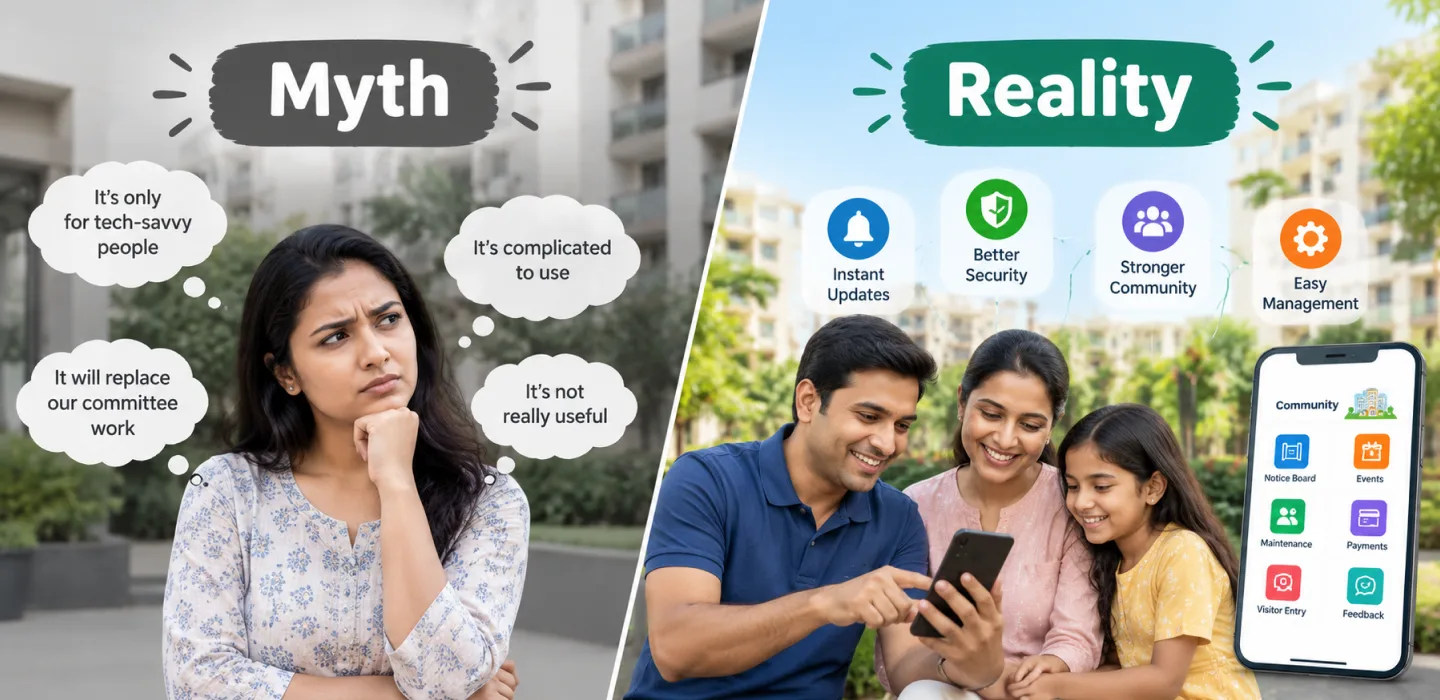
Myth 1: Community Apps Are Difficult to Use
A common misconception about community apps is their perceived difficulty of use, which can deter societies from adopting these platforms. This myth often stems from a lack of familiarity with digital tools, especially among older residents who may be wary of new technology. However, modern community apps like MyKutir are specifically designed with user-friendliness as a cornerstone of their design philosophy, ensuring that even the least tech-savvy individuals can navigate them with ease.
One of the key aspects that contribute to the ease of use of community apps is their intuitive design. The user interfaces are crafted to be straightforward and self-explanatory, minimizing the learning curve for new users. MyKutir, for example, offers a clean and organized layout where users can easily access features such as maintenance requests, community notices, and payment portals without convoluted navigation paths. This accessibility is crucial for ensuring that the app adds value to users' daily lives rather than becoming an additional source of stress.
Moreover, community apps often include features that cater to a multilingual user base, an essential consideration in a diverse country like India. MyKutir supports multiple languages, including English, Hindi, and Gujarati, allowing residents to interact with the platform in their preferred language. This inclusion not only enhances user experience but also promotes wider adoption across different demographic segments within the society.
Mobile accessibility is another significant factor that enhances the usability of community apps. With the pervasive use of smartphones, having a mobile-friendly app ensures that residents can access important information and services on-the-go. MyKutir, like many other community apps, is designed to be mobile-responsive, ensuring seamless functionality across devices. This flexibility means that whether a resident is at home, at work, or traveling, they can stay connected with their community effortlessly.
Thus, the myth that community apps are difficult to use is unfounded when considering the thoughtful design and accessibility features that platforms like MyKutir incorporate. By choosing a user-centric app, housing societies can ensure that their residents have a positive experience, thus maximizing engagement and satisfaction.
Myth 2: Community Apps Compromise Privacy
Privacy concerns are a significant barrier for many when considering the adoption of community apps, particularly in housing societies where personal data management is critical. The myth that digital platforms compromise privacy has been perpetuated by instances of data breaches across various sectors. However, modern community apps like MyKutir prioritize data protection and incorporate robust security measures to safeguard user information.
One of the primary security features that community apps employ is role-based access control. This system ensures that only authorized individuals can access specific information within the app. For instance, a resident might access their own payment history and maintenance requests, while the society manager may have broader oversight capabilities. By controlling access based on roles, community apps limit the exposure of sensitive information and mitigate the risk of unauthorized access.
Additionally, MyKutir utilizes JSON Web Token (JWT) authentication, a secure method for ensuring that communications between users and the app are encrypted and private. JWTs are an industry-standard method for representing claims securely between two parties, and their use in community apps like MyKutir ensures that session data remains confidential and tamper-proof. This level of security is crucial for maintaining trust among residents and fostering a safe digital environment.
Community apps also adhere to data protection regulations and best practices. Regular security audits, encryption protocols, and compliance with data protection laws (like the emerging Personal Data Protection Bill in India) are standard practices in the development and maintenance of these apps. These measures prohibit unauthorized data access and ensure that personal information is stored and processed securely.
The myth that community apps compromise privacy is further dispelled by transparent data policies that apps like MyKutir adopt. Users are informed about what data is collected, how it is used, and the rights they have over their information. This transparency empowers residents to make informed decisions about their digital interactions, thereby enhancing trust in the platform.
In conclusion, while privacy concerns in the digital age are valid, community apps like MyKutir are designed with comprehensive security features that prioritize user privacy. By implementing role-based access, JWT authentication, and adhering to data protection standards, these apps provide a secure environment for housing societies to thrive digitally.
Myth 3: Community Apps Are Expensive and Not Cost-Effective
Cost concerns are often cited as a major deterrent for housing societies considering the adoption of community apps. The myth that these digital solutions are prohibitively expensive compared to traditional methods, such as Excel spreadsheets or manual bookkeeping, persists despite evidence to the contrary. However, many community apps, including MyKutir, offer scalable pricing models that cater to the varying needs and budgets of different housing societies.
Scalable pricing models are a hallmark of community apps, allowing societies to pay for only the features they need. This flexibility means that smaller societies can choose a basic package, while larger societies with more complex requirements can opt for a comprehensive suite of features. MyKutir, for example, offers tiered pricing that can accommodate different budgetary constraints, ensuring that even societies with limited financial resources can benefit from digital transformation.
Moreover, community apps can lead to significant cost savings over time by reducing the need for manual processes. Automated billing, a common feature in apps like MyKutir, eliminates the labor-intensive task of managing paper invoices and tracking payments manually. By automating these processes, societies can reduce administrative overhead, minimize errors, and enhance financial transparency.
Consider the typical expenses associated with manual management: stationery costs, time spent by administrators on mundane tasks, and the potential for human error leading to financial discrepancies. With a community app, these costs are significantly reduced, if not eliminated. Automated reminders for maintenance dues also ensure timely payments, improving cash flow and reducing the time spent on follow-ups.
Additionally, community apps can contribute to cost efficiency by improving operational efficiency and resident satisfaction. By streamlining communication, managing amenities bookings, and handling maintenance requests effectively, these apps reduce the time and resources spent on resolving resident issues. Enhanced resident satisfaction can also lead to better community relations and lower resident turnover, which is often an unquantified cost in traditional management methods.
Thus, while the initial investment in a community app might seem significant, the long-term savings and value they provide make them cost-effective solutions for housing societies. By opting for a platform like MyKutir, societies can leverage scalable pricing and advanced features to optimize their operations and enhance community living.
Reality: Enhancing Communication and Efficiency
The real power of community apps lies in their ability to transform communication and operational efficiency within housing societies. These digital platforms serve as a centralized hub for information, ensuring that all residents and management members are on the same page. MyKutir, for instance, offers a range of communication features designed to improve both the speed and clarity of information dissemination.
One of the standout features of community apps is in-app notifications. Unlike traditional methods that rely on physical notice boards or sporadic emails, in-app notifications provide instant updates on critical matters such as maintenance schedules, events, and urgent notices. This immediacy ensures that all residents are informed promptly, reducing the chances of miscommunication and misunderstandings.
Complaint tracking is another area where community apps excel in enhancing operational efficiency. MyKutir provides a dedicated portal for residents to submit complaints or requests, ensuring that these issues are logged and tracked systematically. The app's dashboard offers management a comprehensive view of all pending and resolved issues, allowing for efficient prioritization and resource allocation. This transparency builds trust and accountability, as residents can see the status of their requests in real-time.
Furthermore, the integration of AI-assisted tools in community apps, such as notice drafting, can further streamline operations. By automating the creation of standard notices, MyKutir reduces the administrative burden on society managers, allowing them to focus on more strategic tasks. These tools also ensure consistency and professionalism in communication, which is often lacking in manually drafted notices.
Efficiency gains are not only limited to communication; they extend to other aspects of society management such as financial operations, resource booking, and compliance tracking. Automated workflows reduce the need for manual intervention, freeing up valuable time and resources. For example, the ability to handle amenity bookings and maintenance schedules through the app ensures that resources are utilized optimally without double-booking or conflicts.
Ultimately, community apps like MyKutir revolutionize the way housing societies operate by enhancing communication and efficiency. By adopting these digital solutions, societies can foster a more connected, responsive, and harmonious living environment, benefiting both residents and management alike.
Case Study: Successful Implementation of a Community App
Imagine a midsized housing society nestled in the bustling city of Pune, grappling with common challenges such as inefficient communication, manual billing processes, and resident disengagement. The society's management committee decides to explore digital solutions to enhance community living and operational efficiency. After thorough research, they choose to implement MyKutir, a comprehensive community app tailored to their needs.
The initial phase involves setting clear objectives for the app's deployment, aiming to improve communication, streamline billing, and enhance overall resident satisfaction. The management committee, aware of potential resistance to change, organizes a series of workshops and training sessions to familiarize residents with MyKutir. This proactive approach is crucial in building confidence and encouraging adoption among residents, especially those less familiar with digital platforms.
One challenge the society faces is data migration from manual records to the digital platform. The management team collaborates with MyKutir's technical support to seamlessly transition data, ensuring accuracy and completeness. With the data now centralized, residents have easy access to their payment histories, maintenance requests, and community updates at their fingertips.
As MyKutir becomes an integral part of daily operations, several benefits quickly emerge. Communication improves dramatically; in-app notifications replace sporadic emails and paper notices, ensuring residents receive timely updates. The complaint tracking system enables residents to submit maintenance requests digitally, with the assurance of prompt resolution. This transparency boosts resident confidence and satisfaction, as they can track the progress of their requests in real-time.
The society also experiences significant financial optimization through automated billing. The app's features help eliminate manual errors in invoicing, while automated reminders ensure timely payments, thereby improving cash flow. The management committee appreciates the reduction in administrative workload, allowing them to focus on strategic initiatives to further enhance community living.
Over time, the society witnesses a marked improvement in community engagement. With features like community voting and event announcements, residents become more involved in decision-making processes and social events. This newfound sense of community fosters a harmonious living environment, reinforcing the society's commitment to digital transformation.
In this hypothetical case study, the successful implementation of MyKutir illustrates the transformative impact a community app can have on a housing society. By addressing initial challenges and leveraging the app's features, the society achieves its objectives of improved communication, efficiency, and resident satisfaction, underscoring the value of digital solutions in modern housing management.
Common Mistakes in Adopting Community Apps
While the benefits of implementing a community app like MyKutir are undeniable, housing societies often encounter several pitfalls that can hinder successful adoption. Identifying these common mistakes can help societies navigate the transition more smoothly and maximize the app's potential.
One frequent mistake is inadequate training and onboarding. Societies often underestimate the importance of educating residents and management on using the app effectively. Without proper training, residents may feel overwhelmed or reluctant to engage with the new platform. To address this, societies should organize comprehensive training sessions and workshops, providing hands-on experience and addressing any concerns. Ensuring that both tech-savvy and less technologically inclined residents are comfortable with the app is key to increasing adoption rates.
Another common issue is lack of resident engagement. Even with the best tools in place, an app's success depends on active participation from residents. Societies can foster engagement by highlighting the app's benefits through regular communication and demonstrating how it simplifies day-to-day tasks. Encouraging feedback and involving residents in decision-making regarding app features can also boost participation and ensure the app meets the community's needs.
Additionally, societies may overlook the importance of customizing the app to suit their specific requirements. Each housing society is unique, with varying needs and challenges. A one-size-fits-all approach may not address specific issues effectively. By tailoring the app's features and functionalities to align with the society's goals, management can ensure the app delivers maximum value. MyKutir, for example, offers customizable modules to cater to diverse housing societies, allowing them to prioritize features that directly address their challenges.
Failure to communicate successfully about the app's capabilities and benefits is another pitfall. Societies should leverage various communication channels — emails, meetings, in-app notifications — to update residents about new features, improvements, and the app's impact. Keeping residents informed and engaged fosters a sense of ownership and encourages sustained use of the app.
Lastly, technical challenges such as data migration and integration with existing systems can pose significant hurdles. Societies should work closely with technical support teams from platforms like MyKutir to ensure seamless transitions and minimize disruptions. By setting realistic timelines and proactively addressing potential technical issues, societies can ensure a smoother adoption process and a more successful implementation.
By recognizing and addressing these common mistakes, housing societies can enhance the adoption and utilization of community apps like MyKutir, unlocking their full potential and fostering a more connected and efficient community.
Comparison: Traditional vs. Digital Communication Methods
As housing societies consider transitioning from traditional to digital communication methods, it's essential to understand the comparative advantages of platforms like MyKutir. Traditional methods, such as notice boards and WhatsApp groups, have long been staples of society communication, but they come with limitations that digital solutions address effectively.
| Aspect | Traditional Methods (Notice Boards, WhatsApp) | Digital Solutions (MyKutir) |
|---|---|---|
| Ease of Access | Limited to physical presence or fragmented group messages | Centralized access through a mobile app, available anytime |
| Efficiency | Time-consuming manual updates, prone to human error | Automated notifications and updates, minimizing manual effort |
| Cost | Recurring expenses for paper, printing, and maintenance | Initial investment, scalable pricing minimizes long-term costs |
| Engagement | Passive communication, hard to track participation | Interactive features like polls, forums, and feedback systems |
| Security | Limited privacy controls and encryption | Role-based access, data encryption, and privacy measures |
Traditional communication methods often lack the immediacy and convenience that modern residents expect. Notice boards require physical presence to stay informed, leading to delays in communication and information dissemination. In contrast, MyKutir's digital platform offers centralized access to all community-related information, ensuring residents stay updated, no matter where they are.
Efficiency is another critical area where digital solutions outshine traditional methods. Manual updates on notice boards or WhatsApp groups are prone to human error and require significant effort from administrators. MyKutir automates notifications and updates, reducing manual intervention and ensuring timely delivery of information. This automation not only saves time but also minimizes the potential for errors.
Cost considerations also play a crucial role in decision-making. Traditional methods incur recurring expenses for paper, printing, and notice board maintenance. In contrast, digital solutions involve an initial investment, but the scalable pricing models in platforms like MyKutir ensure that societies can manage long-term costs effectively. Over time, the reduction in manual processes and improved efficiency can lead to significant cost savings.
Engagement with traditional methods is often passive, with limited mechanisms for tracking resident participation and feedback. MyKutir, however, offers a range of interactive features such as polls, forums, and feedback systems, encouraging active engagement from residents. This engagement fosters a more involved community and enhances the overall living experience.
Lastly, security is a paramount concern for any communication method. Traditional methods provide limited privacy controls, while digital solutions like MyKutir incorporate advanced security measures, including role-based access and encryption, to protect resident data and privacy.
In summary, while traditional communication methods have their place, digital solutions like MyKutir offer significant advantages in terms of access, efficiency, cost, engagement, and security, making them an attractive choice for modern housing societies looking to enhance their community management.
FAQs on Community Apps in Housing Societies
What is a community app in a housing society?
A community app in a housing society serves as a digital platform designed to streamline and enhance the management and communication within the community. These apps offer a range of features that cater to the diverse needs of residents and management, including payment processing, maintenance request handling, amenity booking, and event announcements. By centralizing these functions, community apps like MyKutir provide a seamless interface for both residents and administrators, fostering a more cohesive and efficient community environment.
How do community apps enhance communication?
Community apps enhance communication by providing a centralized hub for all updates and interactions within a housing society. Platforms like MyKutir offer in-app notifications, ensuring that residents receive timely updates on important matters such as maintenance schedules, community events, and urgent notices. The app also facilitates direct communication between residents and management through complaint tracking systems and forums, allowing for transparent and efficient resolution of issues. By replacing fragmented communication channels, community apps ensure that all stakeholders are informed and engaged.
Are community apps safe for data privacy?
Yes, community apps are designed with robust security features to ensure data privacy. MyKutir, for example, employs role-based access control to restrict data access to authorized individuals, protecting sensitive information. Additionally, the use of JSON Web Token (JWT) authentication ensures that communications within the app are encrypted and secure. These measures, coupled with compliance with data protection regulations, provide a safe digital environment, addressing privacy concerns and maintaining resident trust.
What are the costs associated with implementing a community app?
The costs associated with implementing a community app can vary depending on the size of the society and the features required. However, platforms like MyKutir offer scalable pricing models that allow societies to choose packages that fit their budget. While there is an initial investment involved, the long-term cost savings from reduced manual processes, automated billing, and improved operational efficiency often outweigh the upfront costs. Societies can achieve significant financial optimization by adopting these digital solutions.
How can a housing society ensure resident engagement in the app?
To ensure resident engagement in the app, housing societies should focus on effective onboarding and communication. Providing comprehensive training sessions and demonstrations can help residents understand the app's features and benefits. Regular updates about new functionalities and the app's impact on community living can also encourage participation. Societies can foster engagement by seeking resident feedback and involving them in decision-making processes related to the app, creating a sense of ownership and investment in its success.
What support is available during the adoption of a community app?
During the adoption of a community app like MyKutir, societies can access a range of support services provided by the platform. These may include technical support for seamless data migration, training sessions for residents and management, and ongoing customer support for troubleshooting and queries. MyKutir's team is equipped to assist with customization, integration with existing systems, and addressing any technical challenges that arise, ensuring a smooth transition to the digital platform.
Can community apps integrate with existing systems?
Yes, community apps like MyKutir can integrate with existing systems, allowing societies to leverage their current infrastructure while transitioning to digital solutions. This integration capability ensures that data consistency and operational continuity are maintained, minimizing disruptions during the adoption process. By working closely with the app's technical team, societies can seamlessly incorporate the app into their existing workflows, enhancing overall efficiency and functionality.
Key Takeaways
- Community apps serve as comprehensive digital solutions for housing societies, enhancing communication, efficiency, and resident engagement.
- Myths about complexity, privacy, and cost persist but are unfounded when considering the user-friendly, secure, and cost-effective nature of modern apps like MyKutir.
- Successful adoption of community apps requires proactive training, resident engagement, and customization to meet specific society needs.
- Digital solutions offer significant advantages over traditional communication methods, including centralized access, automation, and enhanced security.
- Support during the transition to digital platforms is crucial and available, ensuring a smooth integration with existing systems and processes.