Automation in Housing Society Management: A Comprehensive Guide
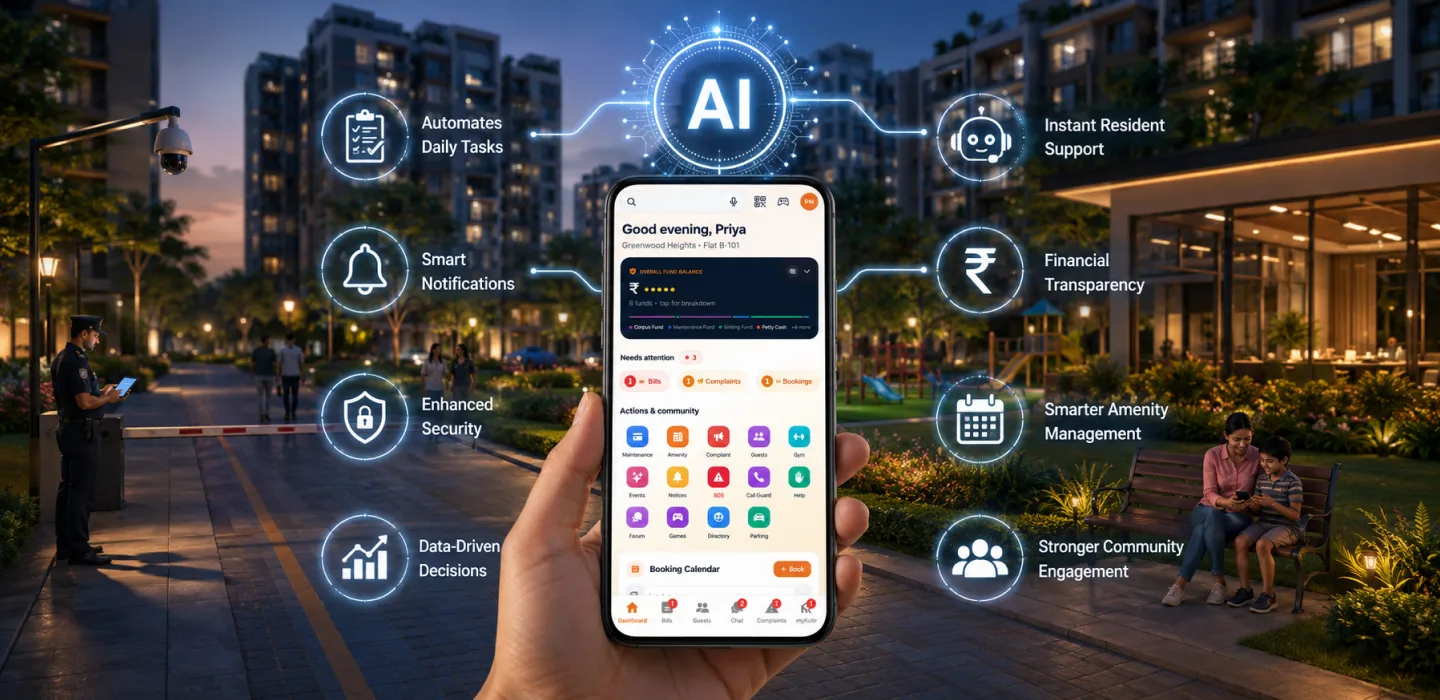
By MyKutir Editorial Team — 2026-09-22
Discover how automation can streamline housing society management through MyKutir's powerful platform.
Automation in housing society management refers to the use of technology to streamline and simplify the various administrative tasks involved in running a housing society. This includes leveraging software solutions to reduce manual intervention in processes such as billing, visitor management, complaint handling, and more. By introducing automation, societies can enhance efficiency, minimize errors, and improve overall resident satisfaction. As housing societies grow in complexity, managing them manually becomes increasingly challenging. Automation offers a viable solution to these challenges, enabling societies to operate smoothly and efficiently.
One of the primary areas where automation proves beneficial is in billing and accounting. Handling financial transactions manually can be time-consuming and prone to errors. Automated systems can generate bills, track payments, and send reminders to residents, reducing the administrative burden on society managers. In addition, visitor management can be streamlined through automation, allowing for seamless visitor registration and tracking, enhancing security within the society.
Complaint handling is another area where automation can significantly improve efficiency. Instead of relying on paper forms or manual logs, residents can raise complaints through an app, and these can be tracked and resolved more swiftly. Automation ensures that complaints do not get lost or forgotten, and follow-ups can be managed with ease.
Furthermore, communication within the society can be greatly enhanced through automation. Notices can be sent out electronically, ensuring that all residents receive important information in a timely manner. Automated reminder systems can also be set up to notify residents about upcoming meetings or maintenance schedules. Overall, automation in housing society management addresses the complexities of managing day-to-day operations, offering a more organized and efficient approach to run societies.
How MyKutir Streamlines Society Management with Automation
MyKutir is designed to simplify society management through a range of automated features that cater to various administrative needs. One of the standout features is the complaint draft assist, which helps residents and society managers to efficiently draft and manage complaints. This tool ensures that complaints are clearly articulated and can be processed promptly, thus speeding up the resolution process.
Another significant feature is the notice authoring assist, which aids in creating and distributing notices effectively. Whether it's an urgent announcement or a routine update, this feature ensures that all residents are promptly informed, thus improving communication within the society. The RAG search over notices enables society managers to prioritize and manage notices according to urgency and importance, ensuring that critical information receives the attention it requires.
Beyond these features, MyKutir automates many manual tasks, greatly reducing the workload on society staff. For instance, through SMS and WhatsApp automation, societies can communicate instantly with residents, whether it’s sending alerts or reminders. This integration ensures that residents are always informed, which enhances transparency and trust.
The integration with Razorpay facilitates seamless payment processing, allowing residents to pay maintenance fees and other charges online, thus eliminating the hassle of manual collection and handling of cash or cheques. Additionally, MyKutir offers automatic bank CSV matching, which simplifies the reconciliation process, ensuring that all financial transactions are accurately recorded and tracked, reducing the risk of discrepancies.
Overall, MyKutir provides a comprehensive suite of features that streamline society management through automation, making it an indispensable tool for housing societies looking to enhance their operational efficiency and resident satisfaction.
A Day in the Life of an Automated Society Management
Imagine a day in a housing society powered by MyKutir's automation capabilities. The day begins with the society manager logging into the MyKutir dashboard to overview scheduled tasks and pending issues. Automated reminders have already been sent to residents regarding upcoming maintenance work, minimizing the need for manual follow-up calls.
As residents begin their day, a security personnel efficiently manages visitor entries using the automated visitor management system. Guests receive electronic passes upon entry, and their details are logged automatically, enhancing both convenience and security. Regular visitors such as delivery personnel have their entries pre-approved, ensuring a smooth and swift process without compromising safety.
Meanwhile, a resident notices an issue with communal lighting. Instead of filling out a paper form, they use the MyKutir app to file a complaint. The complaint draft assist tool guides them in providing all necessary details, ensuring the issue is clearly communicated. As soon as the complaint is submitted, the system assigns it to the maintenance team, which receives an automated notification to address the issue promptly.
Throughout the day, financial transactions such as payment of maintenance fees occur seamlessly. Thanks to Razorpay integration, residents can pay their dues online, and the transactions are automatically matched with bank records, reducing the administrative workload and ensuring accurate financial reporting.
Later, the society manager drafts a notice about the upcoming annual general meeting using the notice authoring assist feature. The notice is sent out electronically, with the RAG system ensuring that it reaches residents who may need to prioritize reading it. Feedback from residents and RSVPs are collected automatically, streamlining the organization of the meeting.
As the day concludes, the society manager reviews the day’s activities, noting the efficiency and clarity that MyKutir's automation brought to various processes. From streamlined communication to efficient complaint resolution, the society operates smoothly, underscoring the transformative power of automation in housing society management.
Common Mistakes in Implementing Automation in Housing Societies
While automation offers numerous benefits, its implementation in housing societies is not without challenges. One common pitfall is incomplete data migration. When transitioning from manual to automated systems, it is crucial to ensure that all necessary data is transferred accurately. Failure to do so can lead to inconsistencies and gaps in records, which can hinder the effectiveness of the new system.
Another mistake societies often make is underutilizing the features of the automated system. MyKutir, for instance, offers a comprehensive range of tools designed to enhance society management. However, if society staff are not adequately trained or do not fully understand these features, they may not use them to their full potential. This can result in missed opportunities for streamlining operations and improving efficiency.
Resistance to change is another significant challenge. Both staff and residents may be accustomed to traditional ways of managing society tasks and may be hesitant to embrace new technology. It is important to engage all stakeholders in the transition process, highlighting the benefits of automation and providing necessary training to ease the transition.
Moreover, societies may overlook the need for continuous evaluation and updates. Technology and society needs evolve over time, and it is important to regularly assess the automated system to ensure it continues to meet the society's needs effectively. Ignoring this aspect can lead to an outdated system that no longer serves its purpose efficiently.
Addressing these common mistakes requires a well-planned approach that involves thorough data migration, comprehensive training programs, proactive change management, and ongoing system evaluation. By doing so, societies can maximize the benefits of automation and avoid potential pitfalls that could undermine the success of their automation efforts.
Comparison: Manual Management vs. Automated Management
When comparing manual management to automated management in housing societies, several key differences emerge. Automation, facilitated by a platform like MyKutir, addresses many of the inefficiencies and challenges associated with manual management. The table below highlights these differences:
| Aspect | Manual Management | Automated Management |
|---|---|---|
| Efficiency | Time-consuming due to manual processes and paperwork. | Streamlined processes save time and reduce manual labor. |
| Accuracy | Prone to human errors in data entry and record-keeping. | Reduces errors through automated data handling and verification. |
| Scalability | Difficult to manage as the society grows. | Easily scalable to accommodate growth and additional tasks. |
| User Satisfaction | Often leads to frustration with slow processes and errors. | Improved satisfaction due to quick, reliable service and transparency. |
| Cost | Higher costs due to inefficiencies and staffing needs. | Cost-effective by reducing administrative overhead and resource wastage. |
| Security | Limited data security with physical records. | Enhanced data security with encrypted electronic records. |
Automated management offers significant advantages over manual approaches, addressing inefficiencies and enhancing overall society operations. These benefits lead to increased satisfaction among residents and a smoother management experience for society administrators.
Step-by-Step Guidance for Implementing Automation with MyKutir
Implementing automation with MyKutir involves several key steps to ensure a smooth transition from traditional management methods. The following guide outlines a comprehensive approach to adopting automation in your housing society:
- Assessment of Current Processes: Begin by evaluating the current processes in your society. Identify areas that are time-consuming, prone to errors, or could benefit from more efficient management. This assessment will help you understand where automation can have the most impact.
- Stakeholder Engagement: Engage all stakeholders, including society committee members, staff, and residents, throughout the transition process. Communicate the benefits of automation and address any concerns or questions they may have.
- Data Migration: Plan for the systematic migration of data from manual records to the MyKutir platform. Ensure that all necessary data is accurately transferred and organized to maintain consistency and continuity.
- Training and Education: Provide comprehensive training for society staff and residents on using the MyKutir system. This includes understanding the features and functionalities of the platform, as well as how to navigate it effectively.
- Customization: Customize the MyKutir platform to suit the specific needs of your society. This may involve setting up user roles, access controls, and configuring system settings to align with your society's requirements.
- Implementation and Testing: Roll out the MyKutir system in phases, starting with a few key features and gradually expanding its use. Conduct tests to ensure all functionalities are working correctly and address any issues that arise during this phase.
- Monitor and Evaluate: After implementing the system, continuously monitor its performance and gather feedback from users. Make necessary adjustments to optimize its use and ensure it continues to meet the society's needs.
By following these steps, housing societies can successfully implement automation with MyKutir, reaping the benefits of enhanced efficiency, accuracy, and resident satisfaction.
The Role of AI in Enhancing Automation
Artificial Intelligence (AI) plays a crucial role in enhancing the automation capabilities of housing society management platforms like MyKutir. AI enables the system to perform tasks that typically require human intelligence, such as decision-making, problem-solving, and learning from data patterns. This results in more efficient and adaptive solutions for managing society operations.
One notable AI feature in MyKutir is the notice RAG (Red, Amber, Green) system. This tool uses AI to categorize notices based on their urgency and importance, helping society managers prioritize tasks and ensure critical information receives the attention it requires. By automatically sorting and flagging notices, the system reduces manual oversight and ensures timely communication to residents.
Another innovative application of AI in MyKutir is the complaint draft assist feature. This tool aids residents and society managers in drafting detailed and precise complaints. It analyzes the text to recommend improvements or clarify the issue, ensuring the complaint is well-articulated and can be addressed swiftly. This reduces the back-and-forth communication typically involved in resolving complaints, leading to faster resolutions and increased resident satisfaction.
AI also enhances predictive analytics capabilities within the MyKutir platform. By analyzing historical data, the system can forecast future trends and identify potential issues before they arise. For example, AI can predict when maintenance is likely to be needed based on usage patterns or past incidents, allowing societies to proactively address issues and avoid disruptions.
Furthermore, AI-driven insights enable societies to make data-informed decisions. By providing comprehensive analytics and reports, AI helps society managers identify areas for improvement and optimize their operations. This leads to increased efficiency, reduced costs, and enhanced overall management.
Incorporating AI into housing society management not only enhances automation but also transforms how societies operate. By leveraging AI's capabilities, MyKutir delivers a smarter, more responsive, and efficient management solution that meets the evolving needs of modern housing societies.
Real-World Examples of Societies Thriving with Automation
Real-world examples highlight the tangible benefits societies experience when implementing automation through platforms like MyKutir. These case studies illustrate how automation can transform society management, improve efficiency, and enhance resident satisfaction.
One society based in Mumbai faced challenges with manual billing and payment collection. Residents often experienced delays, and the management team struggled with reconciling payments. After implementing MyKutir, the society automated its billing processes, allowing residents to view and pay their dues online. The integration with Razorpay facilitated instant payments and automatic reconciliation, drastically reducing administrative workload and eliminating delays. Residents appreciated the convenience of online payments, leading to improved satisfaction and timely fee collection.
Another society in Bangalore had difficulty managing visitor entries and ensuring security. With the MyKutir visitor management system, the society automated visitor registration, allowing guests to pre-register and receive electronic passes. This streamlined the entry process, improved security, and reduced congestion at the gate. The automated system also allowed for better tracking and reporting of visitor data, enhancing security protocols within the society.
A society in Delhi faced challenges with communication and complaint resolution. Notices were often delayed, and complaints took time to address due to manual handling. By adopting MyKutir, the society automated its notice communication and complaint management processes. The notice authoring assist feature ensured timely dissemination of important information, while the complaint draft assist tool facilitated swift complaint resolution. As a result, communication improved, and residents felt more engaged and informed about society affairs.
These examples demonstrate the transformative power of automation in housing society management. By adopting MyKutir, societies can streamline their operations, reduce administrative burdens, and enhance resident satisfaction, ultimately creating a more efficient and harmonious living environment.
Frequently Asked Questions about Automation in Housing Societies
What is automation in housing society management?
Automation in housing society management involves the use of technology to streamline and simplify administrative tasks within a housing society. This includes processes such as billing, visitor management, complaint handling, and communication. By automating these tasks, societies can improve efficiency, reduce errors, and enhance resident satisfaction. Automation replaces manual processes with structured digital workflows, allowing societies to operate more smoothly and effectively.
How does MyKutir support automation in societies?
MyKutir supports automation in societies through a comprehensive suite of features designed to streamline management tasks. These include complaint draft assist, notice authoring assist, and RAG search over notices, which enhance communication and issue resolution. The platform also offers SMS/WhatsApp automation for instant communication, Razorpay integration for seamless online payments, and automatic bank CSV matching for accurate financial reconciliation. By automating these processes, MyKutir reduces manual workload and enhances operational efficiency within societies.
What are the benefits of automating society management tasks?
Automating society management tasks offers numerous benefits, including increased efficiency, accuracy, and scalability. Automation reduces the time and effort required for manual processes, allowing society staff to focus on more strategic activities. It also minimizes errors in data handling and record-keeping, ensuring accurate financial and administrative management. Additionally, automation enhances resident satisfaction by improving communication, streamlining complaint resolution, and providing convenient services such as online payments. Overall, automation transforms society management, making it more efficient and responsive to residents' needs.
Are there any common challenges when implementing automation?
Implementing automation in housing societies can present several challenges. These include incomplete data migration, underutilizing system features, resistance to change from staff or residents, and the need for continuous evaluation of the automated system. To address these challenges, societies should plan carefully, engage stakeholders, provide comprehensive training, and regularly assess the system to ensure it meets the society's needs effectively. Overcoming these challenges is essential for maximizing the benefits of automation and ensuring a successful transition.
How does AI enhance automation in MyKutir?
AI enhances automation in MyKutir by providing advanced tools that improve decision-making and operational efficiency. The notice RAG system categorizes notices by urgency, ensuring prioritized communication. The complaint draft assist tool uses AI to help users articulate detailed complaints, speeding up resolutions. Additionally, AI-driven predictive analytics provide insights into future trends and potential issues, enabling proactive management. By incorporating AI, MyKutir offers a smarter, more responsive, and efficient solution for housing society management.
Can automation help in reducing management costs?
Yes, automation can significantly reduce management costs in housing societies. By streamlining processes and reducing the need for manual intervention, automation lowers administrative overhead. It also minimizes errors, which can lead to costly disputes or financial discrepancies. Furthermore, automation enhances efficiency, allowing societies to operate with fewer resources while maintaining high service levels. These cost-saving benefits make automation an attractive option for societies looking to optimize their budgets and improve overall financial management.
What steps are involved in transitioning to automated management?
Transitioning to automated management involves several key steps. First, assess current processes to identify areas that can benefit from automation. Engage stakeholders to ensure buy-in and address any concerns. Plan for comprehensive data migration, ensuring all necessary information is transferred accurately. Provide training for staff and residents to ensure they can effectively use the new system. Customize the platform to meet society-specific needs, and implement the system in phases to ensure a smooth transition. Finally, continuously monitor and evaluate the system's performance to optimize its use and ensure it meets the society's needs.
Is data security ensured in automated society management systems?
Data security is a critical concern in automated society management systems, and platforms like MyKutir prioritize it by implementing robust security measures. These include data encryption, secure access controls, and regular security audits to protect sensitive information. Societies should ensure that their chosen automation platform complies with industry standards and regulatory requirements for data protection. By doing so, they can safeguard resident data and maintain trust in the automated management system.
Key Takeaways
- Automation in housing society management streamlines administrative tasks, improving efficiency and resident satisfaction.
- MyKutir offers a range of features, such as complaint draft assist and Razorpay integration, to support automated society management.
- AI enhances automation by providing tools for better decision-making and efficient operations, such as notice RAG and predictive analytics.
- Implementing automation requires careful planning, stakeholder engagement, and continuous evaluation to ensure success.
- Real-world examples show that societies can thrive with automation, experiencing improved management efficiency and resident engagement.