Beginner's Guide to Automation in Housing Societies
By MyKutir Editorial Team — 2026-09-08
Explore how automation can streamline housing society management, enhancing efficiency and ease for administrators.
Housing societies in India are often recognized for their vibrant community life and organized living. However, managing a society effectively involves a considerable administrative overhead that can become quite overwhelming. Automation in housing societies refers to the utilization of technology to streamline and simplify these administrative tasks. By deploying automation, societies can enhance efficiency, reduce human error, and improve the overall living experience for residents.
In the context of Indian residential societies, automation encompasses several key elements. Firstly, it involves the application of technology to tasks that are traditionally performed manually, such as billing, visitor management, and committee communication. Automation not only reduces the time spent on these tasks but also increases accuracy and reliability.
Understanding Automation in Housing Societies
Automation in housing societies is a transformative approach to managing the myriad tasks involved in society administration. At its core, automation implies using technology to execute repetitive tasks without continuous human intervention. This includes everything from handling monthly maintenance bills to managing visitor entries and exits. The primary benefit is, of course, efficiency; tasks that previously consumed hours can now be completed in minutes. Additionally, automation enhances accuracy by eliminating human errors, which are inevitable when tasks are performed manually.
Moreover, by automating routine processes, society management committees can focus on more strategic issues rather than getting bogged down by day-to-day operational details. For instance, automated billing systems can generate and distribute invoices electronically, track payments, and even send reminders for dues, thus alleviating the burden on human resources. Similarly, visitor management systems can log visitor entries, issue digital passes, and alert residents instantly, thus improving security and convenience.
Another crucial aspect is the enhanced transparency and communication that automation facilitates. Automated systems maintain comprehensive records and offer robust reporting features, making it easier for society members to stay informed and involved. For example, automated notices and announcements can be disseminated across the community efficiently, ensuring everyone is on the same page.
Adopting automation also means embracing change and modernization, which may initially require an investment in time and resources. However, the long-term benefits, including cost savings and increased member satisfaction, often outweigh the initial hurdles. As Indian housing societies continue to grow and evolve, integrating automation into their management processes is becoming not just an option but a necessity.
Key Areas for Automation
Automating certain areas of management can significantly transform the operations of a housing society. One of the primary areas that benefit from automation is the billing process. Traditionally, billing involves manual data entry, calculation, and distribution of invoices, which is not only time-consuming but prone to errors. Automated billing systems streamline this process by automatically generating bills based on predefined parameters and sending them electronically to residents. This not only saves time but also ensures that all residents receive their bills on time and without errors.
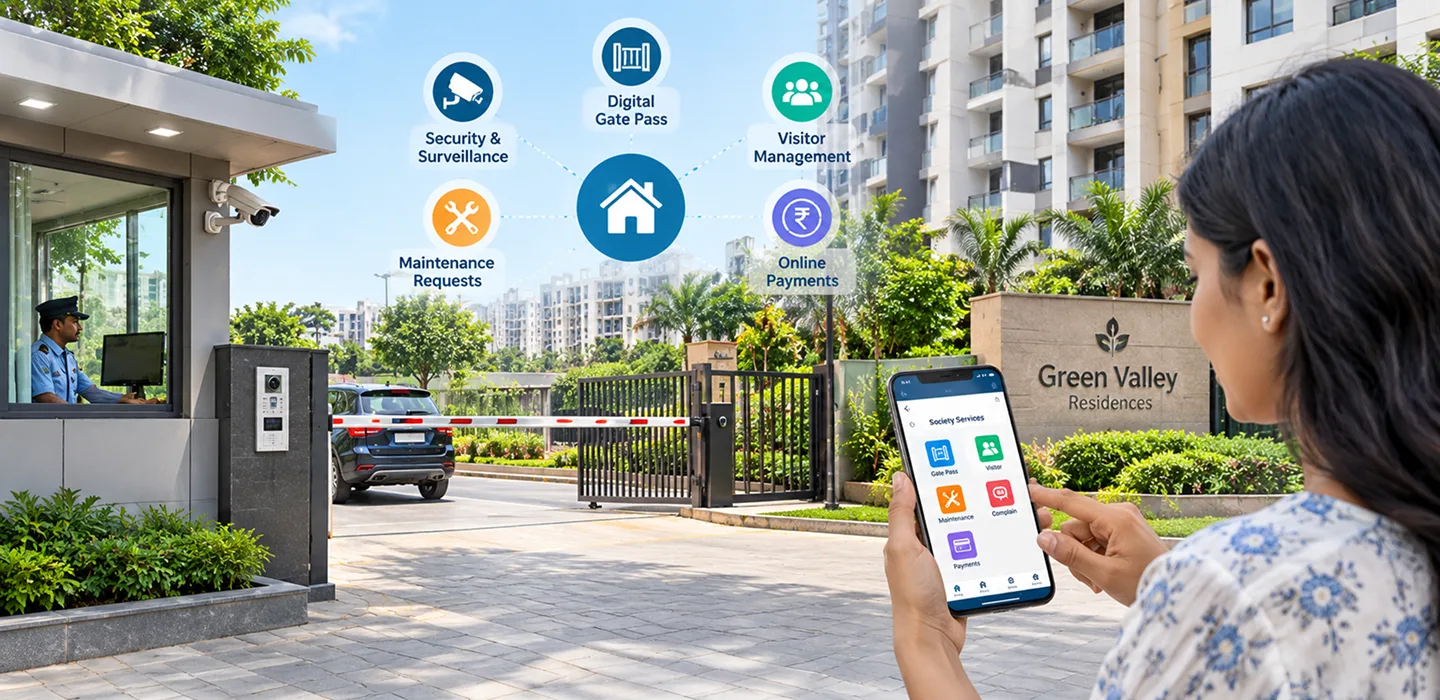
Visitor management is another area where automation can have a profound impact. Automated systems enable seamless logging of visitor information, issuance of digital passes, and real-time alerts to residents about their guests. This enhances the security of the society as the management has a real-time record of who is entering and exiting the premises. In addition, it saves time for security personnel and residents alike, as manual entry logging is eliminated.
Complaint handling and resolution is yet another critical area. With an automated system, residents can log complaints digitally, track the status of their complaints, and receive updates on resolutions. This not only speeds up the resolution process but also provides transparency and accountability, as every step is documented and can be reviewed by the management committee.
Drafting and distribution of notices is another task that can be transformed through automation. Automated notice systems not only formulate notices quickly using pre-set templates but also ensure that they are distributed to all residents instantly, either via email or app notifications. This ensures timely communication and that all members are informed of important updates.
Lastly, general administrative tasks such as maintenance scheduling, facility booking, and event management can be vastly improved through automation. By using technology to handle these tasks, societies can ensure better organization, reduce conflicts, and provide a higher level of service to their residents. Overall, automating these key areas leads to a more efficient, accountable, and resident-friendly management system.
How MyKutir Integrates Automation
MyKutir stands out as a comprehensive solution for automation in housing societies, leveraging technology to optimize management processes effectively. One of the platform's standout features is its ability to handle complaint SLA management. SLAs, or Service Level Agreements, are crucial in ensuring that resident complaints are addressed in a timely manner. MyKutir automates this process by tracking each complaint from inception to resolution, ensuring that the agreed timelines are met and facilitating accountability among the management team.
Notice drafting, an essential communication tool within societies, is made efficient through MyKutir's automated notice authoring assists. By using the NoticeEmbeddingChunk model, the platform aids in the efficient creation and dissemination of notices. This feature not only ensures that notices are drafted quickly and consistently but also that they reach every resident without delay, enhancing communication across the community.
Another innovative feature is the RAG (Red-Amber-Green) search over notices. This color-coded system allows users to quickly assess the urgency and relevance of notices, thus prioritizing their responses accordingly. By streamlining the search and categorization of notices, MyKutir ensures that residents and committee members can stay informed and promptly address pressing matters.
The technology stack behind MyKutir's automation features is robust and well-integrated. It involves a combination of cutting-edge technologies such as AI and machine learning, which enable the platform to continually improve its functionalities and adapt to the needs of the societies it serves. By utilizing modern cloud infrastructure, MyKutir ensures that data is not only securely stored but also easily accessible and scalable, matching the growing needs of societies.
Furthermore, MyKutir provides a user-friendly interface that simplifies the interaction for residents and management alike, reducing the learning curve associated with adopting new technology. This ease of use, coupled with the platform's powerful automation capabilities, makes MyKutir a valuable asset for any housing society looking to enhance its management operations.
Scenario: Automating Visitor Management
Consider a typical scenario in an Indian housing society where visitor management is traditionally handled through manual entry logs. A security guard would note down visitor details in a register, issue a temporary pass, and notify the resident via an intercom. Let's explore how MyKutir automates this process to enhance efficiency and security.
Step 1: Arrival - As a visitor approaches the society's entrance, they are greeted by a security kiosk equipped with MyKutir's visitor management system. The visitor can enter their details manually or scan a QR code sent by the resident they intend to visit. This replaces the need for physical entry logs, reducing time and errors.
Step 2: Verification - The system automatically verifies the visitor details against a pre-approved list or sends a request to the resident for approval. This digital verification step ensures that only authorized visitors are granted entry, thereby enhancing security.
Step 3: Entry Pass - Upon successful verification, the system generates a digital entry pass that the visitor can display on their smartphone. The security personnel at the gate are also notified of the verified entry, allowing them to facilitate a smooth entry into the society.
Step 4: Resident Notification - Simultaneously, the resident receives an instant notification on their MyKutir app, informing them of their guest's arrival. This real-time notification system enhances communication and ensures that residents are always aware of who is visiting them.
Step 5: Exit Logging - When the visitor leaves, a simple check-out process is initiated at the kiosk, logging the exit time and updating the system. This ensures that the society management always has an up-to-date record of all visitors.
Through these steps, MyKutir simplifies the visitor management process, making it more secure, transparent, and user-friendly. The automation not only saves time for residents and security staff but also improves the overall visitor experience, providing a seamless and efficient process from arrival to departure.
Common Automation Mistakes
Implementing automation in housing societies can drastically improve operations, but there are common pitfalls that committees often fall into. One of the most frequent mistakes is a lack of understanding of the technology itself. Many societies jump on the automation bandwagon without fully grasping how the technology works or what it can accomplish. This leads to underutilization of the system and a failure to maximize its potential benefits.
Poor integration planning is another major issue. Automation solutions need to be effectively integrated with existing processes and systems to function optimally. Without a comprehensive integration strategy, societies often face disruptions, compatibility issues, and redundant processes that negate the benefits of automation.
Another common error is inadequate training. Even the most sophisticated automation tools require knowledgeable users to operate them. If the staff and residents are not properly trained, they are unlikely to use the systems effectively, which can lead to frustration and resistance to change.
Societies may also fail to set realistic expectations. Automation is not a magic bullet that solves all problems instantly. It requires careful planning, execution, and ongoing management. Unrealistic expectations can lead to disappointment and a lack of confidence in the system.
To avoid these pitfalls, societies should start by conducting thorough research to understand the available automation technologies and what they can offer. A detailed needs assessment will help identify which areas of management require automation. Additionally, involving a technology consultant or expert can ensure that the chosen systems are compatible with current infrastructure and processes.
Comprehensive training programs for staff and residents are essential to ensure smooth adoption and effective use of the new technology. Finally, setting clear, achievable goals and benchmarks for automation projects will help manage expectations and measure success over time.
Manual vs. Automated Society Management
When comparing manual and automated society management, several differences become evident. The following table outlines some of these key distinctions:
| Aspect | Manual Management | Automated Management |
|---|---|---|
| Efficiency | Time-consuming; involves repetitive tasks | Time-saving; tasks are streamlined and automated |
| Accuracy | Prone to human errors | Reduces errors through automated processes |
| Communication | Relies on notice boards, word of mouth, or WhatsApp | Instant notifications and updates through digital platforms |
| Data Management | Requires physical records or Excel sheets | Centralized digital records, easily accessible |
| Security | Manual entry and verification | Automated checks and digital pass systems |
From the table, it's clear that automated systems offer significant advantages over manual processes. The efficiency gained from automating repetitive tasks allows society management to allocate more time and resources to strategic initiatives and resident engagement. Accuracy is also improved, as digital systems minimize the risk of human error, which is common when tasks are handled manually.
Communication is another area where automation provides substantial improvements. Whereas manual methods may rely on physical notices or informal communication channels like WhatsApp groups (which can be fragmented and unreliable), automated systems deliver instant and consistent communication to all residents.
Data management is streamlined through automation, with digital records offering easy accessibility, improved organization, and robust reporting capabilities. Security is enhanced as automated systems facilitate real-time tracking and verification of visitors, thereby reducing the burden on security personnel and minimizing the risk of unauthorized access.
Step-by-Step Guide to Implementing Automation
Successfully implementing automation in a housing society requires careful planning and execution. Here is a step-by-step guide to help societies transition smoothly from manual to automated systems.
- Initial Assessment: Begin by assessing the current management processes to identify areas that can benefit from automation. Consult with society members and management to gather insights on operational pain points and improvement opportunities.
- Defining Objectives: Clearly articulate the objectives of automation. Are you looking to streamline billing, enhance security, or improve communication? Having well-defined goals will guide the selection of appropriate tools and technologies.
- Selecting the Right Tools: Research and evaluate various automation solutions. Platforms like MyKutir offer a comprehensive suite of features that cater to diverse society management needs. Consider factors such as ease of use, integration capabilities, and customer support.
- Integration with Existing Processes: Plan how the new system will integrate with existing processes. This may involve migrating data, configuring settings, and ensuring compatibility with current infrastructure.
- Training and Education: Conduct training sessions for society members and staff to ensure they are comfortable with the new system. This could involve workshops, tutorials, and hands-on practice sessions.
- Implementation and Testing: Gradually roll out the automation system, starting with a pilot project to test its functionality and address any issues. Monitor the system's performance closely and gather feedback from users.
- Continuous Monitoring and Improvement: Even after successful implementation, continue to monitor the system's performance and seek feedback for improvement. Regular updates and maintenance will ensure the system remains effective and up-to-date.
MyKutir offers extensive support during the implementation phase, providing guidance and resources to facilitate a smooth transition to automation. By following this structured approach, societies can ensure a successful integration of automation technologies, leading to enhanced operational efficiency and resident satisfaction.
FAQs on Housing Society Automation
What is automation in housing societies?
Automation in housing societies refers to the use of technology to manage and streamline the day-to-day administrative tasks that are traditionally performed manually. This includes processes like billing, visitor management, communication, and complaint handling. By automating these tasks, societies can enhance efficiency, reduce errors, and improve overall management capabilities.
How does automation benefit society management?
Automation offers several benefits to society management. It increases efficiency by reducing the time required to perform repetitive tasks, such as generating and distributing bills or tracking visitor entries and exits. Automation also enhances accuracy by minimizing human errors and ensures timely communication through digital platforms. Additionally, it provides transparency and accountability, enabling better decision-making and resident engagement.
What areas of housing society management can be automated?
Several areas of housing society management can benefit from automation. Key areas include billing and payment systems, visitor management, complaint handling and resolution, communication through notices and announcements, and general administrative tasks such as facility booking and maintenance scheduling. Automating these tasks can lead to more efficient and effective management.
How secure is the data in automated systems?
Security is a major concern when implementing any automated system. Platforms like MyKutir prioritize data security by employing advanced encryption protocols and secure cloud infrastructure to protect sensitive information. Regular updates and security patches further enhance the protection of data, ensuring that resident information remains confidential and secure.
What are the costs associated with implementing automation?
The costs associated with implementing automation in housing societies can vary depending on the scope and scale of the solutions adopted. Initial costs may include purchasing software, setting up hardware, and training users. However, the long-term cost savings due to improved efficiency, reduced errors, and lower labor costs often outweigh these initial expenses. Societies should conduct a cost-benefit analysis to evaluate the financial impact and potential return on investment from automation.
Future of Automation in Housing Societies
The future of automation in housing societies is poised to be shaped by rapid advancements in technology, particularly in AI and machine learning. These technologies offer the potential to further refine and enhance society management processes. For instance, AI-driven predictive analytics could anticipate maintenance needs or gauge resident satisfaction through sentiment analysis of feedback and complaints.
Moreover, the integration of smart devices and IoT (Internet of Things) technology will allow for even greater automation capabilities. Imagine a scenario where maintenance issues are automatically logged and dispatched to service teams through sensor alerts, or energy consumption is optimized through smart grid technology integrated within the society's infrastructure.
The MyKutir platform is continuously evolving to align with these future trends. By incorporating AI-based features and expanding its capabilities for data analytics, MyKutir aims to provide more intelligent and adaptive solutions for society management. The platform's commitment to innovation ensures that it remains at the forefront of technological advancements, offering societies cutting-edge tools to enhance their management operations.
In the coming years, we can expect automation to not only simplify existing processes but also enable entirely new ways of managing housing societies. As these technologies mature, societies will likely see increased resident satisfaction, enhanced operational efficiency, and more sustainable community management practices.
Key Takeaways
- Automation in housing societies is essential for streamlining administrative tasks, enhancing efficiency, and reducing human error.
- Key areas for automation include billing, visitor management, complaint handling, and communication, offering significant time savings and improved resident engagement.
- MyKutir provides robust automation solutions with features like complaint SLA management and digital notice systems, supported by a strong technology stack.
- Implementing automation requires careful planning, training, and ongoing monitoring to maximize benefits and avoid common pitfalls.
- The future of automation will be driven by AI and IoT, with platforms like MyKutir at the forefront of these advancements, continuously evolving to meet the needs of modern housing societies.