AI-Assisted Notice Creation in Housing Societies: A Comprehensive Guide
By MyKutir Editorial Team — 2026-09-19
Explore how AI assists in notice creation for housing societies, improving efficiency and communication.
In the realm of housing societies, effective communication is the cornerstone of successful community management. Traditional methods of issuing notices—ranging from manual postings on notice boards to distributing printed matter—have served their purpose over the decades. However, the digital age calls for more efficient, precise, and user-friendly solutions. The advent of artificial intelligence (AI) in housing society management brings with it a transformative approach to notice management, revolutionizing how information is disseminated within communities.
AI-assisted notice creation stands as a beacon of innovation, offering a streamlined, automated, and intelligent way to manage notices. With AI, the process becomes not only faster but also more accurate, as it reduces human error and ensures that communications reach the intended stakeholders without delay. For residents, this means timely updates and reduced chances of missing important notifications due to mismanagement or oversight. Moreover, society managers can focus more on strategic initiatives rather than being bogged down by administrative tasks.
By integrating AI into notice creation, housing societies can leverage advanced features such as natural language processing and machine learning algorithms to automate repetitive tasks, personalize communications, and analyze data for insights. This not only enhances operational efficiency but also improves resident satisfaction by ensuring transparency and responsiveness in management practices. As we explore the potential of AI in notice management, we delve into the mechanics, benefits, and future possibilities of this technology within the MyKutir platform, providing a comprehensive guide for society managers seeking to modernize their approach to communication.
Understanding the AI-Assisted Notice Creation Process
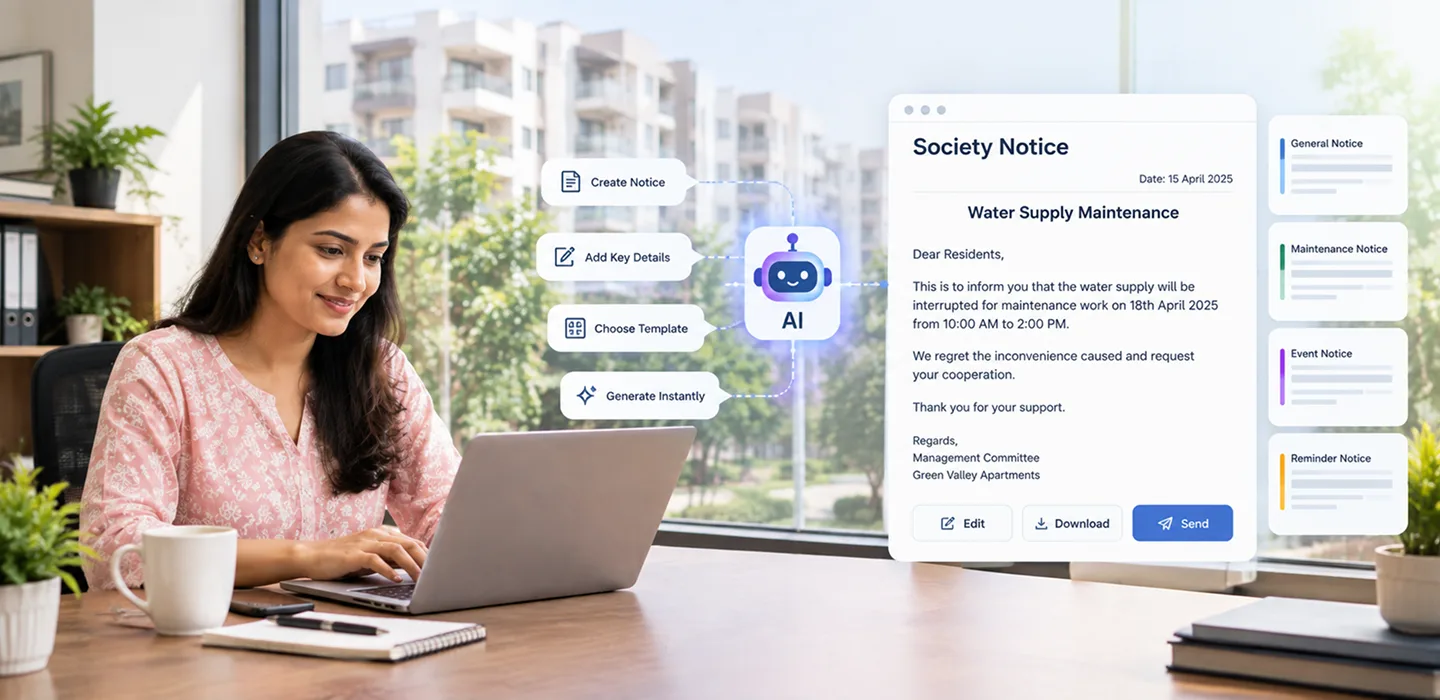
Creating notices using AI within the MyKutir platform involves a systematic process designed to enhance efficiency and accuracy. The first step in this process is the initiation of a new notice, where users can employ the platform's advanced notice authoring assist features. This tool offers text suggestions and content templates that help in crafting the notice with precision, ensuring all essential information is included without the writer having to start from scratch.
Once the draft is in place, AI algorithms then analyze the content for clarity, language consistency, and potential ambiguities. This is where the RAG (Red-Amber-Green) search feature comes into play, identifying areas within the document that need attention. Red highlights alert users to significant issues that might cause misunderstanding or are critical to compliance, amber signals moderate concerns that should be reviewed, and green confirms content that meets all necessary standards.
After the notice passes through these checks, the next phase involves distribution. AI assists in determining the best channels for notification, whether through email, SMS, or in-app notifications, based on residents' preferences and historical data. This ensures that notices are not only correctly formulated but also reach every resident in the most effective manner possible.
Finally, post-distribution, AI tools within MyKutir allow for tracking engagement metrics like read rates and responses. This feedback loop is invaluable for continuous improvement, as it informs society managers about the effectiveness of their communication strategies and any necessary adjustments. This comprehensive process highlights how AI serves as a catalyst in optimizing notice management, reinforcing the importance of adopting digital tools in modern residential settings.
Real-Life Scenario: Streamlining Notice Creation with AI
Let's consider a hypothetical housing society, Greenfield Apartments, which recently adopted AI-assisted notice creation through the MyKutir platform. Prior to this transition, the management team faced constant challenges with manual notice creation, often leading to delayed communications and occasional errors in information dissemination. This led to frequent resident complaints about missing notices for important meetings or maintenance schedules.
By implementing MyKutir's AI tools, Greenfield Apartments transformed their notice management process. The society's secretary, Mr. Mehta, began utilizing the notice authoring assist feature, which significantly cut down the time spent on drafting notices. The AI's ability to suggest relevant content and format not only expedited the creation process but also enhanced the overall professionalism of the notices.
The RAG search feature proved to be a game-changer for Greenfield Apartments. Previously, notices occasionally contained errors that led to misunderstandings among residents. With the AI's automated checks, potential issues were flagged before distribution, allowing the management to rectify them proactively.
Another significant improvement was in the distribution phase. The AI's assessment of optimal communication channels based on resident preferences ensured that every notice reached its intended audience promptly. For instance, younger residents preferred receiving notifications via the app, while older residents opted for SMS alerts. This tailored approach improved resident engagement, as evidenced by a survey that showed a 30% increase in the number of residents reading notices compared to the previous manual system.
This scenario illustrates the tangible benefits of AI in notice creation, from efficiency gains to improved satisfaction levels among residents. By minimizing manual efforts and maximizing accuracy, Greenfield Apartments exemplifies how housing societies can leverage technology to foster better community management and communication.
Common Mistakes in Notice Management and How AI Helps Avoid Them
Manual notice management in housing societies often comes with a host of challenges that can lead to inefficiencies and resident dissatisfaction. Common pitfalls include delayed dissemination, errors in content, and inconsistent communication channels. These issues not only undermine the effectiveness of management but also erode residents' trust over time.
One prevalent mistake is the lack of a standardized process for notice creation. Without templates or guidelines, notices can vary greatly in terms of format and content quality, leading to confusion among residents. AI addresses this by providing structured frameworks and templates through platforms like MyKutir, ensuring uniformity and clarity in every communication.
Errors in content, such as incorrect dates or missing information, are another frequent issue. These mistakes often arise from the manual compilation and review of notices under time constraints. AI mitigates this risk by using language processing capabilities to review content for errors and suggest corrections. The RAG search feature specifically highlights areas that require attention, reducing human oversight and enhancing the reliability of information shared with residents.
Timeliness is a critical factor in notice management. Manual processes can be slow, particularly if notices require multiple levels of approval. AI streamlines this by automating approval workflows, ensuring that notices are distributed as soon as they are finalized. This not only saves time but also ensures that residents receive timely updates, which is crucial for announcements about urgent matters like maintenance work or emergency meetings.
Inconsistent communication channels can also fragment notice dissemination, causing some residents to miss out on important information. AI solutions offer intelligent distribution capabilities, analyzing resident preferences and past engagement data to select the most effective channels for each notice. This targeted approach ensures that all residents are reached, thereby improving overall communication efficacy.
By addressing these common mistakes through automation and intelligent processes, AI significantly enhances notice management, leading to more informed residents and smoother society operations.
Manual vs. AI-Assisted Notice Creation: A Comparison
| Aspect | Manual Notice Creation | AI-Assisted Notice Creation |
|---|---|---|
| Time Efficiency | Time-consuming, involves multiple steps and approvals | Significantly faster with automated workflows and templates |
| Accuracy | Prone to human errors and inconsistencies | High accuracy with AI checks and standardized templates |
| User Satisfaction | May lead to resident frustration due to delays and errors | Improved satisfaction with timely and accurate notices |
| Resource Allocation | Demands considerable effort from management staff | Minimizes manual effort, allowing focus on strategic tasks |
| Communication Channels | Often limited to physical notices or emails | Utilizes diverse channels including SMS, apps, and emails |
| Feedback and Adjustments | Limited feedback mechanisms | Rich analytics for ongoing improvement |
In the comparison between manual and AI-assisted notice creation, it is evident that AI offers substantial advantages across various aspects. Time efficiency is a notable benefit, as AI minimizes the lengthy processes associated with manual workflows. By automating repetitive tasks and providing templates, AI reduces the time needed to create and distribute notices, freeing up resources for other important activities.
Accuracy is another area where AI shines. Manual processes are susceptible to human errors, which can lead to misinformation and resident confusion. AI, with its robust checks and automated revisions, ensures that notices are accurate and consistent. This leads to improved resident trust and reduced instances of miscommunication.
User satisfaction is significantly enhanced with AI-assisted notice creation. Timely and accurate notices mean that residents stay informed and engaged with society activities, reducing frustration and fostering a positive community environment. Additionally, AI's ability to use diverse communication channels ensures that notices reach residents in their preferred format, further boosting satisfaction.
Resource allocation is optimized in the AI-assisted scenario. Management staff can redirect their efforts from mundane tasks to more strategic initiatives, improving overall society governance. AI tools not only perform routine tasks but also offer insights through analytics, allowing for continuous improvement in notice management practices.
Overall, the transition to AI-assisted notice creation within the MyKutir platform clearly supports enhanced efficiency, accuracy, and resident satisfaction, marking a significant step forward for housing societies.
Step-by-Step Guide to Using AI for Notice Creation in MyKutir
Leveraging AI for notice creation within the MyKutir platform is a straightforward process that empowers society managers to communicate more effectively. Here’s a step-by-step guide to using these powerful tools:
Step 1: Access the AI Tools
Begin by logging into the MyKutir platform. Navigate to the notice management section, where you will find the AI-assisted tools available for creating and managing notices.
Step 2: Initiate a New Notice
Click on the "Create New Notice" option. This will open a drafting interface where you can enter the basic details of your notice, such as the title, date, and intended recipients.
Step 3: Utilize the Notice Authoring Assist
Leverage the notice authoring assist feature to help draft the notice. This tool provides intelligent suggestions and content templates to ensure that all necessary information is included and formatted correctly. This step significantly reduces the time and effort required to draft notices manually.
Step 4: Perform RAG Search Check
Once your draft is complete, use the RAG search feature to analyze the content. The system will highlight any issues that need attention in red, amber, or green, based on severity. Address these highlighted areas to enhance the quality and clarity of the notice.
Step 5: Approval Workflow
After revising the draft, proceed through the automated approval workflow. This ensures that all necessary stakeholders have reviewed and approved the notice before dissemination.
Step 6: Distribute the Notice
Using the AI’s distribution capabilities, select the appropriate channels for your residents, be it email, SMS, or app notifications. The system uses historical data and resident preferences to optimize this process.
Step 7: Monitor Engagement
Post-distribution, access the analytics tools to monitor engagement metrics. This data provides insights into how effectively the notice was received and read by the community, allowing for improvements in future communications.
By following these steps, society managers can make the most of AI tools in MyKutir, ensuring prompt, accurate, and effective communication within their communities.
Frequently Asked Questions about AI-Assisted Notice Creation
What is AI-assisted notice creation in housing societies?
AI-assisted notice creation refers to the use of artificial intelligence technologies to streamline the process of drafting, reviewing, and distributing notices within housing societies. This approach leverages tools like natural language processing and machine learning to automate and optimize tasks that traditionally required significant manual effort. AI solutions offer features such as content suggestions, error detection, and targeted distribution, ensuring more efficient and accurate notice management for society managers and residents alike.
How does AI improve notice management efficiency?
AI enhances notice management efficiency by automating repetitive tasks and reducing the likelihood of human error. With AI, society managers can quickly draft notices using intelligent templates and suggestions, perform automated quality checks to ensure information accuracy, and distribute notices through channels that best reach their intended audience. Additionally, AI provides analytics on engagement metrics, helping managers assess the effectiveness of notices and make data-driven improvements.
What are the key features of MyKutir's AI notice creation tool?
MyKutir's AI notice creation tool features several key components that streamline the notice creation process. Notably, the notice authoring assist provides content templates and text suggestions that expedite drafting. The RAG search feature performs automated content checks, flagging areas that require attention. Furthermore, MyKutir offers intelligent distribution capabilities, selecting optimal communication channels based on resident preferences and historical data. These features collectively enhance the efficiency and accuracy of notice management.
How can AI prevent common notice management mistakes?
AI prevents common notice management mistakes by automating the content creation and review process. Errors such as incorrect dates or missing information are minimized with AI-driven checks and suggestions. The use of standardized templates ensures consistency across all notices, while automated workflows eliminate delays in approval and distribution. Furthermore, AI's intelligent distribution capabilities ensure that notices reach all intended recipients, reducing the likelihood of missed communications.
Is it complicated to switch from manual to AI-assisted notice creation?
Switching from manual to AI-assisted notice creation is designed to be seamless with platforms like MyKutir. The user interface is intuitive, guiding society managers through each step of the process. Initially, there might be a learning curve as users adapt to new tools, but comprehensive support and documentation are typically available to ease this transition. Over time, the efficiency and accuracy gains outweigh the initial setup efforts, resulting in a more streamlined and effective notice management process.
What are the challenges of implementing AI in notice management?
Implementing AI in notice management can present challenges such as resistance to change, data privacy concerns, and the need for initial setup and training. Some users may be hesitant to adopt new technology, fearing complexity or loss of control. Additionally, ensuring data security and compliance with privacy regulations is critical. However, these challenges can be mitigated with proper planning, including comprehensive training programs and clear data protection policies, ensuring a successful integration of AI tools.
How does AI-assisted notice creation impact resident communication?
AI-assisted notice creation positively impacts resident communication by improving the accuracy, timeliness, and reach of notices. Residents receive well-crafted information through their preferred channels, leading to higher engagement and satisfaction. AI tools ensure that notices are clear and error-free, reducing misunderstandings and fostering a more informed community. This improved communication enhances residents' trust in society management and contributes to a more harmonious living environment.
What is the future of AI in housing society management?
The future of AI in housing society management holds promise for further advancements in communication, automation, and personalization. As AI technologies continue to evolve, we can expect even more sophisticated tools for managing community operations, from predictive analytics for maintenance scheduling to virtual assistants for resident inquiries. AI will likely play a crucial role in enhancing transparency, efficiency, and engagement within housing societies, enabling more sustainable and resident-centric management practices in the years to come.
Key Takeaways
- AI-assisted notice creation offers significant improvements over manual methods, enhancing efficiency, accuracy, and user satisfaction.
- MyKutir's platform provides essential AI tools like notice authoring assist and RAG search for optimized notice management.
- Real-life scenarios illustrate the tangible benefits of AI adoption in housing societies, such as improved resident engagement and communication.
- AI helps avoid common notice management mistakes by automating drafting, reviewing, and distribution processes.
- Challenges in AI implementation can be addressed with proper training and data protection measures, ensuring a smooth transition.
- The future of AI in housing society management promises further advancements in operational efficiency and resident satisfaction.