The Ultimate Checklist for Automating Your Visitor Management System
By MyKutir Editorial Team — 2026-08-07
Discover the essential steps for automating your visitor management system to enhance security and efficiency in housing societies.
In the growing landscape of residential communities, managing visitors efficiently is a pressing concern. As the number of residents increases, so does the influx of visitors, making it imperative for housing societies to adopt a robust and automated visitor management system. This ultimate checklist will guide you through the essential steps and considerations for automating your visitor management system effectively.
Understanding the Need for Automation
Visitor management in housing societies traditionally involves manual processes such as maintaining logbooks or using spreadsheets. These methods are not only inefficient but also prone to errors and pose security risks. Automation offers a streamlined approach by leveraging technology to enhance security, improve resident convenience, and reduce administrative burdens.
Benefits of Automating Your Visitor Management System
- Enhanced Security: Automated systems provide real-time data access and visitor tracking, allowing for swift responses to any suspicious activities.
- Operational Efficiency: Reduces manual paperwork, freeing up time for security personnel to focus on critical tasks.
- Improved Resident Experience: Residents can pre-authorize visitors through an app, speeding up the entry process.
- Accurate Record Keeping: Digital logs are more reliable and accessible compared to paper records.
Key Features to Look For
When selecting an automated visitor management system, consider the following key features to ensure it meets the needs of your society:
1. Visitor Pre-Authorization
This feature allows residents to pre-approve visitors using a mobile app, reducing wait times at the gate.
2. Real-Time Notifications
Automatic alerts to residents when their guest arrives ensure they are informed instantly about visitor activity.
3. Digital Logbooks
Maintaining digital logs ensures that visitor data is accurate and easily retrievable for audits or security checks.
4. Integration with Security Systems
An automated system should integrate seamlessly with existing security infrastructure like CCTV and access control systems.
5. Multi-language Support
In a diverse society, having support for multiple languages such as English, Hindi, and Gujarati enhances usability.
Steps for Implementing an Automated System
Transitioning to an automated visitor management system involves careful planning and execution. Follow these steps to ensure a smooth implementation:
Step 1: Assess Your Current System
Evaluate your existing visitor management process to identify areas that need improvement.
Step 2: Set Clear Objectives
Define what you aim to achieve with automation, such as increased efficiency or enhanced security.
Step 3: Choose the Right Platform
Select a platform that offers the features outlined above and fits your budget and technical requirements.
Step 4: Train Your Staff
Provide comprehensive training to all relevant staff members to ensure they are comfortable using the new system.
Step 5: Monitor and Optimize
Regularly review system performance and gather feedback to make necessary adjustments.
Comparison: Manual vs. Automated Visitor Management
| Aspect | Manual System | Automated System |
|---|---|---|
| Security | Prone to human error | Real-time tracking and alerts |
| Efficiency | Time-consuming, labor-intensive | Fast, reduces administrative burden |
| Data Accuracy | Often inaccurate | Reliable digital logs |
| Resident Convenience | Limited | High, with pre-authorization |
Illustrative Scenario
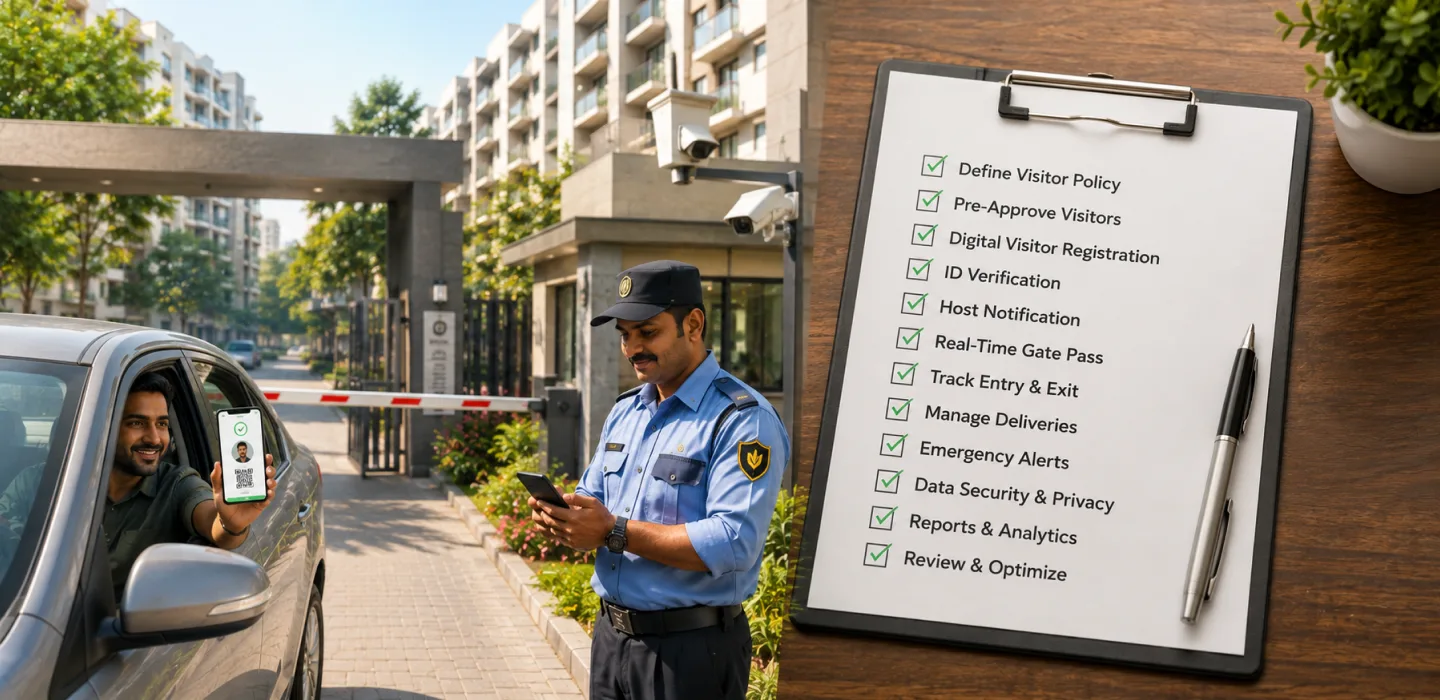
Imagine a housing society called Das Residency with 500 families. Previously, they relied on a paper logbook for visitor entries, resulting in long queues at the gate and frequent data entry errors. After implementing an automated visitor management system, residents began using the app to authorize guests in advance, which reduced wait times drastically. Security personnel could now focus more on monitoring security cameras and less on paperwork, enhancing overall security for the society.
FAQs
1. What is an automated visitor management system?
It is a technology platform designed to replace manual processes of tracking and managing visitors in residential societies through digital means.
2. How does visitor pre-authorization work?
Residents use a mobile app to approve visitor entries in advance, allowing seamless access at the gate.
3. Can it integrate with existing security infrastructure?
Yes, most modern systems can integrate with CCTV, access control systems, and other security devices.
4. What languages does the system support?
Depending on the provider, multi-language support can include English, Hindi, Gujarati, and more.
5. How secure is the database?
Cloud-based systems typically offer strong encryption and security measures to protect visitor data.
6. Is training required for all staff?
Yes, thorough training is essential to ensure all staff members can effectively use the system.
7. How can efficiency be measured post-implementation?
Through KPIs like reduced wait times, fewer data errors, and positive resident feedback.
Key Takeaways
- Automating visitor management enhances security, efficiency, and resident convenience.
- Choose a system with visitor pre-authorization, real-time notifications, and multi-language support.
- Implementation requires careful planning, training, and ongoing optimization.
- Compare manual vs. automated systems to highlight the benefits of automation.