Using AI to Streamline Operations in Residential Societies: An Expert Perspective
By MyKutir Editorial Team — 2026-08-08
Explore how AI is transforming residential society management, enhancing efficiency and resident satisfaction with expert guidance.
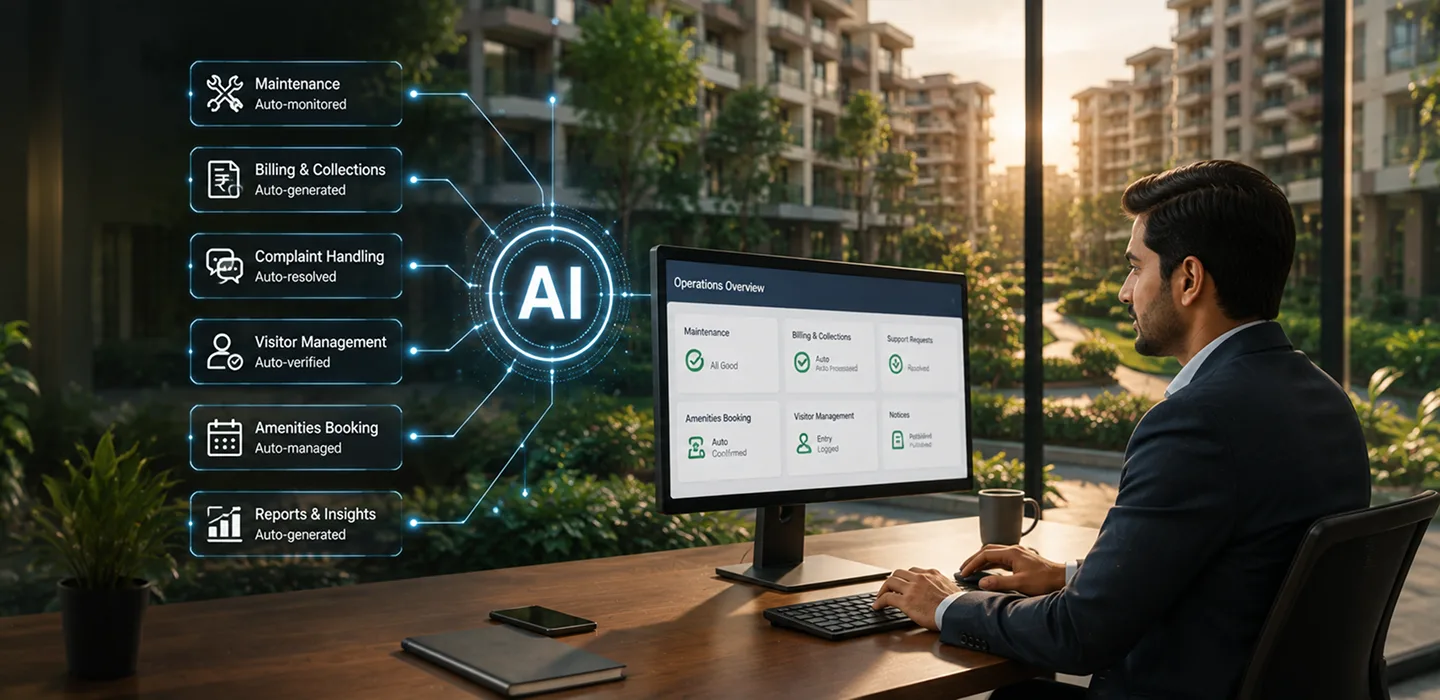
Artificial Intelligence (AI) has been steadily transforming various industries, and the housing society sector is no exception. Residential societies face challenges in efficiently managing operations such as billing, complaint resolutions, visitor management, and communication. Traditional methods often involve cumbersome paperwork and manual processes, which can lead to errors and inefficiencies. AI offers promising solutions to these challenges by providing tools that automate routine tasks, increase accuracy, and enhance the overall management experience. MyKutir is one such platform integrating AI into society management with features like large language models (LLMs) and deterministic automation.
MyKutir’s AI-driven capabilities are designed to ease the workload of society managers and committees by automating repetitive tasks. For instance, billing operations can be streamlined through AI, which handles invoice generation, distribution, and even payment tracking. This not only saves time but also minimizes human error. The platform’s LLM features can assist society managers in drafting notices and managing complaints efficiently, ensuring better communication with residents. Furthermore, deterministic automation helps in scheduling and managing routine maintenance tasks without manual intervention.
AI adoption in residential societies is also about improving resident experiences. Automating processes like visitor management through digital check-ins and check-outs simplifies security protocols and reduces waiting times. The platform’s AI features aim to provide a seamless, convenient experience for residents and managers alike. Through these innovations, AI is paving the way for smarter, more efficient society management, making daily operations smoother and more reliable.
Core Areas Where AI Can Enhance Society Management
The implementation of AI in society management can lead to significant improvements across several key operational areas. Billing automation is one of the most impactful applications. AI can automatically generate and distribute bills, send timely reminders, and even track payments, reducing manual workload and errors. This streamlined process ensures that society finances are managed efficiently, enabling transparency and accountability.
Another critical area is complaint management. Societies often face numerous resident complaints ranging from maintenance issues to administrative queries. MyKutir's LLM features assist in drafting complaint responses, categorizing them based on priority, and tracking their resolution status. This helps society managers address complaints promptly and maintain strong community relations. Moreover, automated systems can analyze trends in complaints, providing insights that can lead to proactive measures and improvements in facilities.
Visitor handling is also transformed by AI capabilities. Traditional visitor management requires manual logs and physical checks, which can be time-consuming and prone to errors. AI-driven systems allow digital check-ins and outs, offer pre-authorization options, and maintain a secure digital log of visitors, enhancing security and efficiency. MyKutir’s platform, for instance, enhances visitor management by integrating AI to ensure swift and accurate processing.
Drafting notices is another administrative task that can benefit from AI. Whether announcing events, policy updates, or maintenance schedules, creating notices can be time-consuming. MyKutir’s LLM assists in crafting clear and concise notices by suggesting templates and phrasing, reducing drafting time and ensuring consistency in communication. AI's role in streamlining these tasks underscores its potential to enhance operational efficiency in residential societies significantly.
How AI-Driven Features Actually Work: A Closer Look
Understanding the technical workings behind AI-driven features can shed light on their effectiveness in society management. MyKutir's platform employs advanced technologies to offer intelligent solutions for various operational needs. The complaint draft assist feature, for example, leverages large language models (LLMs) that can process and understand natural language inputs. This feature aids society managers by suggesting appropriate responses to complaints, which they can then review and send, significantly reducing the time spent on drafting responses.
The notice RAG (Red, Amber, Green) search is another innovative feature that categorizes notices based on their urgency and importance. This system allows managers to quickly identify critical issues that need immediate attention, streamlining response efforts. By using AI to sort and prioritize notices, society management can become more proactive rather than reactive. The RAG search system operates on deterministic automation principles, ensuring reliable and predictable results based on predefined criteria.
AI's integration into society management is made possible through strategic code paths that facilitate seamless interaction between different systems. In MyKutir's case, LLM code paths are designed to ensure that language processing is done efficiently and accurately, using extensive datasets to "train" the models on likely scenarios and queries. This allows the system to respond accurately to a wide range of queries and tasks, maintaining high standards of communication and operational efficiency.
These AI-driven features not only enhance productivity but also contribute to a more engaged and satisfied resident community. They provide society managers with the tools needed to handle complex tasks effortlessly, allowing them to focus on more strategic activities. As these technologies continue to evolve, their potential to reshape society management becomes increasingly significant, promising greater efficiencies and improved resident experiences.
Scenario: A Day in the Life of an AI-Enabled Society Manager
Imagine a day in the life of a society manager who relies on AI-powered tools provided by MyKutir. The day begins with the manager logging into the platform, greeted by a dashboard displaying key performance indicators and pending tasks. The dashboard, enriched by AI analytics, highlights overdue maintenance requests and financial summaries, enabling the manager to prioritize effectively.
The first task involves addressing resident complaints. Thanks to the complaint draft assist feature, the manager can swiftly review and send responses that have been auto-suggested by the platform's LLM. This feature allows the manager to handle twice the number of complaints compared to manual processing, ensuring resident issues are resolved promptly.
Throughout the day, the manager receives visitor requests via the AI-driven visitor management system. Pre-authorization capabilities mean that approved visitors can check in digitally, minimizing queues and enhancing security. The manager can monitor visitor logs in real time, ensuring compliance with society protocols without manual input.
When it comes to drafting notices for upcoming maintenance work, the manager uses the platform's notice RAG search feature to classify notices by urgency. The AI suggests templates for the notices, which are then customized and sent out, keeping residents informed proactively and consistently. This minimizes any disruption caused by maintenance work and reinforces community trust.
By the end of the day, the manager reviews a summary report generated by the AI, reflecting on completed tasks and areas needing attention. This report provides insights into operational efficiency, resident satisfaction levels, and financial standings, guiding future decision-making. Thus, AI tools empower the society manager to achieve more in less time, driving operational excellence and enhancing resident satisfaction.
Common Missteps When Integrating AI in Society Management
Integrating AI into society management can be transformative, but it comes with its own set of challenges. One common misstep is underestimating the importance of staff training. Without adequate training, staff may struggle to use AI tools effectively, leading to underutilization and frustration. Societies should invest in comprehensive training programs to ensure that staff are comfortable and proficient with new technologies.
Another mistake is selecting AI solutions that do not align with the specific needs of the society. For instance, a society with limited visitor traffic may not require an advanced visitor management system. Conducting a thorough needs assessment and involving stakeholders in the decision-making process can prevent mismatches and ensure that the chosen solutions are appropriate and cost-effective.
Failure to maintain data privacy is another critical error. AI systems often handle sensitive resident information, making data protection paramount. Societies must adhere to data protection regulations, implementing robust security measures to safeguard resident data. This includes using encryption, access controls, and regular audits to ensure compliance.
Moreover, societies might overlook the importance of ongoing support and updates. AI technologies evolve rapidly, and societies need to keep their systems up to date to benefit from the latest advancements and security patches. Partnering with a reliable service provider like MyKutir, which offers regular updates and support, can prevent obsolescence and ensure the long-term success of AI initiatives.
Comparison: Manual Processes vs. AI-Driven Management
| Operational Area | Manual Process | AI-Driven Process |
|---|---|---|
| Billing | Manual invoice creation, physical distribution, manual payment tracking | Automated invoice generation, digital distribution, real-time payment tracking |
| Complaint Management | Manual logging, paper-based tracking, slow response times | Automated categorization, digital tracking, prompt responses |
| Visitor Management | Manual entry logs, physical verification, delayed processing | Digital check-in/out, pre-approval options, real-time logs |
| Communication | Handwritten notices, inconsistent messaging, manual delivery | Automated notices, consistent templates, instant digital delivery |
This comparison clearly illustrates the efficiency gains from transitioning to AI-driven management. Automated billing ensures financial transparency, while AI-enhanced complaint management improves resident satisfaction through faster resolution. Visitor management becomes more secure and streamlined, and communication is significantly improved with instant digital notices. This transformation not only simplifies administrative tasks but also enhances the overall living experience for residents.
Step-by-Step Guide to Implementing AI Solutions in Your Society
Adopting AI solutions involves a structured approach to ensure effective integration and long-term success. The first step is to conduct a comprehensive needs assessment to identify specific operational areas that can benefit from AI. Engaging stakeholders, such as residents and committee members, in this assessment ensures that diverse perspectives are considered, and the most pressing needs are addressed.
Next, research and select the appropriate AI tools that align with your society's needs and budget. Platforms like MyKutir offer tailored solutions for housing societies, providing a range of features from billing automation to visitor management. It is crucial to evaluate different service providers, comparing their offerings, pricing models, and customer support services.
Once a provider is selected, focus on preparing your infrastructure for AI integration. This might involve upgrading existing systems, ensuring compatibility with new technologies, and enhancing network security to protect sensitive data. Collaborate with your chosen provider to ensure a smooth transition, leveraging their expertise and support during the implementation phase.
Training staff and residents is a critical component of successful AI adoption. Organize workshops and training sessions that cover the functionalities and benefits of the new system. Adequate training helps users become comfortable with AI tools, maximizing their potential and ensuring smooth operation.
Finally, establish a feedback loop to monitor the system's performance and gather user input. Continuous feedback helps identify any issues or areas for improvement, allowing for timely adjustments and enhancements. This iterative process ensures that AI solutions remain effective and continue to meet the evolving needs of your society.
Legal and Compliance Considerations
As societies integrate AI systems, it's essential to be aware of the legal and compliance implications. While AI can significantly enhance operational efficiency, societies must comply with applicable laws and regulations. This includes adhering to the Societies Registration Act 1860, relevant state Cooperative Societies Acts, and data protection laws.
Data privacy is a critical concern when implementing AI solutions. Societies must ensure that resident data is collected, stored, and processed in compliance with the law. Implementing robust data protection measures, such as encryption and access controls, helps safeguard sensitive information and prevent unauthorized access.
Societies should also be aware of tax implications related to AI adoption. For example, GST thresholds and applicability vary across states and may impact financial management. Consulting with a chartered accountant (CA) or legal expert can help societies navigate these complexities and ensure compliance.
Moreover, AI systems must be transparent and unbiased. They should not introduce discrimination or unfairness in decision-making processes. Regular audits can help identify any biases or discrepancies in AI-driven operations, allowing societies to make necessary adjustments and maintain fairness and transparency.
Given the evolving nature of legal frameworks, societies should stay informed about regulatory changes and seek expert advice when necessary. By proactively addressing legal and compliance considerations, societies can mitigate risks and successfully leverage AI technologies to enhance their operations.
Conclusion: The Future of AI in Society Management
The adoption of AI in society management is transforming how residential communities operate. AI technologies offer significant advantages, from automating routine tasks to improving communication and enhancing resident satisfaction. Societies that embrace AI-driven solutions can expect more efficient operations, better resource management, and a more enjoyable living experience for residents.
Looking ahead, AI will continue to evolve, introducing new capabilities and opportunities for further improvement. Future advancements may include more sophisticated AI algorithms that offer predictive analytics, enabling societies to anticipate and address issues before they arise. The potential for AI to integrate with smart home technologies also offers exciting possibilities for enhancing resident convenience and security.
Encouraging societies to embrace AI is essential for long-term success. By investing in AI technologies, societies can stay ahead of the curve and adapt to the evolving needs of residents. The benefits of AI adoption are clear, and as regulatory frameworks continue to evolve, societies must remain proactive and informed to fully capitalize on AI's potential.
FAQ
What are the primary benefits of using AI in society management?
AI in society management provides numerous benefits, including increased operational efficiency, reduced manual workload, and improved accuracy. By automating routine tasks, AI allows society managers to focus on strategic activities, enhancing community engagement and resident satisfaction. Additionally, AI systems offer real-time data and insights, enabling better decision-making and resource management.
How does AI simplify the complaint resolution process?
AI simplifies complaint resolution by automating the categorization and prioritization of complaints, allowing society managers to address issues promptly. AI tools like MyKutir's LLM assist in drafting responses, reducing the time spent on communication and ensuring consistency in messaging. This leads to faster resolutions and improved resident relations.
What steps should be taken to implement AI in a housing society?
Implementing AI in a housing society involves conducting a needs assessment, selecting appropriate AI tools, preparing infrastructure, training staff, and establishing a feedback loop. By engaging stakeholders, researching solutions, and leveraging expert support, societies can ensure effective AI integration and maximize its benefits.
Are there legal considerations when using AI in societies?
Yes, societies must comply with relevant laws and regulations, including data protection and cooperative societies acts. Ensuring data privacy, transparency, and fairness in AI-driven operations is crucial. Consulting legal experts and staying informed about regulatory changes helps societies navigate these considerations effectively.
How does AI compare to traditional manual processes in residential societies?
AI offers significant advantages over traditional manual processes by automating routine tasks, reducing human error, and providing real-time insights. This enhances operational efficiency and improves resident satisfaction. While manual processes are often time-consuming and error-prone, AI-driven systems streamline society management and enhance overall effectiveness.
What challenges might societies face when adopting AI solutions?
Challenges include inadequate staff training, selecting inappropriate AI solutions, ensuring data privacy, and keeping systems updated. Societies should invest in training, involve stakeholders in decision-making, implement strong security measures, and partner with reliable service providers to overcome these challenges.
Is MyKutir's AI platform suitable for all types of societies?
MyKutir's AI platform offers a range of features that can benefit different types of societies, from small communities to large residential complexes. However, societies should conduct a needs assessment to determine their specific requirements and ensure that the chosen solutions align with their operational needs and budget.
Key Takeaways
- AI enhances efficiency and accuracy in society management by automating routine tasks.
- MyKutir's platform offers LLM features for complaint resolution and notice drafting.
- Successful AI integration requires careful planning, training, and stakeholder engagement.
- Legal and compliance considerations are essential, particularly concerning data privacy.
- AI's future in society management promises further advancements and enhanced resident experiences.