The Ultimate Guide to AI-Powered Notice Management in Indian Housing Societies
By MyKutir Editorial Team — 2026-08-14
Discover how AI transforms notice management in housing societies, streamlining processes and improving communication.
Housing societies in India are bustling communities where effective communication is key to smooth operations. Notice management serves as the backbone of communication in these societies by disseminating essential information to residents and stakeholders efficiently. Traditionally, notice management involves manual processes that include drafting notices, getting approvals, and distributing them through physical boards or emails. This approach, however, can be time-consuming and prone to human errors.
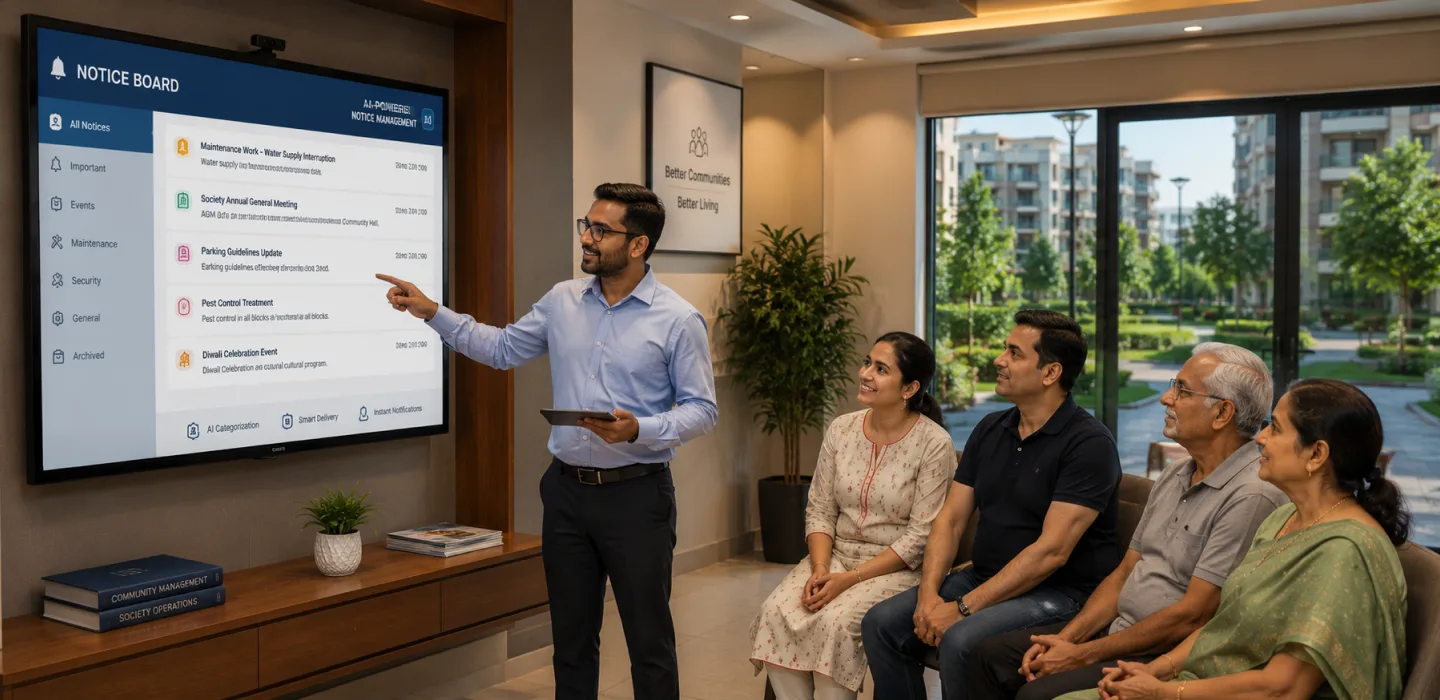
The introduction of AI-powered notice management can transform how societies communicate. By leveraging artificial intelligence, the process of creating, distributing, and managing notices becomes significantly more streamlined and accurate. AI-powered notice management refers to the use of advanced AI algorithms and tools to enhance traditional notice management practices. This includes automating repetitive tasks, providing intelligent assistance in drafting notices, and ensuring timely distribution and tracking of notices.
In the context of Indian housing societies, AI-powered notice management can address several common challenges. These include the need for rapid communication across diverse groups, maintaining the accuracy and relevance of information, and ensuring that all residents are informed in a timely manner. AI can assist by analyzing past notice patterns, predicting the best times for distribution, and personalizing notices based on resident preferences.
Moreover, AI technologies can enhance the traditional practices by offering features like RAG (Red, Amber, Green) search, which allows society managers to quickly categorize and prioritize notices based on urgency and importance. This ensures that critical information reaches residents without delay. By incorporating such AI-driven functionalities, housing societies can not only improve communication efficiency but also build a more engaged and informed community.
Core Features of AI-Powered Notice Management
The shift from manual to AI-powered notice management brings numerous advanced features that redefine how notices are handled in housing societies. A key feature is the notice drafting assist, which uses language models to help in the composition of clear and professional notices. This AI-driven assistance can suggest wording, check for errors, and ensure consistency across communications.
Another crucial feature is the RAG search, which allows society managers to categorize notices using a Red, Amber, Green system based on their urgency. This prioritization helps in ensuring that high-importance notices are addressed first, maintaining the attention of the residents on critical issues.
Deterministic automation is also a standout feature, allowing repetitive tasks such as distribution and follow-up reminders to be automated. This includes setting up schedules for notice delivery and sending automatic reminders to residents who have not acknowledged receipt. Such automation ensures that notices reach everyone efficiently and reduces the chance of human oversight.
The integration of AI into notice management further allows for intelligent tracking and analytics. By analyzing data from notice interactions, AI algorithms can provide insights into resident engagement and the effectiveness of communication strategies. This feedback loop enables continuous improvement in how notices are managed and delivered.
Overall, these features streamline the process of notice creation, distribution, and tracking, making it more efficient and reliable. Housing societies leveraging AI-powered notice management can expect increased resident satisfaction due to timely and accurate communication, as well as reduced administrative burdens on society management committees.
How AI Notice Management Works in Practice
AI-powered notice management in platforms like MyKutir involves several sophisticated yet user-friendly technical components. At its core, MyKutir utilizes AI notice authoring assist to enhance the drafting process. This is done through natural language processing (NLP) technologies that suggest improvements in wording, grammar, and tone, ensuring that notices are both professional and clear.
The backbone of AI-powered notice management in MyKutir is the NoticeEmbeddingChunk model integrated into our Prisma data layer. This model aids in the intelligent categorization and retrieval of notices. By embedding notices into a searchable format, the system allows for rapid searches using the RAG method, which categorizes notices into Red, Amber, or Green based on urgency and importance.
The platform's native AI features also include automated workflows for notice distribution. Once a notice is drafted and approved, the deterministic automation tools ensure that it is disseminated to all relevant parties according to preset schedules. This can include sending emails, app notifications, or integrating with SMS services for broad reach.
Moreover, AI-powered notice management in MyKutir tracks engagement metrics such as open rates and resident responses. This data is crucial for managers to understand how notices are received and to make data-driven decisions for future communications. By automating analytics and feedback collection, AI enables a continuous improvement loop.
Through these innovations, MyKutir streamlines notice management from start to finish, providing housing societies with the tools to maintain clear and effective communication without the inefficiencies of manual processes.
Scenario: AI-Enhanced Notice Management in Action
Imagine a large housing society in Mumbai facing challenges in communicating updates about facility maintenance and community events. In the past, notices were managed manually, leading to delays and confusion among residents. The management committee decides to integrate MyKutir’s AI-powered notice management solution to address these issues.
The process begins with the committee members logging into MyKutir and using the notice drafting assist feature. This AI tool helps them draft a maintenance notice, suggesting the optimal wording and format to ensure clarity and professionalism. Once the notice is ready, it undergoes a quick review by the committee for approval.
After approval, the notice is categorized using the RAG system with a Red priority, indicating its high importance. The deterministic automation feature then takes over, scheduling the notice for immediate distribution across multiple channels, including the society’s mobile app, emails, and SMS for wider reach.
As soon as the notice is distributed, MyKutir's analytics tools kick in. They track which residents have opened the notice and who needs follow-up reminders. The system automatically sends out reminders to those who haven't acknowledged receipt, ensuring that no one is left uninformed.
Residents receive the notice on their preferred platforms and acknowledge it with ease. The community now feels more engaged and informed, thanks to the seamless communication facilitated by AI-powered tools. The management committee also benefits from the time saved, which can be redirected towards other essential tasks.
This scenario illustrates how MyKutir’s AI-enhanced notice management can transform communication in housing societies. By automating processes and providing intelligent insights, societies can ensure timely, accurate, and effective notices, enhancing community involvement and satisfaction.
Common Challenges and Mistakes in Notice Management
Despite the advantages of AI-powered notice management, many housing societies face lingering challenges and make avoidable mistakes when transitioning from traditional methods. One common challenge is resistance to change among committee members and residents. Often, there is apprehension about adopting new technologies and disrupting familiar processes. To mitigate this, societies should focus on comprehensive training and education about the benefits and ease of use of AI systems.
Another prevalent challenge is data management. Housing societies must ensure that the data fed into AI systems is accurate and updated regularly. Failure to maintain data integrity can lead to ineffective communication, as AI relies heavily on the quality of input data to function optimally.
Societies transitioning to AI-powered solutions also sometimes underestimate the importance of user engagement during implementation. A lack of resident involvement and feedback can lead to unsatisfactory adoption rates. Actively seeking resident input and adapting the system based on user feedback can significantly enhance engagement and satisfaction.
Mistakes also occur when societies do not clearly define the roles and responsibilities related to AI notice management. Without a structured approach, tasks can overlap or be neglected, resulting in inefficiencies. Establishing clear guidelines and responsibilities can help streamline operations.
Finally, there is the issue of over-reliance on AI. While AI-powered notice management can automate many tasks, it is not infallible. Societies should continuously monitor the system's performance and maintain a level of human oversight to ensure that notices are not only distributed efficiently but also crafted thoughtfully.
By addressing these challenges and avoiding common mistakes, societies can make a smoother transition to AI-powered notice management and fully realize the benefits of enhanced communication within their communities.
Comparison: AI-Powered vs. Traditional Notice Management
When considering the transition to AI-powered notice management, it's helpful to compare its benefits over traditional methods. The following table highlights some key differences:
| Aspect | Traditional Notice Management | AI-Powered Notice Management |
|---|---|---|
| Efficiency | Manual drafting and distribution; time-consuming and error-prone. | Automated drafting assistance and distribution; saves time and reduces errors. |
| Accuracy | Prone to human errors in drafting and scheduling. | AI ensures consistent wording, grammar checks, and optimal scheduling. |
| User Engagement | Limited tracking; dependent on manual follow-ups. | Automatic engagement tracking with analytics for continuous improvement. |
| Prioritization | Notices prioritized manually, often leading to miscommunication. | RAG system categorizes notices by urgency for effective prioritization. |
| Feedback Loops | Feedback is typically informal and not systematically tracked. | Structured feedback collection for data-driven improvements. |
These differences clearly show the advantages of adopting AI-powered notice management, particularly in terms of improving efficiency, accuracy, and user engagement. By automating routine tasks, societies can save time and resources, allowing them to focus on more strategic initiatives. Additionally, the enhanced accuracy and engagement tracking capabilities enable societies to foster a more informed and involved community.
Implementing AI Notice Management in Your Society
For housing societies considering the transition to AI-powered notice management, implementing it using a platform like MyKutir involves several key steps. Here's a step-by-step guide to get started:
- Assessment and Planning: Begin by assessing your society's current notice management processes and identifying pain points. Determine how AI-powered solutions can address these issues and set clear objectives for the implementation.
- Select the Right Platform: Choose MyKutir for its robust AI-powered notice management features, like notice drafting assist and RAG search. Ensure the platform aligns with your society's needs and offers scalability for future growth.
- Technical Setup: Work with MyKutir to set up the technical infrastructure, integrating it with existing systems if necessary. This may involve configuring data inputs, customizing features, and ensuring secure data handling.
- Staff Training: Conduct comprehensive training sessions for management committee members and staff. Focus on familiarizing them with the new system's features and workflows, emphasizing the ease of use and benefits of AI-powered tools.
- Resident Awareness: Inform residents about the transition to AI-powered notice management. Highlight how it will improve communication and encourage them to provide feedback during the initial stages.
- Launch and Monitor: Go live with the AI-powered system and closely monitor its performance. Use the platform's analytics tools to track engagement and identify areas for improvement.
- Ongoing Support and Improvement: Maintain regular contact with MyKutir's support team to address any issues. Continuously gather feedback from users and make data-driven adjustments to optimize notice management.
By following these steps, housing societies can effectively implement AI-powered notice management and enhance their communication capabilities, ultimately leading to more satisfied and engaged residents.
FAQ on AI-Powered Notice Management
How does AI improve notice management efficiency?
AI enhances notice management efficiency by automating several manual processes, such as notice drafting, prioritization, and distribution. With AI-powered tools like MyKutir, society managers can utilize drafting assistance to quickly compose well-structured notices, reducing the time spent on manual writing. Additionally, AI-driven automation can schedule and send notices to residents without requiring manual intervention, allowing society committees to focus on strategic tasks rather than routine follow-ups. The use of AI also reduces human errors, ensuring that notices are accurate and consistent, thus improving overall communication efficiency.
What are the privacy concerns with AI-powered notice management?
Data privacy is a common concern when implementing AI-powered solutions. Housing societies need to ensure that resident data is handled securely and compliantly. Platforms like MyKutir adhere to strict data protection protocols, ensuring that personal information is encrypted and accessed only by authorized personnel. While AI systems require data to function optimally, safeguards are in place to prevent unauthorized access and misuse. Societies should work closely with their AI solution providers to understand the data privacy measures in place and to comply with local data protection regulations.
Can AI notice management integrate with existing systems?
AI-powered notice management systems like MyKutir are designed to integrate seamlessly with existing systems used by housing societies. Whether societies use accounting software, member management tools, or communication platforms, these AI systems can be configured to work alongside current processes. This integration capability ensures a smooth transition and allows societies to leverage existing investments in technology. Before implementation, it is advisable to conduct a thorough assessment of current systems and discuss integration requirements with the AI solution provider to ensure compatibility.
What setup is required to implement AI notice management?
Implementing AI notice management requires setting up the technical infrastructure, which includes configuring data inputs, customizing platform features, and ensuring secure data handling. Societies will need to work with the AI solution provider to integrate the platform with existing systems and customize its features to meet their specific needs. The setup process should also include defining user roles and permissions to ensure that the system operates smoothly. Once the system is technically ready, thorough testing should be conducted to confirm that it functions correctly before going live.
How does the RAG search feature work in MyKutir?
The RAG search feature in MyKutir categorizes notices using a Red, Amber, Green system based on their urgency and importance. This feature leverages AI algorithms to assess the content and context of notices, automatically assigning them a priority level. Red notices indicate high urgency and require immediate attention, Amber notices are of medium priority, and Green notices are of lower importance. This prioritization helps society managers focus on critical communications and ensures that residents receive urgent notices promptly. The RAG search enhances the efficiency of notice retrieval and distribution.
What training is needed for staff to use AI notice management?
Staff training is a crucial component of successfully implementing AI-powered notice management. Training sessions should cover the features and functionalities of the AI system, focusing on how to navigate the platform, utilize drafting assistance, and manage notice distribution workflows. It's important to emphasize the ease of use and time-saving benefits that AI provides. Additional training on data privacy and security practices may also be necessary to ensure compliance. Ongoing support and refreshers can help staff stay updated on new features and optimizations.
Are there cost implications for adopting AI notice management?
While there are initial costs associated with adopting AI-powered notice management, such as software licensing and setup fees, the long-term benefits often outweigh these costs. AI solutions can significantly reduce the time and resources needed for manual notice management, resulting in cost savings over time. Additionally, the improved efficiency and accuracy of communication can lead to increased resident satisfaction and reduced friction in society operations. Housing societies should consider the return on investment when evaluating the cost implications of AI notice management.
Conclusion: The Future of Notice Management in Housing Societies
AI-powered notice management represents a significant advancement in the way housing societies communicate with their residents. By automating routine tasks and providing intelligent insights, these systems offer a level of efficiency and accuracy that traditional methods cannot match. The benefits of adopting AI-powered solutions are evident in the time saved, the reduction of human errors, and the enhancement of resident engagement.
As more societies realize the potential of AI technologies, we can expect to see a growing shift towards digital transformation in notice management. Future trends may include the integration of AI with other smart home technologies, further personalization of communication, and the use of predictive analytics to anticipate resident needs. However, these advancements will require ongoing commitment to data privacy and security to ensure resident trust.
In conclusion, AI-powered notice management offers housing societies a promising path to improved communication and community satisfaction. By embracing these technologies, societies can better meet the needs of their residents, foster a more engaged community, and streamline their operations for a more efficient and harmonious living environment.
Key Takeaways
- AI-powered notice management enhances communication efficiency and accuracy in housing societies.
- Core features include drafting assistance, RAG search, and deterministic automation.
- Successful implementation requires careful planning, integration with existing systems, and comprehensive staff training.
- AI systems offer significant time and cost savings compared to traditional notice management methods.
- Future trends in notice management technology may include further integration with smart home systems and predictive analytics.