How AI Is Revolutionizing Complaint Resolution in Housing Societies
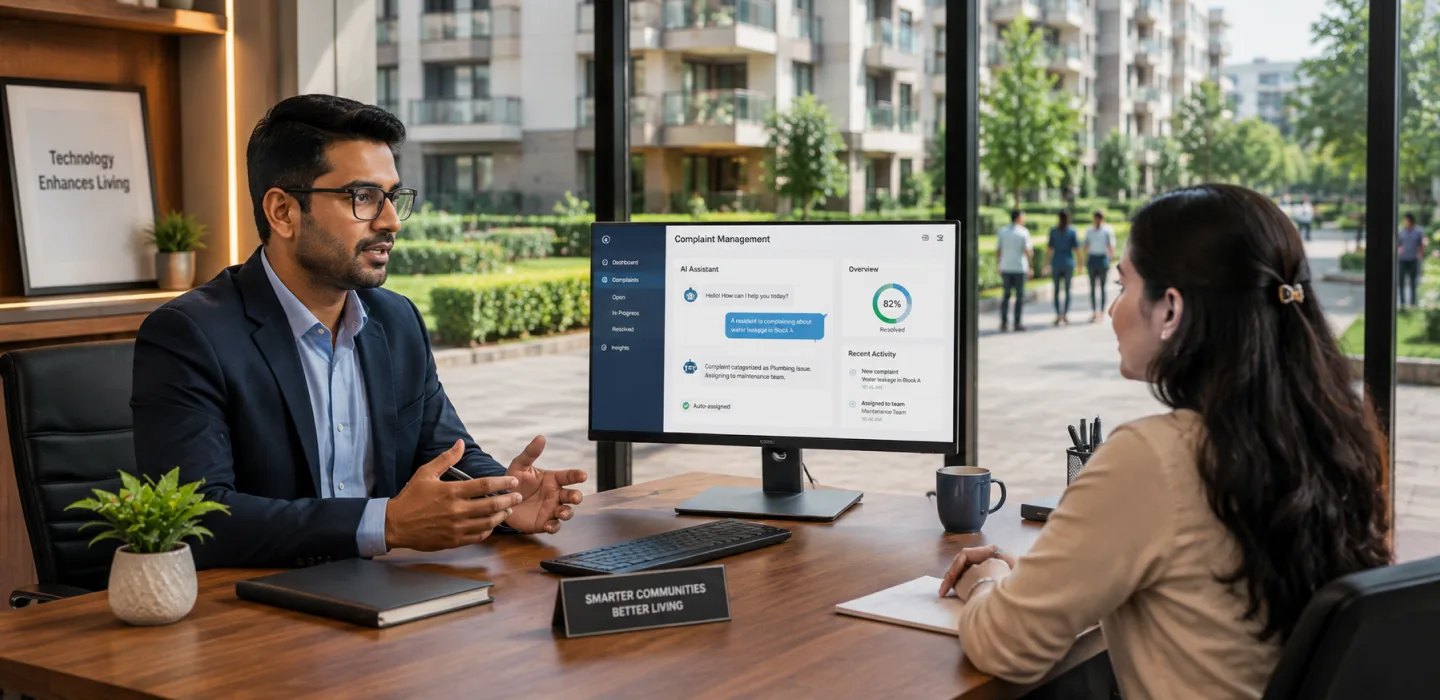
By MyKutir Editorial Team — 2026-09-24
Discover how AI-driven tools are redefining complaint resolution in housing societies, enhancing efficiency and resident satisfaction.
Housing societies, particularly in urban areas, face numerous challenges in maintaining efficient operations and resident satisfaction. Among these, complaint resolution stands out as a critical area where delays or miscommunications can severely impact the community experience. With the advent of Artificial Intelligence (AI), housing society management is undergoing a significant transformation, offering new solutions to old problems. AI's capabilities in automating processes, analyzing large volumes of data, and learning from interactions are proving invaluable in streamlining operations. This article explores how AI, with a focus on platforms like MyKutir, revolutionizes complaint resolution within housing societies.
MyKutir is at the forefront of this AI revolution, offering an AI-first platform designed to address the specific needs of Indian housing societies. By integrating AI into complaint resolution processes, MyKutir not only enhances efficiency but also improves transparency and accountability. AI tools such as natural language processing, machine learning algorithms, and automated response systems are being harnessed to create a seamless experience for both residents and management. The ability of AI to predict issues, provide real-time updates, and learn from each interaction means that societies can address complaints faster and more effectively than ever before.
In summary, AI is not just a technological upgrade for housing societies; it is a paradigm shift that redefines how management and residents interact. By leveraging AI, platforms like MyKutir offer a proactive, data-driven approach to complaint resolution, ensuring issues are resolved swiftly and with minimal friction. As we delve deeper into the specific challenges and solutions in this context, the potential for AI to enhance every aspect of housing society management becomes increasingly clear.
The Challenges of Traditional Complaint Resolution
Traditionally, complaint resolution in housing societies involves numerous manual processes that are prone to inefficiency. Residents typically lodge complaints through physical registers, phone calls, or emails, all of which necessitate manual tracking by society managers. This approach leads to several issues, including delays in response, miscommunication, and lack of a systematic tracking mechanism. Such inefficiencies can frustrate residents and burden management teams.
A major challenge with traditional methods is the lack of real-time updates and communication. Information about the complaint's status often does not reach the resident in a timely manner, resulting in repeated follow-ups and dissatisfaction. Manual systems also lack a centralized database to record and analyze complaint data, making it difficult for management to identify recurring issues or trends that could inform proactive solutions.
Furthermore, the absence of a structured workflow for complaint resolution often leads to inconsistencies in how different types of complaints are handled. This can create perceptions of bias or unfairness, undermining trust in management. For example, a leakage complaint might be prioritized over a noise complaint, not because of its urgency but due to who reports it or when it is reported.
AI provides a promising solution to these challenges by automating many of the manual processes involved in complaint handling. With AI, societies can ensure that all complaints are logged systematically, tracked in real-time, and resolved using standardized procedures. This not only improves efficiency but also enhances transparency and fairness in the complaint resolution process.
AI Tools and Features for Complaint Resolution
MyKutir's AI-driven platform incorporates several innovative tools designed to streamline complaint resolution in housing societies. Key among these are the Complaint and ComplaintHistory entities, which enable a structured approach to managing resident issues. These features ensure that every complaint is systematically recorded, tracked, and resolved, providing both residents and managers with a seamless experience.
One of the standout AI features is the complaint draft assist function. This tool uses natural language processing to help residents articulate their issues clearly, reducing ambiguity and ensuring that management receives precise information. By understanding the context and specifics of the complaint, the platform can prioritize tasks and allocate resources more effectively.
Another critical feature is heuristic chat to ticket summaries. This function leverages AI to analyze conversations between residents and management, automatically generating concise summaries of each interaction. These summaries provide a quick reference for managers, enabling them to address complaints efficiently without sifting through lengthy communication threads.
Moreover, MyKutir's AI tools can categorize complaints based on urgency and type, directing them to the appropriate department or personnel. This automation reduces human error and ensures that issues are handled by the most qualified individuals. Additionally, the platform’s machine learning capabilities allow it to learn from past complaints, predicting potential issues and suggesting preventative measures.
By integrating these AI tools, MyKutir not only enhances the speed and efficiency of complaint resolution but also improves the overall management of housing societies. These innovations represent a significant leap forward from traditional methods, offering a more responsive and transparent approach to addressing resident concerns.
How MyKutir's AI-Driven Complaint Resolution Works
The process of AI-driven complaint resolution on the MyKutir platform is designed to ensure efficiency and resident satisfaction at every stage. It begins with the resident logging a complaint through the MyKutir app. The platform's intuitive interface allows for easy submission, with the complaint draft assist feature guiding users in providing detailed and clear information.
Once a complaint is submitted, the system automatically categorizes it based on urgency and type. Using machine learning algorithms, MyKutir identifies patterns from past complaints stored in the ComplaintHistory entity, predicting potential timelines for resolution. This predictive capability helps management allocate resources effectively and set realistic expectations for residents.
The next step involves assigning the complaint to the appropriate department or personnel. MyKutir's AI tools ensure that each issue is directed to the team best equipped to handle it, reducing resolution times and minimizing errors. During this stage, the heuristic chat to ticket summaries feature provides a comprehensive overview of the complaint's history and any previous interactions, ensuring continuity and context.
Throughout the resolution process, MyKutir provides real-time updates to both residents and management. This transparency helps manage expectations and reduces the need for follow-ups, as residents are kept informed of progress. Once a complaint is resolved, the system logs the outcome in the ComplaintHistory, allowing for future reference and analysis.
By employing AI at every step, MyKutir transforms complaint resolution from a reactive process to a proactive and efficient system. The platform not only addresses current issues but also learns from each experience, continually improving its ability to manage resident concerns.
A Scenario of AI in Action: Efficient Complaint Resolution
Imagine a scenario where a resident in a housing society notices a persistent water leakage issue in their apartment. Traditionally, this would involve calling the society office, detailing the issue multiple times, and waiting for someone to address it, possibly for several days. However, with MyKutir's AI-driven platform, the process is streamlined and efficient.
The resident logs into the MyKutir app and uses the complaint draft assist feature to submit a detailed description of the problem. The AI analyzes the complaint, categorizing it as an urgent matter, and automatically forwards it to the maintenance department. The system's real-time tracking capabilities mean the resident receives immediate confirmation that their issue has been acknowledged and is being addressed.
In the backend, MyKutir's heuristic chat to ticket summaries feature generates a concise report of any previous issues related to water leakage within the society. This report is sent to the maintenance team, providing them with valuable context and history, which helps in diagnosing the problem more effectively. The AI predicts the time required for resolution based on past data, setting a realistic timeline that is communicated to the resident.
As the maintenance team works on the issue, the resident receives updates through the app, ensuring full transparency. Once resolved, the resident is notified, and MyKutir logs the outcome in the ComplaintHistory entity for future reference. This efficient and transparent process not only resolves the complaint swiftly but also enhances the resident’s trust in the society's management.
This scenario illustrates how AI can transform a potentially frustrating experience into one that is quick, clear, and satisfactory for all parties involved.
Common Mistakes to Avoid in AI-Driven Complaint Resolution
Implementing AI in complaint resolution offers numerous benefits, but it's crucial for housing societies to avoid common pitfalls that can hinder successful adoption. One major mistake is neglecting adequate training for both residents and management. While AI tools are designed to be user-friendly, understanding the nuances and capabilities of the system is essential for maximizing its potential.
Another common error is failing to integrate AI tools with existing systems and workflows. Housing societies often have established procedures for handling complaints, and AI should enhance, not disrupt, these processes. Proper planning and coordination are required to ensure seamless integration. Societies should work closely with AI providers like MyKutir to tailor solutions that fit their specific needs.
Over-reliance on AI without human oversight is another mistake. While AI can automate many aspects of complaint resolution, human judgment is still crucial in certain situations. Societies must maintain a balance between AI efficiency and human intervention, especially for complex issues that require empathy and nuanced decision-making.
Additionally, societies should avoid ignoring resident feedback. AI systems are most effective when they evolve based on real-world usage and input. Encouraging residents to provide feedback on the AI's performance helps identify areas for improvement and ensures the system remains aligned with their needs.
Lastly, underestimating the importance of data privacy can lead to significant challenges. Societies must ensure that their use of AI complies with relevant data protection regulations and that residents’ personal information is handled securely.
By being aware of these common mistakes and taking steps to address them, housing societies can successfully implement AI-driven complaint resolution systems like MyKutir, enhancing efficiency while maintaining resident satisfaction.
Manual vs. AI-Driven Complaint Resolution: A Comparison
| Aspect | Manual Resolution | AI-Driven Resolution |
|---|---|---|
| Efficiency | Time-consuming due to manual tracking and communication. | Automated processes ensure faster logging and tracking. |
| Resident Satisfaction | Often low due to delays and lack of transparency. | High, as residents receive real-time updates and quick resolutions. |
| Management Workload | High, as manual systems require constant oversight. | Reduced, as AI automates many routine tasks. |
| Consistency | Inconsistent responses depending on individual managers. | Standardized processes ensure consistent handling of complaints. |
| Data Analysis | Limited, as data is not systematically recorded or analyzed. | Robust, with AI analyzing trends and suggesting proactive measures. |
As the table demonstrates, AI-driven complaint resolution provides distinct advantages over manual methods. Societies that adopt AI systems like MyKutir can expect improved efficiency, higher resident satisfaction, and reduced management workload, making it an attractive option for modernizing operations.
Step-by-Step Guide to Implementing AI in Complaint Resolution
Implementing AI-driven complaint resolution tools within a housing society involves several key steps. Here is a detailed guide to ensure a smooth transition to an AI-enabled system like MyKutir.
- Assessment and Planning: Begin by assessing the current complaint resolution process. Identify areas where AI can provide the most value, such as reducing response times or improving data analysis. Work with stakeholders to define clear objectives and set realistic expectations for the AI implementation.
- Selecting the Right AI Platform: Choose an AI platform that aligns with your society's needs. MyKutir, with its AI-first approach, is designed specifically for housing societies and offers comprehensive tools for complaint resolution. Ensure the platform supports integration with existing systems and workflows.
- Training and Onboarding: Provide training sessions for both management and residents to familiarize them with the new system. Highlight key features such as complaint draft assist and heuristic chat to ticket summaries, emphasizing how these tools will improve the complaint resolution process.
- Data Migration: Transition existing complaint records into the new AI system. This step is crucial for leveraging historical data to enhance the AI’s predictive capabilities. Ensure that data privacy regulations are adhered to during this process.
- Testing and Feedback: Conduct a pilot test with a small group of residents and refine the system based on their feedback. This phase is essential for identifying any issues and making necessary adjustments before a full-scale rollout.
- Full Implementation: Once testing is complete, implement the AI system across the society. Monitor its performance closely during the initial months, addressing any issues promptly and collecting ongoing feedback from users.
- Continuous Improvement: AI systems are most effective when they evolve over time. Regularly review performance metrics and resident feedback to identify areas for improvement, ensuring the system remains aligned with the society’s needs.
By following these steps, housing societies can successfully integrate AI into their complaint resolution processes, reaping the benefits of efficiency and enhanced resident satisfaction that platforms like MyKutir offer.
Frequently Asked Questions about AI in Complaint Resolution
How does AI improve complaint resolution in housing societies?
AI enhances complaint resolution in housing societies by automating many routine tasks, such as categorizing and prioritizing complaints, thereby reducing response times. It provides real-time updates to residents, improving transparency and communication. Machine learning capabilities allow AI to analyze historical data, predicting potential issues and suggesting proactive measures, thus increasing efficiency and resident satisfaction.
What specific AI tools does MyKutir offer for complaint resolution?
MyKutir offers several AI tools designed to streamline complaint resolution, including the complaint draft assist, which helps residents articulate their issues clearly. It also features heuristic chat to ticket summaries, which generates concise summaries of interactions, aiding in efficient resolution. The platform's ability to categorize complaints by urgency and type ensures that issues are directed to the appropriate personnel, enhancing efficiency and accuracy.
Can AI handle all types of complaints in a housing society?
While AI can manage a wide range of complaints effectively, there are instances where human intervention is necessary, particularly for complex issues requiring empathy and nuanced decision-making. AI tools like those offered by MyKutir are designed to complement human oversight, ensuring routine complaints are handled efficiently while providing support for more complex scenarios.
Is training required to use AI-driven complaint resolution tools?
Yes, training is essential to maximize the benefits of AI-driven complaint resolution tools. Both management and residents need to understand how to use the system effectively. Training sessions can cover the use of features like complaint draft assist and real-time tracking, ensuring all users can leverage the platform’s capabilities fully.
How does AI ensure faster complaint resolution times?
AI ensures faster complaint resolution by automating the categorization, prioritization, and tracking of complaints. This reduces the need for manual intervention and speeds up the response process. Real-time updates keep residents informed, reducing follow-up queries and streamlining resolution. Additionally, AI’s predictive capabilities help anticipate issues, allowing for quicker preemptive actions.
What are the cost implications of implementing AI in complaint resolution?
The cost implications of implementing AI in complaint resolution can vary based on the size of the housing society and the complexity of the system chosen. While there is an initial investment in terms of setup and training, the long-term savings from improved efficiency, reduced manual workload, and enhanced resident satisfaction often offset these costs. MyKutir offers scalable solutions, allowing societies to choose a plan that fits their budget and needs.
How do residents benefit from AI-driven complaint resolution?
Residents benefit from AI-driven complaint resolution through faster response times, improved communication, and increased transparency. AI systems like MyKutir provide real-time updates on complaint status, reducing uncertainty and enhancing trust in management. By efficiently handling routine and repetitive tasks, AI allows management to focus on resolving complex issues, ultimately leading to greater resident satisfaction.
Key Takeaways
- AI revolutionizes complaint resolution by automating processes and enhancing efficiency in housing societies.
- Traditional methods face challenges such as delays and lack of tracking, which AI addresses effectively.
- MyKutir offers specific AI tools for complaint resolution, like complaint draft assist and heuristic chat to ticket summaries.
- Successful AI implementation requires careful planning, integration, and ongoing training and feedback.
- Residents benefit from improved communication, faster responses, and greater transparency with AI-driven systems.