Optimizing Vendor Management in Apartment Complexes: A Comprehensive Checklist
By MyKutir Editorial Team — 2026-09-21
Explore the essential checklist for optimizing vendor management in apartment complexes, ensuring smooth operations and satisfied residents.
Managing vendors in apartment complexes is a critical aspect of maintaining a high standard of living for residents. These residential communities often rely on a variety of external service providers to ensure smooth operations. Effective vendor management helps in not only ensuring quality service but also in optimizing costs and enhancing resident satisfaction. However, it is not without its challenges. From selecting the right vendor and negotiating terms to monitoring performance and handling disputes, property managers have a lot to navigate.
The common challenges in vendor management include inconsistent service quality, lack of accountability, and communication breakdowns. These issues can lead to resident dissatisfaction and increased operational costs. Furthermore, without a structured approach, it can become difficult to maintain transparency and compliance with legal standards. On the flip side, a well-organized vendor management system can bring numerous benefits. It can help streamline operations, ensure quality service delivery, and foster positive relationships with vendors, leading to long-term success.
By implementing a systematic approach to vendor management, apartment complexes can mitigate risks, reduce costs, and enhance operational efficiency. This involves identifying key vendors, setting clear selection criteria, creating comprehensive agreements, and continuously monitoring vendor performance. Additionally, leveraging technology can streamline these processes and improve management effectiveness. Ultimately, effective vendor management is about achieving the right balance between cost, quality, and service delivery to meet the community’s needs.
Identifying Key Vendors and Service Providers
Identifying key vendors is the first step toward an effective vendor management strategy. In an apartment complex, essential services may include maintenance, security, landscaping, housekeeping, waste management, and sometimes amenities like swimming pools or gyms. Each of these services plays an integral role in the functionality and appeal of the residential community. Therefore, understanding the specific needs of your complex is critical.
One approach to identifying these vendors involves conducting a needs assessment. This process involves gathering input from residents and property management teams to determine which services are priorities. For instance, if the complex has extensive landscaping, hiring a professional landscaping service may be essential. Similarly, if security is a top concern, a reliable security company should be prioritized. Once the key services are identified, the next step is to evaluate potential vendors based on their experience, reputation, and ability to meet your community’s specific requirements.
Evaluating the importance and role of each vendor involves analyzing their impact on the community. Maintenance vendors, for example, are crucial because they ensure that all facilities are in working order, directly impacting residents’ quality of life. Security vendors, on the other hand, provide peace of mind, which is often a significant factor for residents when choosing where to live. Landscaping and housekeeping contribute to the aesthetic appeal and cleanliness of the property, which are also crucial factors in resident satisfaction.
Properly identifying and evaluating vendors not only ensures service quality but also lays the foundation for long-term partnerships and operational efficiency. It helps in setting clear expectations and accountability measures, which are vital for maintaining the standard of living in an apartment complex.
Establishing Vendor Selection Criteria
Once key vendors are identified, the next step is to establish selection criteria that align with the community’s needs. Selecting appropriate vendors involves more than just looking for the lowest bid. It requires a comprehensive evaluation of several factors to ensure that the chosen vendors can deliver the required quality of service consistently.
Quality of service should be a primary consideration when selecting vendors. This involves assessing the vendor’s expertise, professionalism, and track record. For instance, if the vendor is providing maintenance services, it is essential to ensure they have the necessary skills and experience to handle complex repair tasks. Checking references and reviews can provide invaluable insights into their past performance and reliability.
Pricing is another critical factor, but it should be considered in conjunction with the overall value offered. Sometimes, opting for a slightly more expensive vendor can be justified if they offer superior service or additional features that benefit the community in the long run. It’s important to strike a balance between cost and value, ensuring the chosen vendors provide excellent service without exceeding budget constraints.
Vendor reputation and compliance with legal standards are equally important. A vendor with a solid reputation is more likely to be reliable and committed to fulfilling their obligations. Additionally, ensuring that vendors comply with local regulations and industry standards protects the apartment complex from potential legal issues. This includes verifying necessary licenses, insurance, and certifications.
Aligning vendor services with community needs is also crucial. This means understanding the specific requirements of the apartment complex and ensuring that the vendor can cater to those needs. By establishing robust selection criteria, property managers can make informed decisions that contribute to the long-term success and satisfaction of the community.
Creating Comprehensive Vendor Agreements
Creating well-structured vendor agreements is a fundamental aspect of effective vendor management. These agreements serve as the foundation for the relationship between the apartment complex and the vendor, outlining the terms and conditions under which services are provided. A comprehensive vendor agreement ensures clarity, transparency, and protects both parties in case of disputes.
Key elements of a strong vendor agreement include clear definitions of services, performance metrics, payment terms, and dispute resolution mechanisms. Clearly defining the scope of services helps set expectations and avoid misunderstandings. It specifies exactly what the vendor is responsible for and the standards they are expected to meet. This can include details such as service frequency, quality standards, and any specific requirements unique to the apartment complex.
Performance metrics are essential to ensure that vendors deliver services as promised. These metrics provide a basis for monitoring vendor performance and can include indicators like response times, quality levels, and completion rates. By including these metrics in the agreement, both parties have a clear understanding of expectations and can measure performance objectively.
Payment terms should be clearly defined to prevent any confusion or disputes regarding compensation. This includes specifying payment schedules, the process for invoicing, and any penalties for late payments. Similarly, outlining a dispute resolution process helps resolve any disagreements amicably. This can involve steps like mediation or arbitration before pursuing legal action.
Mutual understanding and clarity are the cornerstones of effective vendor agreements. These documents set the tone for the entire working relationship, and therefore, it is crucial that both parties thoroughly review and agree to the terms before signing. Investing time and effort in drafting comprehensive vendor agreements pays off in the long run by fostering successful partnerships and preventing potential conflicts.
Implementing Vendor Performance Monitoring
Ongoing performance monitoring is vital to ensure vendors consistently meet the expected standards and contribute positively to the apartment complex’s operations. Implementing a structured process for vendor performance monitoring helps identify areas for improvement and maintain accountability.
A key aspect of performance monitoring is setting clear Key Performance Indicators (KPIs) that align with the service delivery expectations outlined in the vendor agreement. These KPIs should be specific, measurable, achievable, relevant, and time-bound. For instance, KPIs for a maintenance vendor might include response time to service requests, completion rate of repairs, and resident satisfaction levels. Regularly tracking these indicators enables property managers to assess vendor performance objectively and identify any areas requiring attention.
Conducting regular performance reviews is another essential component of effective vendor management. These reviews allow property managers to provide feedback, address any concerns, and discuss potential improvements. It’s important that these reviews are not just held when issues arise, but as a regular part of the management process. Quarterly reviews are often a good starting point, but the frequency can be adjusted based on the complexity and criticality of the services provided.
Maintaining open communication channels with vendors is crucial for effective performance monitoring. This involves establishing clear contact points, encouraging regular updates, and fostering an environment where feedback can be shared openly. By keeping the lines of communication open, property managers can quickly address any issues and work collaboratively with vendors to enhance service delivery.
Incorporating vendor performance monitoring into the overall vendor management strategy ensures that the apartment complex receives consistent, high-quality services. It also enables property managers to make data-driven decisions, optimize vendor relationships, and contribute to the community’s overall success.
Managing Vendor Relationships for Long-term Success
Building and maintaining strong vendor relationships is crucial for the long-term success of an apartment complex. Effective relationship management goes beyond transactional interactions and fosters collaboration, trust, and mutual benefit.
Open and effective communication is the cornerstone of successful vendor relationships. Property managers should establish regular communication routines, such as monthly check-ins or progress meetings, to discuss any issues, share updates, and align on future goals. This proactive approach prevents misunderstandings and ensures that both parties are working towards the same objectives.
Handling conflicts in a constructive manner is also vital. Disagreements and challenges are inevitable in any business relationship. However, addressing these conflicts with a problem-solving mindset rather than a confrontational one can lead to better outcomes. It’s important to listen to the vendor’s perspective, identify the root cause of the issue, and work together to find a mutually acceptable solution.
Recognizing and acknowledging good service plays a significant role in fostering positive vendor relationships. Positive feedback, appreciation letters, or awards can go a long way in motivating vendors to maintain high standards. In some cases, offering incentives for exceptional performance can further strengthen the relationship and encourage vendors to go above and beyond.
Additionally, involving vendors in strategic discussions about the apartment complex can lead to enhanced collaboration. By understanding the complex’s long-term goals and challenges, vendors can offer valuable insights and propose innovative solutions that align with the community’s needs.
Ultimately, effective vendor relationship management is about creating a partnership where both parties benefit. When vendors feel valued and part of the community’s success, they are more likely to invest in delivering exceptional service, contributing to a thriving and well-maintained apartment complex.
Leveraging Technology for Vendor Management
Incorporating technology into vendor management processes can significantly enhance efficiency, transparency, and effectiveness. Platforms like MyKutir offer a range of features designed to streamline vendor management in apartment complexes.
Digital contract management is one such feature that can simplify the way vendor agreements are handled. By digitizing contracts, property managers can easily store, access, and manage all vendor agreements from a centralized platform. This not only reduces paperwork but also enhances accessibility and organization. It allows for quick reference, easy updates, and streamlined renewal processes, ensuring that all agreements are up-to-date and readily available.
Automated billing and payment tracking are additional technological advancements that can improve vendor management. Platforms like MyKutir provide automated systems for generating invoices, tracking payments, and sending reminders for due payments. This reduces the administrative burden on property managers and minimizes the risk of errors, delays, or disputes related to financial transactions.
Performance tracking tools offered by technological platforms enable property managers to monitor vendor performance efficiently. By aggregating data on service delivery, response times, and resident feedback, managers can gain valuable insights into vendor performance and identify opportunities for improvement. These tools often provide visual dashboards that make it easy to analyze data and track trends over time.
Moreover, technology facilitates better communication with vendors through integrated messaging systems. These systems provide a seamless platform for property managers and vendors to communicate, share updates, and collaborate on resolving issues. This ensures that communication is documented, organized, and easily accessible whenever needed.
Overall, leveraging technology in vendor management allows apartment complexes to optimize their processes, enhance transparency, and improve overall service delivery. By automating routine tasks and providing valuable insights, technology empowers property managers to focus on strategic decision-making and achieve better outcomes for their communities.
Common Mistakes in Vendor Management and How to Avoid Them
Despite the best intentions, common mistakes in vendor management can hinder the effectiveness of the process and impact the overall success of an apartment complex. Identifying these pitfalls and understanding how to avoid them is crucial for optimizing vendor management.
One frequent mistake is neglecting regular performance reviews. Without consistent assessments, it becomes challenging to hold vendors accountable or recognize areas for improvement. To avoid this, property managers should establish a routine for conducting performance reviews and ensure they are an integral part of the vendor management strategy. Regular reviews provide an opportunity to address any issues early and make necessary adjustments collaboratively with vendors.
Poor communication is another common pitfall that can lead to misunderstandings and conflicts. Property managers often assume that vendors know what is expected of them, resulting in misaligned expectations. To prevent this, clear, consistent communication should be prioritized. Regular meetings, detailed written communications, and using technological tools to facilitate discussions can bridge any communication gaps and keep all parties aligned on goals and expectations.
Failing to set clear KPIs and performance metrics is a mistake that can hinder the ability to measure vendor success. Without defined criteria, evaluating vendor performance becomes subjective and inconsistent. Property managers should ensure that performance metrics are included in vendor agreements and communicated clearly from the outset.
Another common error is selecting vendors based solely on price. While cost is an important consideration, it should not be the only factor in the decision-making process. Property managers should evaluate the overall value offered, including service quality, reputation, and alignment with community needs. This approach ensures that vendors deliver value for the price paid, leading to more sustainable partnerships.
Finally, neglecting to involve vendors in strategic planning can limit their ability to contribute meaningfully to the community’s success. By engaging vendors in discussions about long-term goals and challenges, property managers can leverage their expertise and insights to drive innovation and improvement.
Avoiding these common mistakes requires a proactive approach, clear communication, and a focus on building collaborative relationships with vendors. By doing so, apartment complexes can optimize vendor management and enhance the quality of services provided to their residents.
Conclusion and Checklist Summary
Optimizing vendor management in apartment complexes is a multifaceted process that requires careful planning, execution, and continuous improvement. By following a structured approach and leveraging the right tools, property managers can establish effective vendor management practices that contribute to the community’s success.
To summarize, effective vendor management begins with identifying key vendors and service providers that align with the community’s needs. Establishing robust selection criteria ensures that vendors are chosen based on their ability to deliver value and meet quality standards. Creating comprehensive vendor agreements sets clear expectations and protects both parties, while ongoing performance monitoring ensures accountability and continuous improvement.
Managing vendor relationships is essential for fostering long-term partnerships. Open communication, conflict resolution, and recognition of good service strengthen these relationships and contribute to consistent service delivery. Leveraging technology, such as MyKutir’s platform, streamlines vendor management processes and offers valuable insights for strategic decision-making.
Avoiding common mistakes, such as neglecting performance reviews or focusing solely on cost, is crucial for optimizing vendor management. By taking a proactive approach, property managers can achieve a harmonious balance between cost, quality, and service delivery.
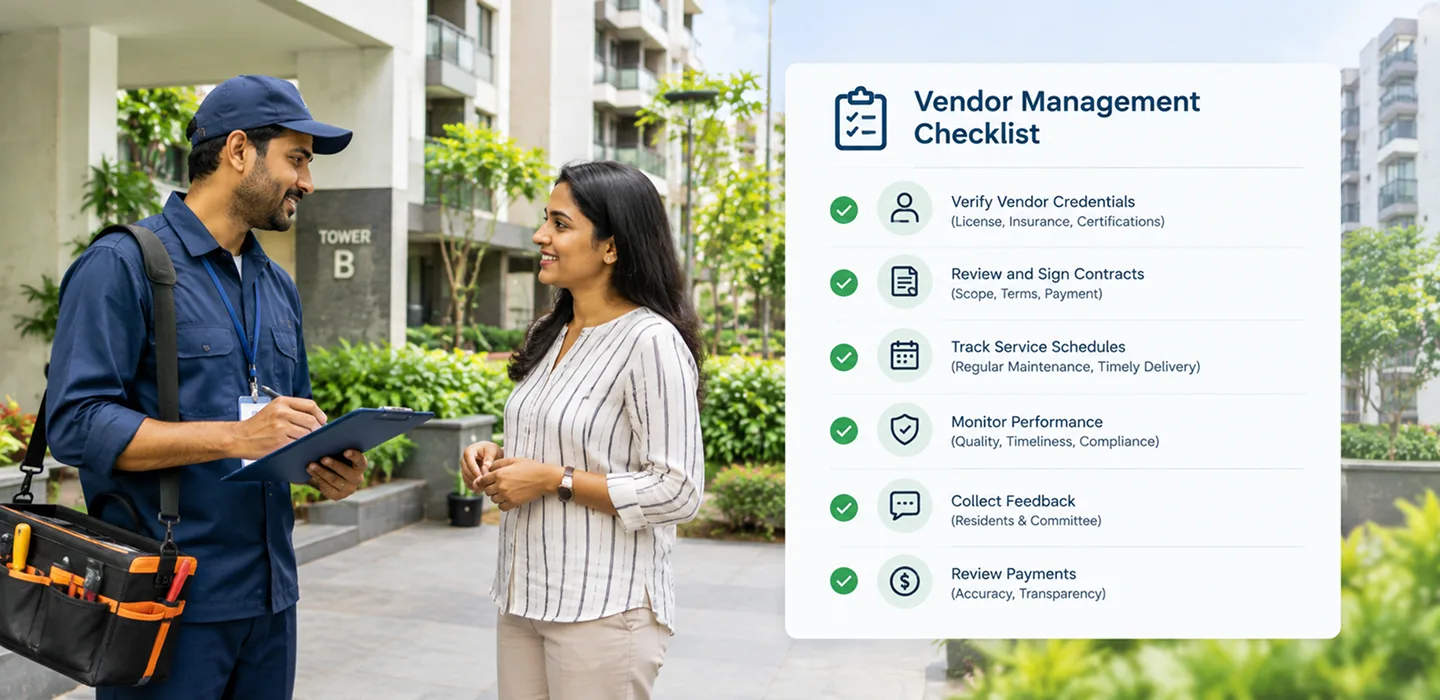
Use the following checklist to evaluate and optimize your vendor management practices:
| Vendor Management Checklist |
|---|
| Identify key vendors based on community needs. |
| Establish comprehensive selection criteria, considering quality, value, and compliance. |
| Draft detailed vendor agreements with clear performance metrics and terms. |
| Implement regular performance monitoring through KPIs and reviews. |
| Foster strong relationships through open communication and conflict resolution. |
| Leverage technology for streamlined contract management and performance tracking. |
| Avoid common pitfalls by maintaining consistency in reviews and prioritizing communication. |
FAQ
What are the key criteria for selecting vendors in apartment complexes?
The key criteria for selecting vendors in apartment complexes include quality of service, cost-effectiveness, reputation, and compliance with legal standards. Quality of service ensures that vendors can meet the complex's needs consistently and effectively. Cost-effectiveness ensures that the services provided offer good value for the money spent. Reputation is also important, as vendors with a strong track record are more likely to be reliable and trustworthy. Finally, compliance with legal standards and industry certifications ensures that vendors operate within the regulatory framework, minimizing legal risks for the apartment complex.
How can technology improve vendor management?
Technology can significantly improve vendor management by streamlining processes and enhancing transparency. Digital contract management systems allow for easy storage, retrieval, and updating of vendor agreements, reducing paperwork and improving organization. Automated billing and payment tracking minimize errors and streamline financial transactions. Performance tracking tools provide valuable insights into vendor performance, enabling data-driven decision-making. Additionally, integrated communication platforms facilitate seamless interaction with vendors, ensuring clear and documented exchanges. Overall, technology enhances efficiency, reduces administrative burdens, and provides valuable data for optimizing vendor relationships.
What should be included in a vendor agreement?
A vendor agreement should include several key elements to ensure clarity and protect both parties. These include a detailed scope of services, outlining exactly what the vendor is responsible for and the standards they must meet. Performance metrics provide objective measures for assessing service quality. Payment terms clarify invoicing procedures, schedules, and any penalties for late payments. Dispute resolution mechanisms outline steps for addressing disagreements, such as mediation or arbitration. Additionally, any legal requirements, confidentiality clauses, and termination conditions should be clearly defined to prevent misunderstandings and protect both parties.
How do you monitor vendor performance effectively?
Effective vendor performance monitoring involves setting clear Key Performance Indicators (KPIs) aligned with service expectations. Regular performance reviews provide an opportunity for feedback and addressing any concerns. Technology can facilitate real-time performance tracking, providing data on service delivery and quality. Open communication channels ensure any issues are promptly addressed, and vendors have the opportunity to improve. It is also important to document performance records systematically, so trends over time can be analyzed, leading to informed decisions and continuous improvement in vendor service delivery.
What common mistakes should be avoided in vendor management?
Common mistakes in vendor management include neglecting regular performance reviews, poor communication, selecting vendors based solely on price, and failing to involve vendors in strategic planning. To avoid these pitfalls, property managers should establish and adhere to a routine for performance assessments, ensuring clear and consistent communication with vendors. Vendor selection should focus on overall value rather than just cost. Engaging vendors in discussions about long-term goals can enhance collaboration and innovation. By addressing these common mistakes, apartment complexes can optimize their vendor management processes and improve service quality.
How often should vendor performance reviews be conducted?
The frequency of vendor performance reviews can vary based on the complexity and criticality of the services provided. As a general guideline, quarterly reviews are recommended to provide regular feedback and identify areas for improvement. However, for critical services such as security or maintenance, more frequent reviews may be necessary. The key is to establish a consistent schedule that allows for timely feedback, monitoring of key performance metrics, and opportunities for vendors to address any issues that arise. Regular reviews contribute to continuous improvement and maintain accountability and service quality.
What role does communication play in vendor management?
Communication is a vital component of effective vendor management. It helps ensure that both parties have a clear understanding of expectations, responsibilities, and goals. Regular communication fosters transparency, builds trust, and facilitates collaboration. By keeping the lines of communication open, property managers can quickly address any issues, provide feedback, and work collaboratively with vendors to enhance service delivery. Additionally, documenting interactions and using technological tools to facilitate communication can improve organization and provide a reference for future discussions. Effective communication is essential for building strong vendor relationships and ensuring successful service delivery.
Key Takeaways
- Identify and prioritize key vendors based on the specific needs of the apartment complex.
- Establish clear selection criteria focused on quality, value, and legal compliance.
- Create comprehensive vendor agreements to set expectations and protect both parties.
- Implement regular performance monitoring to ensure accountability and continuous improvement.
- Foster strong vendor relationships through effective communication and conflict resolution.
- Leverage technology to streamline vendor management and optimize service delivery.
- Avoid common mistakes by maintaining consistency in reviews and prioritizing clear communication.