Leveraging AI for Efficient Visitor Management in Housing Societies
By MyKutir Editorial Team — 2026-08-16
Discover how AI can revolutionize visitor management, offering enhanced security and convenience for housing societies.
In today’s rapidly evolving technological landscape, the integration of artificial intelligence (AI) into various sectors has transformed how routine operations are conducted. One area seeing significant advancements is visitor management in housing societies. Traditionally, housing societies managed visitor entries manually or through basic digital logs. However, with the onset of AI technologies, these systems are being significantly upgraded to provide enhanced security, convenience, and operational efficiency. This article will explore how AI is revolutionizing visitor management, making housing societies safer and more efficient environments.
The incorporation of AI into visitor management systems aims to address key challenges faced by housing societies, including unauthorized access, inefficient visitor logging, and cumbersome manual processes. AI technologies bring smart solutions that automate and streamline these tasks. The goals are clear: increase vigilance at entry points, reduce human error, and ensure that interactions between visitors and residents are both secure and seamless.
By leveraging AI, housing societies can now employ advanced features like facial recognition, predictive analytics, and automated alerts. These technologies not only bolster security but also improve the overall user experience for residents and visitors alike. As we delve into the specifics of AI-enhanced visitor management systems, we'll see how these innovations are setting new standards for security and efficiency in housing societies.
Key Features of AI-Enhanced Visitor Management Systems
MyKutir's visitor management module is at the forefront of integrating AI technologies into housing societies. The system is designed to provide a comprehensive suite of features that enhance security and operational efficiency. At the heart of these advancements is the automated visitor log. Gone are the days of maintaining tedious paper records or basic digital spreadsheets. MyKutir’s system automatically logs visitor details as soon as they enter the premises, capturing data with precision and ensuring it is easily retrievable when needed.
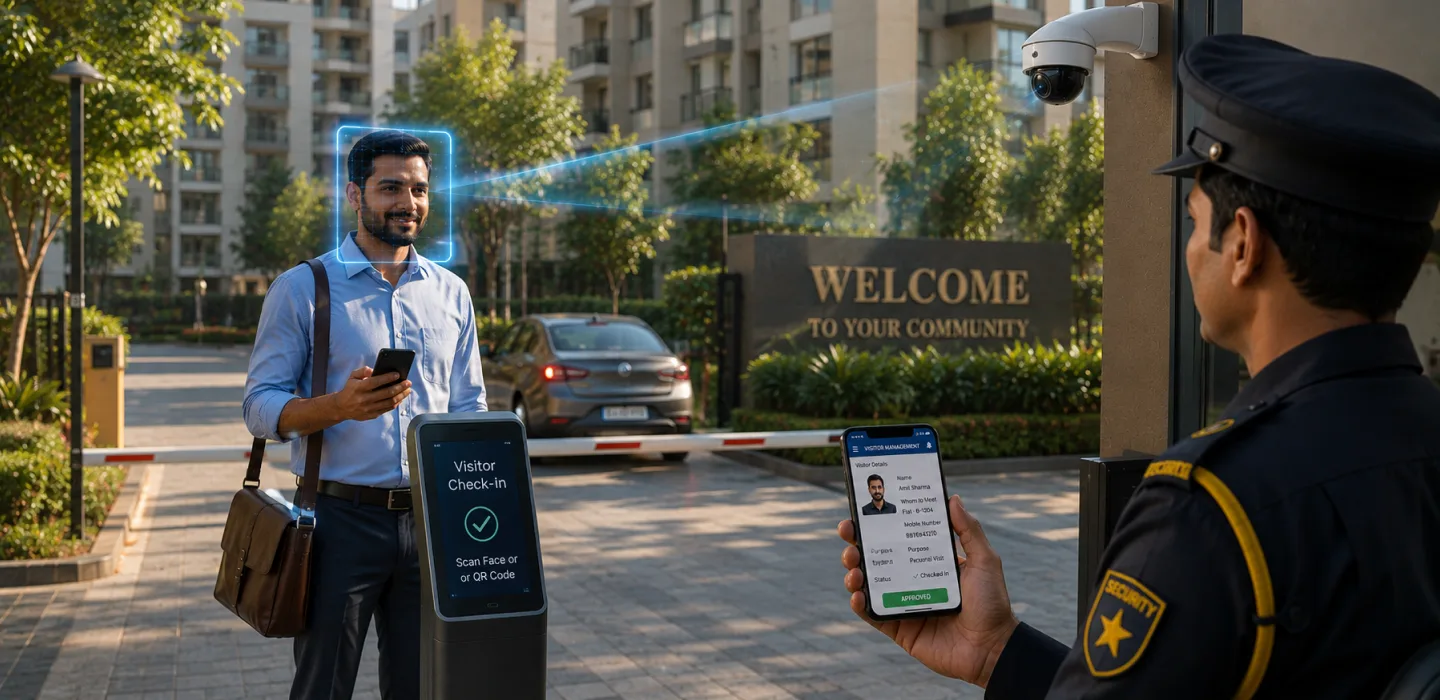
Facial recognition has become a cornerstone technology in MyKutir's visitor management solutions. This feature allows for swift identification of individuals entering the housing society, ensuring that only authorized personnel gain access. The technology works in real time, instantly matching faces against a database of authorized individuals and thereby preventing unauthorized entries.
Furthermore, MyKutir integrates digital gate passes with its AI systems, simplifying the process for visitors and enhancing security measures. Visitors can receive digital passes that their smartphone can display at the entrance. This is cross-verified with the database, providing a double layer of security. The security personnel receive this in real time, minimizing waiting time and potential entry of unauthorized individuals.
Besides security, data management benefits are also significant. The AI systems systematically analyze visitor patterns, provide insights into peak visiting times, and predict potential security risks based on historical data. This optimization of data management not only ensures better security but also helps in resource planning, such as allocating more security personnel during peak times.
How AI Improves Security in Housing Societies
Security has always been a top priority for housing societies, and AI technologies have vastly improved how societies manage and maintain security. Real-time monitoring is a significant component of AI-enhanced visitor management systems. With AI, housing societies can monitor visitor movements from entry to exit. The systems can track who enters the premises and when, offering an unparalleled level of vigilance.
Visitor tracking is another essential feature that AI enhances. With the help of AI-powered cameras and sensors, the movement of visitors can be continuously tracked, ensuring that they do not enter unauthorized areas within the society. This not only deters potential miscreants but also provides a clear record of visitor movements, which can be critical in resolving security incidents.
AI systems also utilize automated alerts to notify security personnel or residents of any unauthorized access attempts. If a face does not match with the authorized database or if a visitor tries to access restricted areas, the system sends immediate alerts to the concerned authorities. This allows for quick response and mitigates potential security breaches.
Moreover, predictive analytics play a significant role in enhancing security. By analyzing patterns and trends in visitor data, AI systems can predict potential security risks before they occur. These insights allow housing societies to implement preemptive measures, such as increasing security personnel during high-risk periods or monitoring specific entry points more closely.
Scenario: AI in Action for Visitor Management
Consider a typical day in an Indian housing society implementing AI-assisted visitor management. The day begins with the security personnel logging into the MyKutir system on their tablets. The system displays a dashboard with expected visitors for the day, highlighting any VIP or first-time visitors for special attention.
At the entry gate, a resident orders a delivery. As the delivery person approaches the society, they use their smartphone to generate a digital gate pass through the MyKutir app. The gate pass includes their photo and details of the delivery. Upon arrival, the security personnel use a tablet to scan the QR code on the digital pass. The AI system cross-verifies the image from the live feed with the photo on the pass, ensuring it matches before allowing access.
Meanwhile, a resident's guest arrives. The resident has already pre-registered the guest via the app, providing their details and expected arrival time. The guest’s face is scanned at the gate, and the AI system recognizes them as pre-approved, signaling the security personnel to let them in without delay.
Throughout the day, the AI system tracks and logs all entries and exits. Security personnel receive notifications of any unusual activity, such as a visitor attempting to access restricted areas. This information is readily available for society management to review, helping them adjust security measures as necessary.
As the day concludes, the society's management reviews the data collected. They identify peak visitor times and adjust security staffing accordingly for the following days. The system’s predictive analytics feature alerts them to a potential increase in visitors during an upcoming holiday, allowing management to prepare adequately.
Common Challenges and Mistakes in AI Implementation
While the benefits of AI in visitor management are substantial, implementation is not without its challenges. One primary concern is privacy. Residents may be uneasy about the use of facial recognition and constant data logging. To address this, it’s crucial for housing societies to maintain transparency about the data being collected and its usage. Assurances that data is securely stored and not misused must be front and center in the communication with residents.
Data security is another significant challenge. AI systems handle vast amounts of sensitive data, which, if not protected, could lead to data breaches. Implementing robust data encryption and routinely updating security protocols are essential practices that should be adhered to.
Resistance to change can also pose a barrier to successful AI implementation. Staff and residents accustomed to traditional systems may be hesitant to adopt new technologies. The solution lies in comprehensive training programs and workshops that educate users about the benefits and operations of AI systems. Facilitating a smooth transition involves not just training but also having a support system in place to address any operational hiccups.
Furthermore, compliance with local laws and regulations is paramount. Housing societies must ensure that their AI systems comply with the Societies Registration Act 1860 and other relevant legislation. As rules and thresholds vary by state and change over time, consulting with a CA or registrar is advisable to stay compliant.
AI vs. Traditional Visitor Management: A Comparison
Transitioning from traditional to AI-powered visitor management systems represents a significant upgrade in security and efficiency for housing societies. Below is a comparison table highlighting key differences between the two approaches:
| Aspect | Traditional Visitor Management | AI-Powered Visitor Management |
|---|---|---|
| Efficiency | Manual entry, prone to errors, time-consuming | Automated processes, quick identification, reduces errors |
| Security | Relies on human vigilance, limited tracking | Real-time monitoring, predictive analytics, facial recognition |
| Data Management | Paper logs, limited analysis capabilities | Digital logs, data analysis, predictive insights |
| User Experience | Inconvenient for residents and visitors | Streamlined entry, digital gate passes, pre-registration |
As the table demonstrates, AI-powered systems provide advantages that traditional methods cannot match. The automated nature of AI eliminates manual errors, enhances security through smart technologies, and provides a more streamlined experience for users. Societies that adopt AI visitor management systems can expect a marked improvement in their operations and resident satisfaction.
Step-by-Step Guide to Implementing AI Visitor Management
Implementing AI-based visitor management systems in housing societies requires careful planning and execution. Here’s a step-by-step guide to help societies navigate the process:
- Evaluate Needs: Begin by assessing the current visitor management processes and identifying areas that need improvement. Determine the specific goals for AI implementation, such as enhancing security or reducing manual workload.
- Select the Right Features: Based on your needs assessment, select AI features that align with your goals. Consider elements like facial recognition, digital gate passes, or real-time monitoring.
- Choose a Vendor: Research and select a reliable vendor like MyKutir that offers the AI features you need. Ensure the vendor provides robust data security and complies with local regulations.
- Customize the System: Work with the vendor to customize the AI system to fit your society’s specific requirements. This includes setting up databases for facial recognition and integrating with existing security infrastructure.
- Train Staff and Residents: Conduct comprehensive training sessions for security personnel and residents. Ensure they understand how to use the new system and are aware of the benefits it offers.
- Test the System: Before full-scale implementation, conduct pilot testing to iron out any operational issues. Collect feedback from users and make necessary adjustments.
- Implement and Monitor: Roll out the AI system across the society. Continually monitor its performance and gather feedback to ensure it meets the society’s needs. Regular updates and maintenance are crucial for optimal performance.
Following these steps systematically can help housing societies transition smoothly to AI-powered visitor management systems, ensuring enhanced security and efficiency.
Real-Life Example: Success Story of AI Implementation
To illustrate the impact of AI on visitor management, let's consider the case of Green Acres, a mid-sized housing society in Pune. Faced with increasing visitor traffic and security concerns, Green Acres decided to implement MyKutir’s AI-powered visitor management system.
The initial challenge was the manual visitor log system, which was time-consuming and prone to errors. Security personnel struggled to manage peak times, leading to long queues and frustrated residents. Furthermore, unauthorized entry incidents were not uncommon, raising security concerns among residents.
Green Acres began by consulting with MyKutir to design a system tailored to their needs. The implementation included facial recognition for quick visitor identification, digital gate passes for seamless entry, and predictive analytics to anticipate security needs.
The society faced resistance from some residents concerned about privacy and data security. To address this, Green Acres organized workshops to educate residents on how AI improves security and ensures data protection. They also implemented strong data encryption measures to alleviate privacy concerns.
After implementing the system, Green Acres reported a 50% reduction in unauthorized entries and significant improvements in the speed and accuracy of visitor processing. Security personnel could allocate their time more efficiently, focusing on monitoring rather than logging details. Residents appreciated the streamlined experience, particularly the digital gate passes and reduced waiting times.
Overall, Green Acres' successful AI implementation resulted in enhanced security, greater operational efficiency, and increased resident satisfaction, demonstrating the tangible benefits of integrating AI into visitor management.
Future Trends in AI-Powered Visitor Management
The future of AI-powered visitor management in housing societies is poised for exciting advancements. As AI technology evolves, we can expect several trends to shape the landscape of visitor management.
One significant trend is the deeper integration of machine learning algorithms. These algorithms can analyze vast datasets to identify patterns and optimize visitor management processes. For example, predictive analytics could evolve to foresee security threats more accurately, enabling proactive measures.
The integration of Internet of Things (IoT) devices is another area of growth. IoT sensors placed at entry points can work in tandem with AI systems to provide real-time data, enhancing the accuracy of visitor tracking and monitoring. This integration could lead to more automated and responsive visitor management systems.
Advancements in biometric technologies are also anticipated. Beyond facial recognition, AI systems might incorporate additional biometric data points such as voice recognition or even gait analysis to enhance security further.
Additionally, we may see AI systems offering more personalized visitor experiences. By learning from data, AI could provide tailored recommendations or services to frequent visitors, such as automatic pre-approvals or personalized directions within the society.
As these trends develop, housing societies must stay informed and adaptable to leverage new technologies effectively, ensuring their visitor management systems continue to provide top-tier security and user experience.
FAQ
How does AI contribute to visitor management efficiency?
AI enhances efficiency by automating visitor logging and entry processes. This reduces manual workloads for security personnel and speeds up the entry and exit of visitors. Features like digital gate passes and facial recognition streamline operations, eliminating the need for manual checks and reducing waiting times at entry points.
What are the security benefits of AI in visitor management?
AI significantly bolsters security through real-time monitoring, predictive analytics, and facial recognition. These technologies enhance the ability to detect and prevent unauthorized access, monitor visitor movements, and respond quickly to potential security threats. AI systems also provide valuable data insights that can help optimize security strategies.
Are there privacy concerns with AI-powered visitor systems?
Privacy concerns are valid, as AI systems collect and store personal data. Addressing these concerns requires transparency about data usage and robust data protection measures. Housing societies should implement strong encryption, limit data access, and regularly update security protocols to protect residents' privacy.
How do AI features integrate with existing systems in housing societies?
AI features can be seamlessly integrated with existing infrastructure through APIs and digital interfaces. Vendors like MyKutir work with societies to customize solutions that complement their current security setups. Integration efforts focus on ensuring compatibility and minimizing disruption during the transition phase.
What are the costs involved in implementing AI for visitor management?
Costs vary depending on the size of the society and the complexity of the AI features deployed. Initial investments include software procurement, hardware installation, and training. However, AI systems often lead to cost savings over time by reducing manual labor, improving efficiency, and enhancing security, which can lower incident-related expenses.
How can societies prepare for AI implementation in visitor management?
Preparation involves evaluating current processes, setting clear objectives, and selecting suitable AI features. Engaging with experienced vendors like MyKutir ensures the system aligns with the society’s needs. Training staff and residents is crucial to ensure smooth adoption and maximize the benefits of the new technology.
What technological advancements are anticipated in this field?
Future advancements may include more sophisticated machine learning algorithms, integration with IoT devices, and expanded biometric capabilities. These technologies could lead to even more efficient, secure, and personalized visitor management systems. Housing societies should stay updated on these trends to continuously enhance their visitor management strategies.
Key Takeaways
- AI technologies are transforming visitor management in housing societies by enhancing security and efficiency.
- MyKutir's AI features include automated logs, facial recognition, and digital gate passes, offering significant benefits.
- Real-time monitoring, predictive analytics, and automated alerts are key security enhancements provided by AI.
- Successful AI implementation requires addressing privacy concerns and ensuring compliance with regulations.
- Future trends in AI include deeper machine learning integration, IoT device collaboration, and advanced biometrics.