Leveraging AI for Effective Complaint Resolution in Housing Societies
By MyKutir Editorial Team — 2026-08-17
Explore how AI can streamline complaint resolution in housing societies, making processes more efficient and responsive.
The management of housing societies involves numerous tasks, one of the most significant being resolving resident complaints. Traditional methods of handling complaints often face several challenges, from delayed responses to poor communication channels. This inefficiency not only frustrates residents but also burdens the society management committees that strive to maintain harmonious living conditions.
Introduction to Complaint Resolution in Housing Societies
In housing societies, managing resident complaints efficiently is crucial for maintaining a peaceful living environment. However, traditional methods of complaint resolution are fraught with challenges that can compromise the overall effectiveness of society management. A common issue is the delay in response times. When complaints are logged manually, they often pass through multiple layers of management before reaching the person responsible for resolution. This process can be slow and cumbersome, leading to resident dissatisfaction.
Another common challenge in traditional complaint resolution is the lack of tracking. Without a systematic way to monitor the progress of a complaint, residents are left in the dark about the status of their issues. This lack of transparency can erode trust between residents and the management committee, creating an environment of discontent. Additionally, inefficient communication channels can exacerbate these problems. In many societies, complaints are communicated verbally or through informal notes, leading to miscommunication or even lost messages.
Furthermore, the absence of a standardized system for logging and addressing complaints often results in inconsistent resolutions. Different managers may handle similar complaints differently, leading to perceptions of unfair treatment among residents. This inconsistency can significantly impact resident satisfaction and the overall reputation of the housing society.
Moreover, the manual handling of complaints is time-consuming and resource-intensive. Management committees spend a significant amount of time sorting through complaints, prioritizing issues, and attempting to resolve them, often without the aid of any structured framework. This inefficiency not only delays the resolution process but also diverts attention from other critical areas that require management oversight.
Overall, these challenges underscore the need for a more streamlined, efficient, and transparent approach to complaint resolution in housing societies. The introduction of technology, particularly AI-driven systems, can transform the way societies manage resident complaints, enhancing satisfaction and operational efficiency.
The Role of AI in Modernizing Complaint Resolution
Artificial Intelligence (AI) is revolutionizing many sectors, and housing society management is no exception. By bringing AI into the fold, societies can significantly enhance the efficiency and effectiveness of their complaint resolution processes. AI offers numerous features that can streamline operations, improve communication, and increase resident satisfaction.
One of the primary benefits of incorporating AI in society management is its ability to expedite the complaint process through tools like complaint draft assist. This feature uses AI algorithms to help residents articulate their complaints clearly and concisely. By providing suggested phrases and identifying key details needed for a thorough complaint, AI ensures that all relevant information is captured at the onset, reducing back-and-forth communication and speeding up initial processing.
Another vital AI tool is notice authoring assist. This feature aids society managers in crafting clear, consistent communication to residents regarding complaint resolutions or updates. By analyzing previous notices and learning from common communication patterns, AI can draft notices that are professional and aligned with the society's communication standards, ensuring residents receive accurate information promptly.
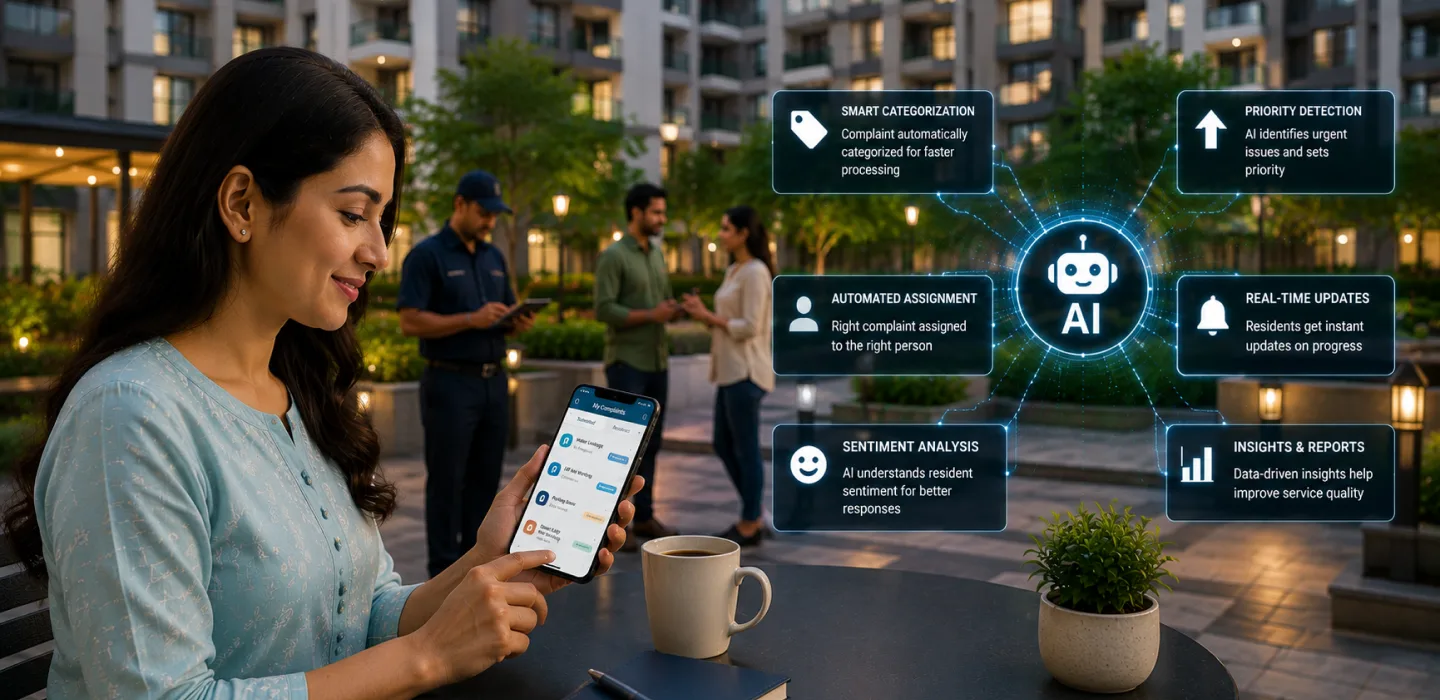
AI also offers unparalleled tracking capabilities. Through intelligent systems, each complaint can be logged, categorized, and monitored in real-time, allowing for better oversight. Society managers can access dashboards that provide an overview of all active complaints, track their status, and prioritize issues based on urgency or severity, ensuring that no complaint is overlooked.
Importantly, AI systems are designed to learn and improve over time. With each complaint and resolution, AI systems become more adept at identifying patterns and predicting outcomes, allowing for more proactive management. This means that over time, AI can help societies anticipate common issues, prepare resolutions in advance, and even prevent problems before they arise by identifying potential risks.
By integrating AI into their operations, society managers not only enhance the efficiency of complaint resolution but also foster a more transparent and reliable environment for residents. The transformation from traditional methods to AI-driven solutions signifies a forward-thinking approach to society management, offering a more harmonious living experience for all involved.
How MyKutir's AI Features Transform Complaint Handling
MyKutir is at the forefront of integrating AI features into housing society management, particularly in the realm of complaint handling. With innovative tools like complaint draft assist and RAG search over notices, MyKutir empowers societies to manage complaints with unprecedented efficiency and precision.
The complaint draft assist tool is a game-changer for residents and society managers alike. It streamlines the complaint lodging process by guiding residents through the necessary steps to fill out a comprehensive complaint form. Using AI, this feature suggests relevant keywords and phrases, ensuring that the complaint is detailed and precise. This not only minimizes the back-and-forth communication often required to clarify complaints but also accelerates the initial stages of complaint processing by providing managers with all necessary information upfront.
MyKutir's RAG (Red Amber Green) search over notices further enhances complaint handling by categorizing complaints and resolutions based on urgency and priority. This system allows society managers to quickly identify critical issues requiring immediate attention (Red), track ongoing complaints (Amber), and confirm resolved matters (Green). The visual representation simplifies the monitoring process, ensuring that no complaint falls through the cracks and that all issues are addressed promptly and appropriately.
Additionally, these AI features are seamlessly integrated into MyKutir's platform, providing a unified interface for society managers. This integration ensures that all complaint-related activities, from logging to resolution, are handled within a single system, reducing the complexity and potential for errors that can occur when juggling multiple platforms.
Furthermore, MyKutir's AI-driven approach to complaint resolution ensures consistency and fairness in handling complaints. By relying on data-driven insights, AI minimizes the subjectivity and variability that can occur with human-only management, leading to more equitable outcomes for residents. The ability to learn from past resolutions also means that MyKutir's AI tools are continually improving, refining processes, and enhancing decision-making over time.
Through these advanced AI features, MyKutir transforms how housing societies manage complaints, shifting the focus from reactive problem-solving to proactive management. This not only boosts operational efficiency but also enhances resident satisfaction by providing a reliable, transparent, and fair complaint resolution process.
A Step-by-Step Guide to Using AI for Complaint Resolution
Implementing AI-driven complaint resolution can significantly improve the efficiency and effectiveness of managing resident issues in housing societies. Here is a comprehensive step-by-step guide on how society managers can integrate MyKutir's AI tools into their complaint resolution processes.
Step 1: Setting Up the System
The first step involves setting up MyKutir's AI platform. Society managers should ensure that the system is correctly configured to handle the specific needs of their society. This may involve customizing categories for complaints, setting up user roles for access control, and integrating the platform with existing society management tools.
Step 2: Training Staff
Once the system is in place, it's crucial to train society staff and management committee members on how to use the new AI tools effectively. Training sessions should focus on familiarizing staff with the complaint draft assist and RAG search over notices features, ensuring they understand how to interpret AI-generated insights and manage the dashboard efficiently.
Step 3: Educating Residents
Education doesn't stop with the staff; residents need to be informed about the new system and how to lodge complaints effectively. Workshops or informational pamphlets can help residents understand how to use the complaint draft assist feature and encourage adoption by highlighting the benefits of AI-driven complaint handling.
Step 4: Monitoring Outcomes
After implementation, society managers should closely monitor the outcomes of using AI-based complaint resolution tools. This involves tracking key metrics such as complaint resolution times, resident satisfaction levels, and the volume of complaints processed to gauge the effectiveness of the system.
Step 5: Continuous Improvement
AI tools are dynamic and learn from each interaction. Society managers should periodically review system performance and seek feedback from both staff and residents to identify areas for improvement. Updating the system with new AI features and enhancements ensures that the society continues to benefit from the latest advancements in AI technology.
By following these steps, housing societies can seamlessly transition to AI-driven complaint resolution, reaping the benefits of improved efficiency, accuracy, and resident satisfaction. The transition requires commitment and collaboration from all stakeholders, but the long-term advantages make it a worthwhile endeavor for any society looking to modernize its management practices.
Scenario: A Day in the Life of a Society Manager Using AI
Imagine a typical day for Anjali, a society manager of a large housing complex, who is using MyKutir's AI tools to efficiently handle resident complaints. Anjali begins her day with a quick overview of the complaints dashboard, easily identifying issues that require immediate attention thanks to the RAG search over notices feature. The dashboard displays a clear visual representation of complaint statuses, with red indicating urgent matters.
One of the red-flagged complaints involves a malfunctioning elevator that has been reported by several residents. Using the complaint draft assist tool, Anjali reviews the detailed descriptions provided by residents, each of whom was guided to include all necessary information. This detailed data allows Anjali to promptly contact the maintenance team with specific instructions, expediting the repair process.
As the day progresses, Anjali receives a notification about a new complaint regarding noise levels from a late-night party. The AI system categorizes the complaint as amber, indicating it needs attention but isn't critical. Anjali uses the notice authoring assist tool to quickly draft a consistent and professional message to the residents involved, reminding them of noise regulation policies.
The AI also alerts Anjali to a resolved issue marked green on the dashboard—a water leakage problem that was fixed the previous day. She uses the notice authoring assist to draft a thank-you note to the maintenance staff and informs residents of the resolution, fostering a sense of community and transparency.
Throughout the day, Anjali appreciates the efficiency that AI brings to her role. The AI tools reduce her workload by streamlining communication, prioritizing tasks, and providing invaluable insights into complaint trends. This allows Anjali to focus more on strategic planning and less on firefighting daily issues.
As the day ends, Anjali reflects on the positive resident feedback received through the platform's feedback module, noting an increase in satisfaction scores since implementing the AI-driven system. The enhanced efficiency not only improves Anjali's work-life balance but also promotes a happier, more harmonious living environment for all residents.
Avoiding Common Mistakes When Implementing AI Solutions
While the benefits of AI in complaint resolution are substantial, housing societies must be aware of potential pitfalls during implementation. Avoiding these common mistakes can ensure a smooth integration and operation of AI tools like MyKutir's platform.
One common mistake is insufficient training for society staff. Without comprehensive training, staff may struggle to use AI tools effectively, leading to underutilization and frustration. It's crucial to invest time in training sessions that are hands-on and interactive, allowing staff to familiarize themselves with the system's features and functionalities.
Another pitfall is neglecting resident education. Residents need to understand how the new system works and the benefits it brings. Failing to communicate this can result in low engagement and a preference for traditional complaint methods. Societies should organize informational meetings, distribute guides, and actively address resident concerns to encourage adoption.
Lack of continuous monitoring and feedback can also impede the success of AI implementation. AI systems are most effective when they are continuously updated and improved based on user feedback and performance metrics. Society managers should regularly review system performance, solicit feedback from both residents and staff, and make necessary adjustments to enhance AI capabilities.
Moreover, societies might overlook the importance of data privacy and security. Ensuring that resident data is protected is paramount. Choosing a platform like MyKutir that prioritizes data security and complies with relevant regulations can prevent potential breaches and maintain resident trust.
Finally, societies should avoid setting unrealistic expectations. While AI significantly enhances efficiency, it doesn't replace the need for human oversight. Managers should set realistic goals regarding AI capabilities, understanding that human judgment and intervention are still necessary for complex cases and nuanced decision-making.
By being mindful of these common pitfalls and implementing strategies to address them, housing societies can successfully integrate AI solutions into their complaint resolution processes. This careful approach ensures that societies reap the full benefits of AI, improving efficiency and resident satisfaction.
Comparison: AI vs. Traditional Complaint Resolution Methods
| Aspect | AI-Powered Methods | Traditional Methods |
|---|---|---|
| Response Time | Quick, often instantaneous due to automated prioritization and tracking | Slower, relies on manual handling and can be delayed due to multiple layers of communication |
| Accuracy | High, with consistent data-driven analysis and learning capabilities | Varied, often dependent on individual judgment and prone to human error |
| Resident Satisfaction | Higher, due to transparency, quick resolutions, and clear communication | Lower, often due to perceived delays and lack of communication |
| Transparency | Enhanced, with real-time tracking and status updates | Limited, with few updates and minimal visibility for residents |
| Consistency | Uniform outcomes through standardized procedures and learning algorithms | Inconsistent, varies with individual handling and subjective interpretations |
| Scalability | Highly scalable without significant increase in resources | Limited, requires more manpower and time as the volume of complaints increases |
AI-powered methods offer numerous advantages over traditional complaint resolution, particularly in terms of speed, accuracy, and resident satisfaction. The automated nature of AI systems allows for rapid processing and clear communication, while traditional methods often struggle with delays and inconsistencies. Furthermore, AI provides enhanced transparency and scalability, making it an invaluable tool for large housing societies or those looking to improve their efficiency.
The Future of Complaint Resolution in Housing Societies
The future of complaint resolution in housing societies is poised for transformation, with AI at the helm of this evolution. As technology continues to advance, several trends are likely to redefine how societies manage resident complaints, making processes more efficient and resident-centric.
One potential advancement is the integration of natural language processing (NLP) into complaint management systems. NLP will enable AI tools to better understand and interpret the nuances of resident complaints, making the resolution process more accurate and empathetic. This advancement will allow AI systems to capture the sentiment and urgency of complaints, providing more tailored responses and solutions.
Another promising innovation is the use of predictive analytics. By analyzing historical complaint data, AI systems could predict common issues before they arise and proactively address them. This proactive approach would significantly reduce the incidence of complaints, enhancing resident satisfaction and reducing the workload for management staff.
Additionally, AI could facilitate more personalized resident engagement. Future AI systems may be able to learn individual resident preferences and communication styles, allowing for more personalized interactions and faster resolutions. This personalization would foster greater trust and cooperation between residents and management, creating a more harmonious living environment.
As AI technology matures, we can also anticipate improvements in multilingual support, enabling societies to cater to diverse resident communities more effectively. AI-driven translation and communication tools would break down language barriers, ensuring all residents can engage with management in their preferred language.
Furthermore, the integration of AI with IoT (Internet of Things) devices could revolutionize complaint management. Smart sensors and devices could automatically detect and report issues such as leaks or power outages, triggering immediate alerts to management and expediting resolutions before residents even lodge complaints.
In sum, the future of complaint resolution in housing societies is bright, with AI-driven innovations set to enhance efficiency, accuracy, and satisfaction. As societies embrace these advancements, they will not only improve their operations but also create more engaged and content resident communities.
Frequently Asked Questions
How does AI assist in drafting complaints?
AI assists in drafting complaints by providing suggestions and templates that guide residents through the process of articulating their issues clearly and concisely. Tools like MyKutir's complaint draft assist analyze the nature of the complaint and suggest relevant phrases and keywords to ensure all necessary information is captured. This helps residents communicate their concerns effectively and expedites the processing of complaints by providing managers with detailed and structured information from the outset.
What are the benefits of using AI for complaint resolution?
Using AI for complaint resolution offers numerous benefits, including faster response times, higher accuracy, and increased resident satisfaction. AI systems automate the prioritization and tracking of complaints, ensuring that issues are addressed promptly. They also provide standardized, data-driven analyses that reduce the potential for human error and variability. The transparency and real-time updates offered by AI systems enhance trust and communication between residents and management, leading to more harmonious community living.
How secure is the data processed by AI in MyKutir?
The data processed by AI in MyKutir is handled with a high level of security. MyKutir prioritizes the protection of resident data, implementing robust security measures to prevent unauthorized access and data breaches. The platform complies with relevant data protection regulations and industry best practices, ensuring that personal information is handled confidentially and securely at all times. Society managers can trust that MyKutir's AI systems are designed to safeguard resident privacy.
Are there any training resources for society staff using AI tools?
Yes, MyKutir provides comprehensive training resources for society staff using AI tools. These resources include hands-on training sessions, detailed user manuals, and online tutorials that guide staff through the platform's features and functionalities. Training is designed to ensure staff can effectively utilize AI tools like complaint draft assist and RAG search over notices, maximizing the benefits of AI in complaint resolution. Ongoing support and updates are also available to address any questions or challenges that may arise.
Can AI handle complex complaint cases effectively?
AI is well-equipped to handle complex complaint cases, thanks to its data-driven analysis capabilities and learning algorithms. AI systems can analyze patterns, identify underlying issues, and suggest appropriate resolutions, even for intricate cases. However, the role of human oversight remains crucial, especially for cases that require nuanced judgment or personal interaction. Society managers can rely on AI to streamline processes and provide insights while using their discretion for complex, sensitive situations.
What if the AI incorrectly processes a complaint?
If an AI system incorrectly processes a complaint, the error can be quickly addressed by society managers who maintain oversight and control over the system. Most AI platforms, including MyKutir, allow for intervention and manual adjustments, ensuring that complaints are resolved accurately. Continuous monitoring and feedback loops also help AI systems learn from mistakes and improve over time, reducing the likelihood of future errors. Residents can be reassured that there are mechanisms in place to correct any inaccuracies promptly.
How does AI improve response time in complaint handling?
AI improves response time in complaint handling by automating the prioritization and tracking of complaints. Features like RAG search over notices allow society managers to quickly identify urgent issues and allocate resources accordingly. AI tools also streamline communication, reduce the back-and-forth often required in manual processes, and provide real-time updates that keep residents informed. These efficiencies lead to faster resolutions and increased resident satisfaction, as issues are addressed promptly and transparently.
Key Takeaways
- Traditional complaint resolution methods in housing societies face challenges like delayed responses and inefficient communication.
- AI features such as complaint draft assist and notice authoring assist can modernize and expedite complaint handling.
- MyKutir's AI tools, including RAG search over notices, offer enhanced accuracy and efficiency in complaint management.
- Implementing AI in complaint resolution involves setting up systems, training staff, and educating residents.
- AI-driven complaint resolution offers significant advantages over traditional methods, including faster response times and increased resident satisfaction.
- Future advancements in AI are likely to include improved NLP, predictive analytics, and integration with IoT for proactive issue management.
- Comprehensive training and continuous monitoring are crucial for successfully implementing AI tools in housing societies.