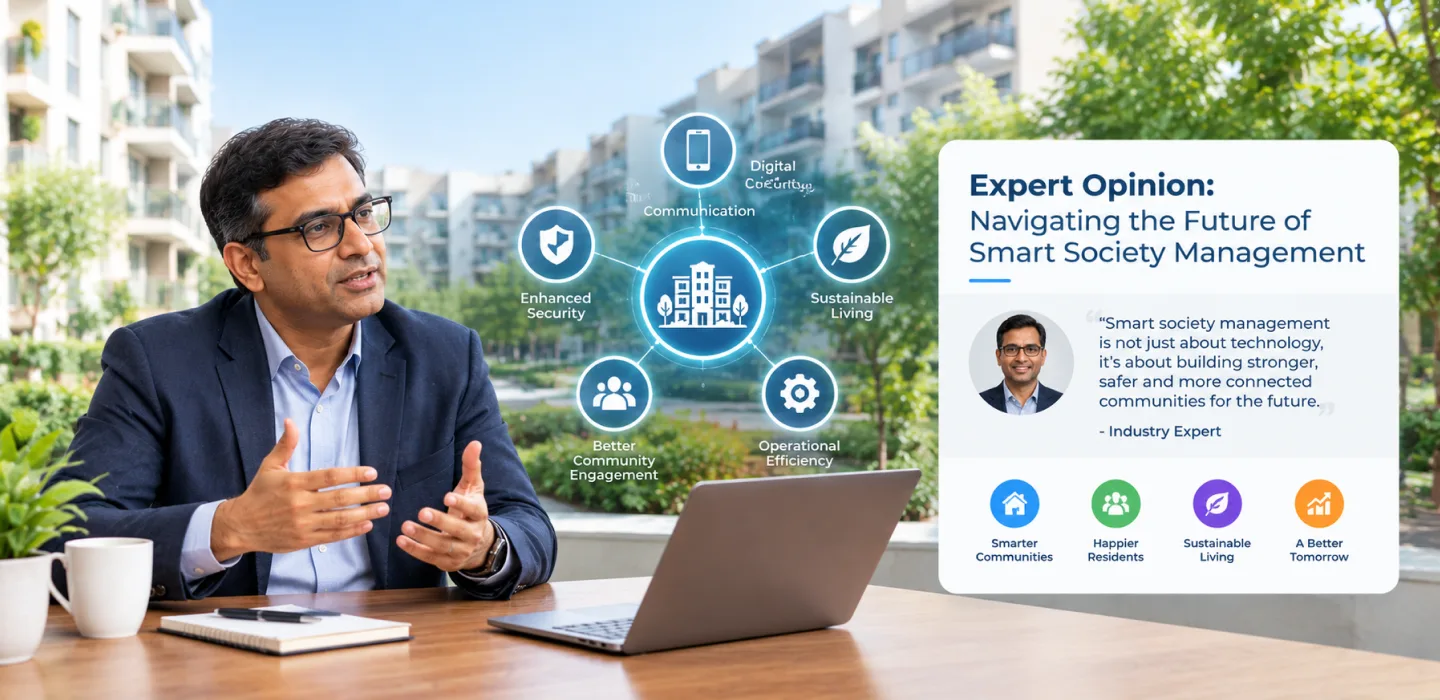
Expert Opinion: Navigating the Future of Smart Society Management
By MyKutir Editorial Team — 2026-09-24
Discover expert insights on effectively managing smart societies in India, addressing challenges and opportunities ahead.
As urban populations continue to rise, the need for efficient and effective management of residential societies has never been more crucial. Smart society management represents a modern approach to overseeing housing societies by integrating advanced technologies into the daily operations of residential communities. This integration streamlines processes and enhances the quality of life for residents, transforming traditional housing societies into 'smart societies'.
At its core, smart society management leverages digital tools and systems to automate and optimize various aspects of residential management. This includes everything from billing and maintenance requests to security and visitor tracking. By moving away from manual processes, societies can improve accuracy, save time, and reduce costs. Moreover, technologies like mobile apps and AI-powered systems provide real-time data and analytics, empowering society managers to make informed decisions and proactively address potential issues.
For instance, consider the typical challenges faced by a housing society — managing billing and payments can be cumbersome and error-prone when handled manually. A smart billing system automates this process, providing residents with digital invoices, reminders, and an online payment platform. This not only reduces paperwork and administrative burden but also ensures timely collection of funds necessary for society maintenance.
By embracing smart society management, residential communities can also improve the overall experience for residents. Automated booking systems for amenities such as swimming pools or clubhouses eliminate scheduling conflicts and ensure fair access for all residents. Visitor management systems enhance security by tracking who enters and exits the community, while AI-powered complaint resolution tools quickly address concerns and improve satisfaction.
Overall, smart society management is about integrating technology into every aspect of residential life to create a more connected, efficient, and enjoyable living environment. As we delve into the components, trends, challenges, and benefits of smart society management in this article, it is important to remember that each society is unique. Therefore, the journey to becoming a smart society will differ based on specific needs and existing infrastructure.
Key Components of Smart Society Management
A smart society is built on a foundation of several key components that collectively work to enhance the efficiency and effectiveness of managing residential communities. At the heart of these components are smart billing systems, visitor management, automated amenities booking, and AI-powered complaint resolution.
Smart Billing Systems: These systems automate the invoicing and payment process, making it easier for society members to handle their finances. With features such as online payment gateways, automated reminders, and detailed financial reports, smart billing systems eliminate the need for manual ledger maintenance. The transparency and accessibility provided by these systems help in building trust among residents as they can view and track their payments and dues online.
Visitor Management: Traditional logbook entries have been replaced by digital visitor management systems that streamline entry and exit processes for guests, delivery personnel, and service providers. These systems often require visitors to register digitally upon entry, providing a real-time view of all non-residents on the premises. Enhanced security features enable societies to maintain a secure environment while ensuring a seamless visitor experience.
Automated Amenities Booking: With amenities like swimming pools, gyms, and community halls becoming an integral part of modern residential societies, managing their usage can be challenging. Automated booking systems allow residents to reserve these facilities through a digital platform, reducing conflicts and maximizing utilization. This not only enhances resident satisfaction but also ensures equitable distribution of society resources.
AI-Powered Complaint Resolution: Effective grievance management is crucial for resident satisfaction. AI-powered tools can categorize and prioritize complaints, assign them to the appropriate personnel, and even suggest solutions based on historical data. This leads to quicker resolution times and higher resident satisfaction, as issues are addressed promptly and efficiently.
Each of these components contributes to a more organized and user-friendly society management experience. By leveraging technology, societies can streamline operations, enhance security, and improve the overall quality of living for their residents.
Expert Insights: Current Trends and Future Prospects
As smart society management gains traction, industry experts see significant trends taking shape, reshaping how residential societies operate. One prominent trend is the increasing adoption of integrated systems that bring together multiple aspects of society management under one digital platform. This integration allows for seamless collaboration between different facets of society administration, from financial management to security and communication.
Experts also highlight the growing role of artificial intelligence in predictive maintenance and resource management. For instance, AI can analyze historical data to predict when maintenance tasks will be needed, allowing societies to perform repairs proactively rather than reactively. This not only reduces downtime but also minimizes repair costs over time.
Another emerging trend is the use of IoT (Internet of Things) devices to enhance the livability of societies. Connected devices can monitor energy consumption, water usage, and overall resource efficiency, enabling societies to reduce their environmental footprint while cutting costs. IoT-enabled smart lighting and temperature control systems are gaining popularity as they help in conserving energy and optimizing comfort.
Looking ahead, experts predict that data analytics will play an increasingly crucial role in decision-making processes for society management. By analyzing data collected from various sources, society managers can gain valuable insights into residents' behaviors and preferences, allowing them to tailor services and improve satisfaction rates.
Moreover, as society management becomes more digital, there is a growing emphasis on data privacy and security. With the implementation of smart solutions, housing societies must ensure that resident data is protected and comply with regulatory standards. Experts foresee stricter regulations and improved security protocols to prevent data breaches and protect residents' information.
Overall, the future of smart society management looks promising, with technology continuing to evolve and offer new possibilities for improving residential living. As societies adapt to these trends, they can expect enhanced efficiency, security, and satisfaction among residents.
Case Studies: Successful Smart Societies in India
India is home to numerous housing societies that have successfully implemented smart management solutions, reaping benefits in efficiency, security, and resident satisfaction. These case studies highlight both the advantages and challenges encountered during the transition.
One notable example is a large residential society in Mumbai, which adopted an integrated society management platform to handle financial transactions, visitor management, and communication among residents. Prior to implementation, the society faced challenges with delayed payment collections and inefficient visitor tracking. By introducing a comprehensive digital platform, they streamlined the billing process, enabling residents to make payments online and receive automated reminders. The visitor management feature also enhanced security by providing real-time data on entry and exit activities, effectively addressing prior security concerns.
Another successful case is a gated community in Bengaluru that employed IoT devices to monitor and control energy consumption. With smart meters and connected appliances, the society reduced energy wastage and improved cost savings. Residents received personalized insights into their energy usage, which encouraged them to adopt more sustainable practices.
In Pune, a society implemented a robust complaint management system powered by AI. Before the transition, residents expressed frustration over the slow response to maintenance issues. The AI-powered tool now categorizes complaints based on urgency and automatically assigns them to available staff, ensuring timely resolution. As a result, resident satisfaction increased significantly, and the society experienced a more harmonious living environment.
While these societies saw success, the journey was not without challenges. Initial resistance to change and the cost of technology adoption were common hurdles. However, strong leadership and clear communication about the value of smart systems helped overcome these obstacles. Furthermore, training sessions for residents and staff ensured smooth technology adoption and maximized the benefits of new systems.
These case studies demonstrate the transformative potential of smart society management in India, offering valuable insights for other societies aspiring to enhance their operations.
Challenges in Implementing Smart Society Management
Despite the clear advantages of smart society management, transitioning from traditional methods presents several challenges that societies must address. Understanding these obstacles is essential for a successful implementation and ensuring long-term benefits.
Cost: One of the primary concerns is the financial investment required to implement smart solutions. The initial setup cost for digital platforms, IoT devices, and training can be considerable, which might deter societies, especially smaller ones with limited budgets. While the long-term savings and efficiency gains often justify the investment, societies must carefully plan and allocate resources to manage these upfront costs effectively.
Technological Adoption: Embracing new technology can be daunting for residents and management accustomed to manual processes. Resistance to change is common, particularly among older residents who may find digital tools challenging. To mitigate this, societies need to provide comprehensive training sessions and ongoing support to ensure all stakeholders feel comfortable using new systems.
Data Privacy Concerns: As societies collect more digital data, ensuring privacy and security becomes paramount. Residents may fear data breaches or misuse of personal information. Societies must implement robust data protection measures and comply with relevant data privacy regulations to build trust and confidence among residents. Transparent communication about how data will be used and protected is also crucial.
Infrastructure Limitations: Some societies may face infrastructure constraints, such as inconsistent internet connectivity, which can hinder the implementation of smart technologies. Before transitioning, societies should assess their current infrastructure and make necessary upgrades to support digital systems.
While these challenges may seem daunting, they are not insurmountable. By developing a clear implementation plan, securing buy-in from residents, and collaborating with technology providers, societies can navigate these challenges and set the stage for successful integration of smart management solutions.
Comparison: Smart Society Management vs Traditional Methods
The shift from traditional management methods to smart society management represents a significant evolution in residential administration. Understanding the differences and benefits of each approach can help societies make informed decisions about their management strategies.
| Aspect | Traditional Methods | Smart Society Management |
|---|---|---|
| Billing and Payments | Manual ledger maintenance, physical invoice distribution, cash or cheque payments | Automated invoicing, online payments, digital records |
| Visitor Management | Physical logbooks, manual entry checks | Digital check-in systems, real-time monitoring |
| Communication | Notice boards, circulars, meetings | Digital notices, mobile app notifications |
| Amenities Booking | Manual booking register, first-come-first-serve | Automated booking systems, equitable access |
| Complaint Resolution | Manual tracking, informal follow-up | AI-powered resolution, automated tracking |
Smart society management stands out for its ability to automate processes, reduce manual errors, and offer real-time insights. Automated systems for billing and payments minimize delays and errors associated with manual processes. Digital visitor management enhances security by providing accurate data on guests entering and exiting the society.
Traditional methods, while familiar, often involve considerable administrative effort and room for error. Manual processes can lead to delays in communication, billing disputes, and a lack of transparency. On the other hand, smart society management provides a streamlined, integrated approach that enhances operational efficiency and resident satisfaction.
Ultimately, the transition to smart society management offers tangible benefits, positioning societies to better meet the needs of modern residents and adapt to the evolving landscape of residential living.
Steps to Transition into a Smart Society
Transitioning from traditional management systems to a smart society model requires a strategic approach. Here is a step-by-step guide to help societies navigate this transformation:
- Assessment and Planning: Start by assessing the current management processes and identifying areas for improvement. Engage with residents and management staff to understand their needs and pain points. A detailed plan that outlines objectives, timelines, and budgets forms the foundation of a successful transition.
- Research and Selection: Explore various technology providers and platforms that offer smart society solutions. Evaluate options based on features, scalability, ease of use, and support. It's crucial to choose technology that aligns with the society's specific needs and budget constraints.
- Infrastructure Upgrade: Ensure the society's infrastructure can support digital systems. This may involve upgrading internet connectivity, installing necessary hardware, or improving security measures to protect data integrity.
- Stakeholder Buy-In: Secure buy-in from residents and management by communicating the benefits of smart systems. Address any concerns and highlight the long-term advantages such as cost savings, improved efficiency, and enhanced security.
- Implementation: Work with selected vendors to implement the chosen smart society solutions. This phase may include software installation, system configuration, and integration with existing processes.
- Training and Support: Conduct training sessions for residents and staff to ensure they are comfortable using new systems. Ongoing support is essential to address any issues and ensure seamless adoption.
- Feedback and Improvement: After implementation, gather feedback from users to identify areas for improvement. Continuous monitoring and updates will help refine processes and maximize the benefits of smart society management.
Following these steps can help societies transition smoothly to smart management systems, ultimately enhancing the quality of life for residents.
Frequently Asked Questions about Smart Society Management
What is smart society management?
Smart society management refers to the integration of digital technologies into the administration of residential societies to enhance efficiency and improve the quality of life for residents. It involves automating processes such as billing, visitor management, amenities booking, and complaint resolution, as well as using data analytics to make informed decisions.
How can technology improve society management?
Technology improves society management by automating routine tasks, reducing manual errors, and providing real-time data insights. This allows for more accurate billing, enhanced security through digital visitor tracking, efficient communication with residents via mobile apps, and timely resolution of complaints using AI-powered tools. Ultimately, technology streamlines operations, reduces costs, and improves resident satisfaction.
What are the challenges in adopting smart management systems?
Challenges in adopting smart management systems include the initial cost of implementation, resistance to change from residents unfamiliar with technology, data privacy concerns, and potential infrastructure limitations. Societies must address these challenges through careful planning, training, and ensuring robust security measures to protect resident data.
Are smart society solutions expensive?
While the initial setup cost for smart society solutions can be significant, the long-term benefits often outweigh these costs. Automated systems reduce administrative efforts, improve efficiency, and lead to cost savings over time. Societies should carefully evaluate their budget and choose scalable solutions to manage costs effectively.
How do I start transitioning my society to smart management?
To start transitioning your society to smart management, begin by assessing current processes and identifying areas for improvement. Research and select suitable technology solutions, upgrade necessary infrastructure, and secure stakeholder buy-in. Implement the chosen solutions with the help of technology providers and ensure comprehensive training and support for residents and staff.
What are the benefits of AI in society management?
AI in society management offers numerous benefits, including faster complaint resolution through automated categorization and assignment, predictive maintenance that reduces downtime, and data-driven insights for better decision-making. AI enhances operational efficiency and improves resident satisfaction by addressing issues proactively and effectively.
Is data privacy a concern in smart societies?
Data privacy is a significant concern in smart societies as more resident information is collected digitally. Societies must implement robust data protection measures, comply with relevant regulations, and communicate transparently about data usage and security protocols. Ensuring data privacy builds trust and confidence among residents, making it a critical aspect of smart society management.
Conclusion: The Road Ahead for Smart Societies
As we've explored throughout this article, smart society management represents an innovative approach to residential management that leverages technology to streamline operations and improve the quality of life for residents. The integration of digital solutions into billing, visitor management, communication, and amenities booking transforms traditional processes, making them more efficient, transparent, and user-friendly.
While the transition to smart society management presents challenges such as cost, technological adoption, and data privacy, these can be addressed through strategic planning, stakeholder engagement, and robust security measures. The benefits of adopting smart solutions are substantial, including reduced administrative burden, enhanced security, cost savings, and greater resident satisfaction.
Looking ahead, the future of smart societies is bright. As technology continues to evolve, housing societies have the opportunity to further embrace digital tools that enhance sustainability, security, and community living. The growing trends of AI, IoT, and data analytics will play a pivotal role in shaping the next generation of residential management.
For societies considering the transition to smart management, the key is to take a phased, thoughtful approach. By assessing current needs, selecting appropriate technologies, and ensuring resident buy-in, societies can unlock the full potential of smart management systems and create a more connected and efficient living environment.
Ultimately, smart society management is not just about technology; it's about improving the overall experience for residents and creating vibrant, sustainable communities. By embracing this innovative approach, societies can position themselves for long-term success in an increasingly digital world.
Key Takeaways
- Smart society management integrates technology to enhance efficiency and quality of life in residential communities.
- Key components include smart billing, digital visitor management, automated amenities booking, and AI-powered complaint systems.
- Current trends involve integrated systems, AI, IoT, and a focus on data privacy and security.
- Successful case studies in India showcase the benefits and challenges of implementing smart solutions.
- Challenges include cost, technological adoption, and data privacy concerns, but they can be managed with careful planning.
- Smart systems offer significant advantages over traditional methods in terms of efficiency and resident satisfaction.
- Societies should follow a structured approach to transition, ensuring infrastructure readiness and stakeholder buy-in.
- Data privacy and security are paramount in maintaining resident trust and ensuring compliance with regulations.