Efficient Apartment Deliveries: A Best Practices Guide
By MyKutir Editorial Team — 2026-09-22
Discover essential best practices for streamlining delivery management in apartment complexes with MyKutir.
In recent years, the landscape of delivery management in apartment complexes has undergone a significant transformation. The surge in e-commerce and online shopping has led to a drastic increase in the volume of deliveries, presenting new challenges for apartment management teams. Deliveries that once might have been occasional are now daily affairs, requiring sophisticated systems to efficiently manage the flow of packages and prevent congestion and confusion within apartment buildings.
The main challenge faced by apartment managers is the sheer volume of deliveries. Couriers and delivery personnel are constantly arriving, leading to a continuous influx of packages that need to be logged and distributed to residents. Without proper systems, this can quickly lead to a backlog, with packages piling up in common areas, creating not just an eyesore, but also security concerns. Moreover, residents expect timely notifications and quick access to their packages, increasing the pressure on management to deliver efficient solutions.
Traditional methods of managing deliveries, such as manual logs and paper notices, are often inadequate to handle this level of activity. These methods are prone to errors, inefficiencies, and lack real-time communication capabilities, which are crucial in today’s fast-paced environment. As such, apartment complexes are increasingly turning to digital solutions to streamline their delivery management processes.
In this context, the importance of having a robust delivery management system cannot be overstated. Such systems not only help maintain order and security but also enhance resident satisfaction by providing timely notifications and secure access to packages. By implementing efficient delivery management practices, apartment complexes can transform what could be a logistical nightmare into a seamless part of everyday operations, ensuring that residents receive their packages promptly and securely without unnecessary hassle.
Key Features of MyKutir for Delivery Management
MyKutir offers a range of capabilities designed to enhance delivery management in apartment complexes. One of the standout features is the ability to log deliveries efficiently. This feature allows management to keep an accurate and up-to-date record of all packages that enter the premises, which helps in preventing the misplacement of items and ensures that residents receive their deliveries promptly.
Another vital feature is the notification system. MyKutir sends automatic notifications to residents via app alerts or SMS as soon as their package arrives. This not only keeps residents informed in real-time, but also allows them to schedule a convenient time to collect their items, thus reducing congestion and wait times at reception areas. The timely notifications enhance the resident experience, making them feel prioritized and adding to their overall satisfaction with the apartment services.
Security is a primary concern when it comes to package deliveries, and MyKutir addresses this by maintaining a secure log of all deliveries. Each package is recorded with details such as the delivery time, recipient, and courier service. This log acts as an audit trail, which is invaluable for resolving any disputes or queries regarding deliveries. It ensures accountability and transparency, both of which are essential for maintaining trust with residents.
Furthermore, MyKutir integrates seamlessly with other features and modules of the platform, making it part of a comprehensive management system. This integration means that delivery management is not a standalone feature, but is part of a holistic approach to management that includes other aspects such as visitor management, facility booking, and resident communication. This integration ensures that all aspects of apartment management work together cohesively, providing a better experience for both residents and management.
How to Set Up an Effective Delivery Process
Implementing an effective delivery management system in an apartment complex can seem daunting. However, with a structured approach and the right tools, it can be streamlined considerably. Here's a step-by-step guide to setting up an efficient delivery process using MyKutir.
Step 1: Assess Current Needs
The first step is to assess the current delivery management needs of your apartment complex. Evaluate the volume of deliveries, peak times, available storage space, and any specific issues that have arisen with package management in the past. This assessment will help you tailor MyKutir's features to meet your unique requirements.
Step 2: MyKutir Setup
Once you've determined your requirements, proceed with setting up MyKutir. Start by creating user accounts for the residents and staff involved in managing deliveries. Ensure that all stakeholders are familiarized with the app's interface and functionality. Training sessions can be highly beneficial to ensure that everyone is confident in using the system.
Step 3: Define Processes and Protocols
Establish clear processes for how deliveries will be handled. This includes identifying who will log the deliveries into the system, how notifications will be sent, and how packages will be stored and retrieved. Having a defined protocol prevents confusion and ensures that everyone knows their responsibilities.
Step 4: Communicate with Residents
Inform residents about the new delivery management system. Highlight the benefits, such as real-time notifications and improved security. Provide instructions on how to use the system to check notifications and collect their packages. Resident buy-in is crucial for the success of the system.
Step 5: Monitor and Adjust
Once the system is operational, monitor its performance. Gather feedback from both residents and staff to identify any areas of improvement. MyKutir provides analytics that can give insights into delivery patterns and process efficiency, which can be used to make informed adjustments.
By following these steps, apartment complexes can establish a robust delivery management process that not only improves operational efficiency but also enhances resident satisfaction.
Common Mistakes in Delivery Management and How to Avoid Them
Despite the best intentions, managing deliveries in apartment complexes can sometimes lead to a series of common pitfalls. These issues often arise due to inadequate planning or communication and can cause significant disruptions if not addressed proactively. Here are some of the most common mistakes and how they can be avoided.
Mistake 1: Lack of Communication
One of the biggest issues is poor communication between management and residents. Without timely notifications, residents are often unaware of package arrivals, leading to delays and frustration. To avoid this, ensure that your delivery management system includes an effective notification feature. MyKutir, for instance, alerts residents via app notifications or SMS, ensuring they are always in the loop.
Mistake 2: Inadequate Record-Keeping
Without a secure log of deliveries, packages can easily become misplaced or lost. Manual logs are prone to errors and can be difficult to maintain. Implementing a digital system like MyKutir helps keep accurate records, providing a reliable audit trail that enhances accountability and transparency.
Mistake 3: Not Anticipating Peak Times
Failing to anticipate and prepare for peak delivery times can lead to overwhelming staff and creating bottlenecks. Analyze delivery patterns to predict busy periods and allocate resources accordingly. MyKutir’s analytics feature can be invaluable in identifying these trends.
Mistake 4: Security Oversights
Security is paramount when handling deliveries. Unauthorized access to packages can lead to theft or vandalism. Ensure that access to storage areas is restricted and monitored, and consider implementing CCTV surveillance for additional security. MyKutir helps maintain a secure environment by logging each delivery meticulously.
By being aware of these common mistakes and leveraging digital solutions to address them, apartment complexes can significantly improve their delivery management processes, ensuring smoother operations and higher resident satisfaction.
Case Study: Successful Delivery Management in a Real Apartment Complex
To illustrate the transformative power of a robust delivery management system, let's consider a hypothetical case study of an apartment complex that successfully implemented MyKutir. While this is a fictional scenario, it reflects realistic challenges and solutions that many complexes face.
Background
The Sunshine Residences is a mid-sized apartment complex with 200 units. Like many other complexes, it struggled with managing the high volume of deliveries. Packages were often misplaced, and residents were frequently frustrated with the lack of timely notifications and the complex's inefficient delivery process.
Challenges
The key challenges included a lack of effective communication with residents, inadequate tracking of package deliveries, and frequent congestion in common areas where packages were stored. Additionally, there were complaints about package security, with instances of missing or damaged items.
Solution
The management team decided to implement MyKutir to overhaul their delivery management system. They began by setting up the platform and training staff on its features. MyKutir's delivery logging and notification features were central to the new process, ensuring every package was recorded upon arrival, and residents received real-time updates.
Results
Within a few months, Sunshine Residences saw a marked improvement in their delivery management efficiency. Package retrieval times decreased significantly as residents were better informed about their deliveries. The secure logging system also reduced incidents of misplaced packages and improved overall package security.
Feedback
Residents expressed satisfaction with the new system, appreciating the convenience of receiving timely notifications and the improved security of their deliveries. The management team found that MyKutir's analytics provided valuable insights, allowing them to further refine their processes.
This case study highlights how implementing a digital system like MyKutir can address common delivery management challenges in apartment complexes, leading to improved efficiency, security, and resident satisfaction.
Comparison: Digital Systems vs. Traditional Methods
The shift from traditional methods of delivery management to digital systems offers numerous advantages. Here's a comparison of how a digital solution like MyKutir stacks up against manual approaches:
| Feature | Traditional Methods | Digital Systems (MyKutir) |
|---|---|---|
| Logging Deliveries | Manual entry prone to errors and incomplete records. | Automated and accurate logging with comprehensive delivery detail capture. |
| Notification System | Paper notices or phone calls, often delayed or missed. | Instant app notifications or SMS to residents. |
| Security | Limited tracking and no audit trail. | Secure logs with detailed tracking and accountability. |
| Efficiency | Time-consuming and manpower-intensive. | Streamlined operations with less manpower, reducing costs. |
| Analytics and Insights | No data collection or analysis capability. | Analytics to track trends and improve processes. |
As illustrated in the table, digital systems offer significant improvements over traditional methods, especially in terms of efficiency, security, and communication. This transition is not just about adopting new technology but fundamentally changing how delivery management is perceived and executed, ultimately leading to better experiences for residents and management alike.
Best Practices for Secure and Efficient Deliveries
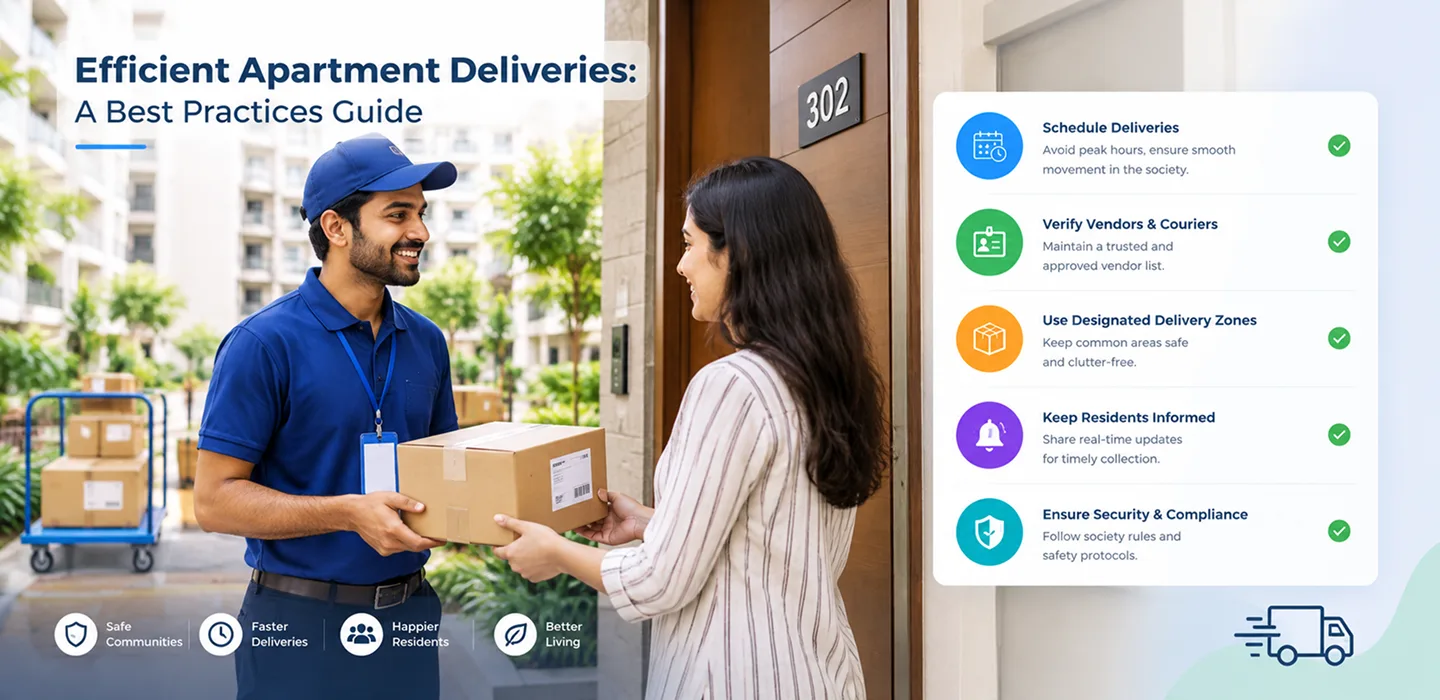
To manage apartment deliveries effectively, it's essential to follow a set of best practices that ensure both efficiency and security. Here are some key practices that can dramatically improve delivery management in apartment complexes.
1. Implement a Digital Management System
Utilizing a digital platform like MyKutir can streamline the entire process, from logging deliveries to notifying residents. These systems offer automated solutions that save time and reduce human error, providing a more reliable delivery experience.
2. Secure Storage Areas
Ensure that delivery storage areas are secure and access is restricted to authorized personnel only. Implement security cameras and monitor these areas regularly to prevent unauthorized access and potential package theft.
3. Timely Notifications
Ensure residents are promptly informed of package arrivals through notifications. This not only improves resident satisfaction but also facilitates quicker package retrieval, reducing crowding in storage areas.
4. Create Clear Policies
Establish and communicate clear policies regarding delivery handling, including package storage duration and retrieval procedures. These policies should be readily accessible to all residents and staff to ensure compliance and consistency.
5. Regular Training and Updates
Provide regular training to staff on using the delivery management system and update them on any new procedures or changes. Keeping the team well-informed ensures smooth operations and quick adaptation to any process changes.
These best practices create a structured framework that allows apartment complexes to handle deliveries efficiently, ensuring packages are managed securely and residents remain satisfied with the service provided.
Integrating Delivery Management with Resident Communication
Effective delivery management is closely linked to robust resident communication. By integrating these two aspects, apartment complexes can significantly enhance their operational efficiency and resident satisfaction. Here's why this integration is crucial and how it can be achieved.
Firstly, real-time communication is essential for managing expectations and reducing frustration. When residents are promptly notified about package arrivals, they can plan their schedules accordingly and retrieve their packages at their convenience. This reduces congestion and waiting times at collection points, which are common pain points in apartment complexes.
Moreover, integrating delivery management with resident communication tools allows for seamless information flow. Platforms like MyKutir enable consistent and comprehensive communication, ensuring that all messages, updates, and alerts reach residents through their preferred channels, whether that be app notifications or SMS.
This integration also enables proactive management of any delivery-related issues. For example, if a package is delayed or misplaced, immediate communication can help resolve the issue more quickly, reducing potential resident dissatisfaction. Additionally, feedback mechanisms can be incorporated, allowing residents to report issues or provide suggestions directly through the app, facilitating continuous improvement in service delivery.
Furthermore, integrated systems support data-driven decision-making. Delivery management systems equipped with analytics can provide insights into delivery patterns and resident preferences, allowing management to tailor their services to better meet resident needs. This data can be used to identify peak delivery times, optimize staffing schedules, and improve overall system efficiency.
In summary, integrating delivery management with resident communication tools is not just a matter of convenience, but a strategic move towards improving operational efficiency and enhancing resident satisfaction. It allows for better management of resources, quicker resolution of issues, and a more personalized service for residents.
Future Trends in Apartment Delivery Management
The future of delivery management in apartment complexes is set to evolve with advancements in technology and changing consumer expectations. Here we explore some of the trends and innovations likely to shape the future of this field.
One significant trend is the increasing use of artificial intelligence (AI) in delivery management systems. AI can be used to predict delivery patterns, optimize storage space, and even automate the scheduling of deliveries to reduce congestion. By analyzing historical data, AI can offer insights that lead to more efficient and cost-effective delivery management processes.
Another emerging trend is the use of Internet of Things (IoT) devices to track and manage packages. Smart lockers equipped with IoT technology can provide secure and contactless delivery options, allowing residents to retrieve their packages using digital codes or biometric authentication. These innovations offer enhanced security and convenience, aligning with the growing demand for touchless solutions.
Blockchain technology is also poised to make an impact by improving transparency and traceability in the delivery process. By creating an immutable ledger of each transaction, blockchain can ensure that every step of the delivery process is recorded and verifiable, thus increasing trust and accountability.
Additionally, the integration of augmented reality (AR) for package locating and retrieval could revolutionize the way residents interact with delivery management systems. AR can help residents navigate to specific lockers or storage areas using their smartphones, making the package retrieval process more intuitive and user-friendly.
As these technologies advance, apartment complexes will need to stay abreast of developments to maintain competitive delivery services. By adopting new technologies and trends, housing societies can continue to optimize their delivery management processes, meeting the evolving needs of residents and setting new standards for service excellence in the apartment management industry.
FAQ
What are the main challenges of delivery management in apartment complexes?
The primary challenges include managing a high volume of deliveries, ensuring timely notifications to residents, maintaining package security, and efficiently logging and tracking packages. Additionally, traditional manual processes often lead to errors and inefficiencies, further complicating delivery management.
How does MyKutir improve delivery management for apartments?
MyKutir enhances delivery management by automating logging and notifications, ensuring accurate records and timely communication with residents. Its secure logging system provides accountability, while its analytics feature offers insights that improve efficiency. By integrating with other management features, it creates a cohesive system that benefits both residents and management.
What steps should be taken to set up an effective delivery system?
To set up an effective delivery system, assess current needs, set up the MyKutir platform, define clear processes and protocols, communicate these to residents, and continually monitor and adjust the system based on feedback and analytics. These steps help create a streamlined process that enhances delivery management.
What are common mistakes in managing deliveries and how can they be avoided?
Common mistakes include poor communication, inadequate record-keeping, and lack of security measures. These can be avoided by implementing a digital management system like MyKutir, which provides real-time notifications, accurate logging, and secure package handling. Regular training and clear protocols also help mitigate these issues.
How can delivery management systems be integrated with resident communication tools?
Integration involves using platforms like MyKutir that combine delivery management with resident communication features, providing real-time notifications and updates. This seamless interaction ensures that residents receive timely information about their deliveries, enhancing their experience and ensuring efficient package management.
What security measures should be in place for handling deliveries?
Security measures should include restricted access to storage areas, use of CCTV cameras, and secure logging of all deliveries. Implementing digital systems like MyKutir can enhance security by providing detailed tracking and accountability for every package, reducing the risk of theft or misplacement.
What future trends should we expect in delivery management for apartments?
Future trends include the use of AI for predictive analysis, IoT devices for smart locker systems, blockchain for transparency, and AR for package retrieval. These technologies promise to make delivery management more efficient, secure, and user-friendly, catering to the evolving needs of residents and management.
Key Takeaways
- The rise in online shopping has increased the volume of deliveries in apartment complexes, necessitating efficient management systems.
- MyKutir offers comprehensive delivery management features, including automated logging, notifications, and secure records.
- Implementing an effective delivery management system involves careful planning, setup, and communication with residents.
- Common mistakes in delivery management can be avoided by leveraging digital solutions and establishing clear protocols.
- Integrating delivery management with resident communication enhances efficiency and satisfaction.
- Future trends in delivery management include AI, IoT, blockchain, and AR technologies.