Effective Guard Management in Housing Societies: Best Practices
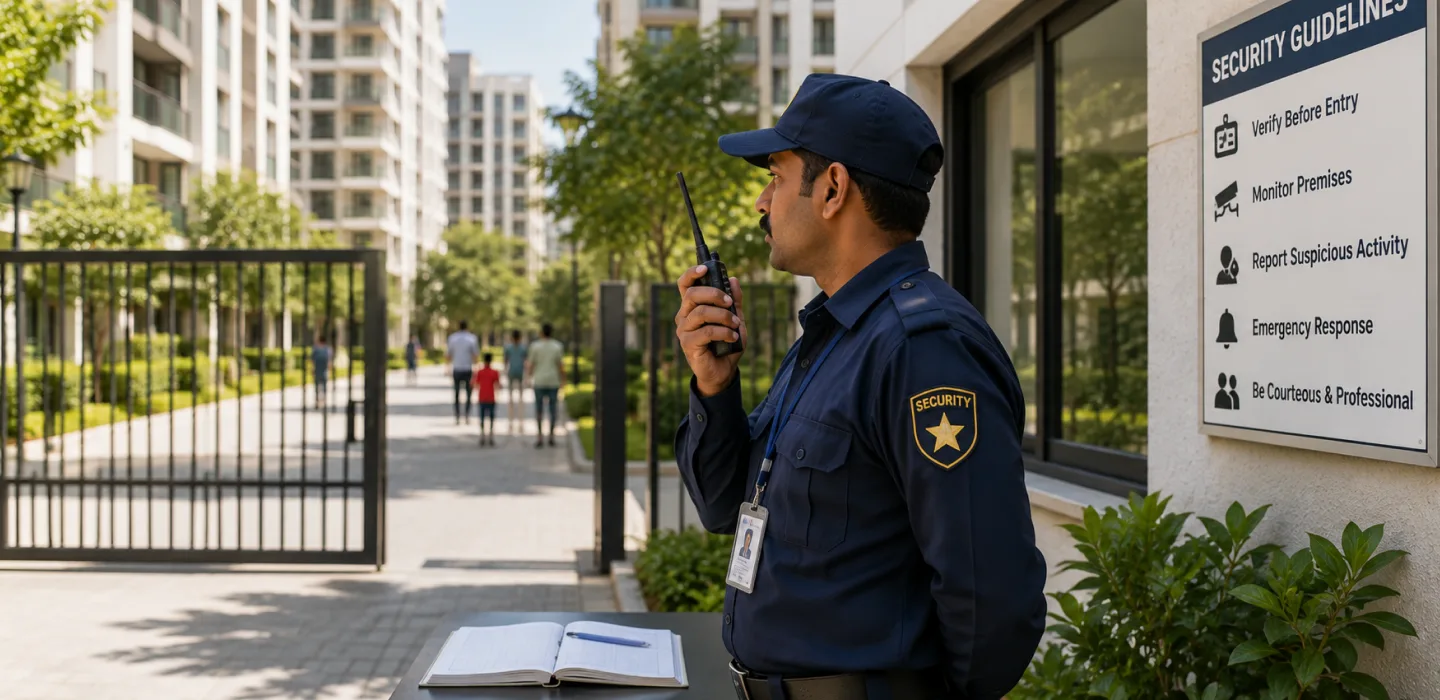
By MyKutir Editorial Team — 2026-09-13
Learn the best practices for managing security guards in housing societies with effective strategies and MyKutir's tools.
Security is a fundamental aspect of residential living, particularly in housing societies, where diverse groups of people live in close proximity. Managing the security of these complexes is crucial, not just for the safety of residents but also for maintaining the property’s overall value and reputation. Effective guard management in housing societies involves organizing, monitoring, and optimizing the efforts of security personnel to ensure the safety and well-being of all residents. This process can be quite challenging, given the need to manage multiple entry and exit points, visitor logs, and emergency incidents. Without a proper management system, issues such as unauthorized entries, disorganized logs, and delayed responses to incidents can arise, compromising the safety and satisfaction of residents.
Traditionally, guard management has relied heavily on manual processes, such as handwritten logs and direct communication through walkie-talkies, which often leads to inconsistencies and inefficiencies. Guards are expected to handle a variety of tasks simultaneously, from monitoring CCTV footage to conducting patrols and managing visitor entries. Such tasks demand a level of coordination and accuracy that manual methods struggle to consistently provide. Moreover, the lack of centralized data makes it difficult for housing societies to audit their security operations and ensure accountability.
In recent years, technology has become an invaluable tool in enhancing the efficiency and effectiveness of guard management. By implementing digital systems, housing societies can streamline their operations, improve communication, and ensure the integrity of security protocols. Platforms like MyKutir offer comprehensive solutions that address these challenges by digitizing visitor management, enabling real-time monitoring, and maintaining digital logs that are easily accessible. With these tools, security operations can be optimized to prevent incidents before they occur, significantly enhancing the safety of residents and the overall livability of housing societies.
Key Responsibilities of a Security Guard
Security guards in housing societies fulfill a crucial role in ensuring the safety and security of residents, property, and assets. Their responsibilities are diverse and require a keen eye for detail, excellent communication skills, and the ability to respond swiftly to any incidents. One of the primary duties of a security guard is to manage the flow of people entering and exiting the premises. This involves verifying the identity of visitors, ensuring that they have legitimate reasons for entry, and monitoring the movement of residents to prevent unauthorized access.
A critical component of a security guard's responsibilities is visitor verification. Security personnel must maintain a log of all visitors, ensuring that each entry is documented accurately. This process involves not only checking IDs and noting down details but also assessing any potential risks associated with each visitor. Guards need to be vigilant and trust their instincts, as they are often the first line of defense in preventing security breaches.
Besides managing entrance points, security guards are tasked with patrolling the premises to deter potential criminal activity. Regular patrols, whether on foot or via vehicle, help detect and address any suspicious behavior or safety hazards. These patrols are essential in maintaining a visible security presence, which can deter criminal activity and reassure residents of their safety.
Maintaining incident logs is another significant responsibility. Whether it’s a medical emergency, a dispute between residents, or an attempted break-in, guards must record the details accurately and promptly. This documentation is crucial not only for immediate action but also for future audits and investigations. Comprehensive logs help in identifying patterns and assessing the effectiveness of current security measures, providing valuable insights for continuous improvement.
Furthermore, security guards often serve as a point of contact for emergency services. In case of an incident, guards should be trained to coordinate with local law enforcement, fire departments, or medical services to facilitate quick and effective responses. They need to possess a clear understanding of emergency protocols and communication channels to act with confidence and authority during crises.
Challenges in Traditional Guard Management Approaches
Traditional guard management approaches in housing societies often rely on manual processes, which present numerous challenges. One of the most significant limitations of these systems is their inefficiency. Paper logs, for instance, can be prone to errors, illegible handwriting, and can easily be misplaced or damaged. This makes it difficult to maintain accurate records of visitor entries, incidents, and patrols, leading to gaps in data that compromise the security of the housing society.
Another challenge of traditional methods is the lack of accountability. Without digital records, it becomes challenging to audit the actions of security personnel. There is often no way to verify if a guard has completed their patrol rounds or if they have accurately recorded all incidents. This lack of accountability can lead to complacency among guards, potentially resulting in security lapses that could have been prevented with a more rigorous system.
Communication is another critical area where traditional methods fall short. Guards often rely on walkie-talkies or personal mobile phones, which can be unreliable and may not provide a secure channel for communication. This can lead to miscommunication or delays in responding to incidents, further exacerbating security risks. Moreover, coordinating shift changes and ensuring that all guards are up to date with the latest protocols and incidents can be cumbersome without a centralized communication platform.
Real-time monitoring is also a significant limitation of manual systems. In the event of an emergency, immediate access to accurate data can be crucial for decision-making. Manual systems fail to provide the real-time insights needed to swiftly assess a situation and respond effectively. Without digital tools, housing societies are unable to track security operations in real-time, making it difficult to monitor guard performance and ensure that all security measures are being followed diligently.
Furthermore, traditional guard management approaches often lack scalability. As housing societies expand, the volume of data and the number of personnel to manage increases exponentially. Manual systems struggle to accommodate this growth, leading to a decreased overall efficiency in security operations. Transitioning to a digital platform like MyKutir can address these challenges by providing scalable solutions that grow alongside the housing society’s needs.
How MyKutir Enhances Guard Management
The MyKutir platform offers a robust solution to the challenges faced by traditional guard management systems. By leveraging technology, MyKutir enhances the efficiency and effectiveness of security operations within housing societies. One of the standout features of MyKutir is its visitor management system. The platform digitizes the process of logging visitor entries, allowing guards to easily record and verify visitor information using a mobile device. This not only reduces the chance of error but also speeds up the entry process, minimizing delays and congestion at entrance points.
With MyKutir, housing societies benefit from digital logs that replace cumbersome paper records. Digital logs are accessible, easy to search, and can be archived for long-term storage without the risk of physical damage. This feature ensures that all visitor entries, incidents, and patrol activities are meticulously recorded and can be accessed at any time for audits or analysis. As a result, accountability among security personnel is significantly improved, as guards are aware that their activities are being logged and monitored.
The platform also enhances real-time monitoring, a crucial aspect for effective security management. MyKutir’s React Native app provides live updates, enabling administrators to monitor guard activities and security incidents as they happen. The app facilitates instant communication with security personnel, ensuring that all guards are informed of ongoing situations and can respond accordingly. This level of connectivity and transparency is invaluable for maintaining a secure and coordinated security operation.
Another innovative feature of MyKutir is its digital gate pass management. This tool allows residents to generate digital passes for their visitors, streamlining the entry process and reducing the burden on security guards. By utilizing the digital gate pass, residents can pre-approve visitors, which enhances security by ensuring that only authorized individuals can gain entry. Additionally, it provides housing societies with a comprehensive record of all visitor activities, which can be invaluable for security audits and investigations.
Overall, MyKutir significantly improves the management of security guards by providing a centralized, digital platform for all security operations. This enhancement not only increases the efficiency of guards but also raises the overall level of security within the housing society, making it a safer and more attractive place to live.
Implementing Best Practices for Guard Management
Effective guard management is essential for maintaining security within housing societies, and implementing best practices can significantly enhance the performance and accountability of security personnel. One of the foundational elements of guard management is comprehensive training. Security guards should undergo rigorous training programs that cover all aspects of their responsibilities, including emergency response, conflict resolution, and the use of digital tools like MyKutir. Continuous training is also crucial to keep guards updated with the latest security protocols and technologies.
Establishing clear protocols is another vital aspect of successful guard management. Housing societies should develop detailed security policies that outline the responsibilities of guards, procedures for handling incidents, and guidelines for communication. Protocols should be regularly reviewed and updated to address emerging security challenges and to incorporate feedback from guards and residents. Having clear protocols helps ensure consistency in security operations and provides a framework for evaluating guard performance.
Leveraging technology is a best practice that cannot be overlooked. Platforms like MyKutir provide numerous tools that enhance guard management by automating processes, improving communication, and allowing for real-time updates. For example, integrating digital visitor management systems eliminates the need for paper logs, increasing efficiency and reducing the chances of human error. Real-time monitoring and incident reporting enable quick responses to security threats and ensure that data is available for audits and analysis.
Accountability is another critical component of effective guard management. Implementing digital systems like MyKutir allows for accurate tracking of guard activities, ensuring that all actions are documented and can be reviewed at any time. This level of accountability encourages guards to perform their duties diligently and provides a basis for evaluating their performance objectively.
Regular audits and evaluations of security operations can help identify areas for improvement and ensure that guards adhere to established protocols. Housing societies should conduct periodic reviews of their security systems to assess their effectiveness and make necessary adjustments. Engaging residents in the process by encouraging feedback and addressing their concerns can also enhance the overall security environment and foster a sense of community.
Scenario: A Day in the Life of a Security Guard Using MyKutir
To illustrate the transformative impact of MyKutir on guard management, consider a typical day in the life of a security guard at a housing society utilizing the platform. The guard's day begins with logging into the MyKutir app via their mobile device to receive updates on recent incidents and shifts. The app provides an overview of tasks scheduled for the day, including visitor management, patrols, and any specific instructions from the housing society's management.
As residents begin their day, the guard is positioned at the entrance gate, equipped with the MyKutir app. A visitor arrives, and the guard quickly accesses the digital gate pass, verifying the visitor's details before granting access. This process is fast and efficient, reducing wait times and preventing bottlenecks at the entrance. The visitor's entry is logged automatically in the system, ensuring the record is accurate and easy to reference if needed.
Throughout the day, the guard conducts scheduled patrols of the premises. With MyKutir's real-time monitoring feature, the guard can update their status as they complete each patrol route. This information is instantly available to the housing society's management, who can verify that all patrols are conducted as scheduled. If the guard encounters any suspicious activity, they can immediately report it through the app, notifying management and other security personnel to respond promptly.
During the afternoon, a minor incident occurs when two residents get into a disagreement. The guard intervenes and uses the MyKutir app to document the incident, noting down the details and any actions taken. This documentation is crucial for resolving the issue and provides a transparent record for management to review. The guard is also able to communicate with the residents via the app, sending updates and receiving feedback to ensure the situation is handled professionally and effectively.
As the day concludes, the guard wraps up their shift by reviewing the day's activities in the MyKutir app. They ensure that all logs are complete, incident reports are submitted, and any outstanding tasks are noted for the next shift. The app also allows the guard to receive feedback from their supervisor, providing an opportunity for learning and growth. This scenario demonstrates how MyKutir streamlines tasks, enhances communication, and empowers guards to perform their duties with greater efficiency and confidence.
Common Mistakes in Guard Management and How to Avoid Them
Managing security personnel in housing societies comes with its set of challenges, often leading to common mistakes that can compromise security. One of the most frequent mistakes is inadequate training for security guards. Without comprehensive training covering emergency protocols, conflict resolution, and digital tools like MyKutir, guards may not be fully prepared to handle incidents effectively. Continuous professional development and regular training updates are essential to keep guards skilled and confident in their roles.
Poor incident documentation is another common pitfall in guard management. Traditional paper logs are prone to errors, omissions, and can be easily lost or damaged. As a result, critical information may be missing when it's needed most, hindering investigations and audits. Implementing digital log systems through platforms like MyKutir ensures that records are accurate, complete, and easily accessible, providing a reliable source of information for any security-related evaluations.
Inadequate communication among guards and with management is a significant issue that can lead to operational inefficiencies and delayed responses to incidents. Traditional communication methods, such as walkie-talkies, are often unreliable and do not provide a secure channel for transmitting sensitive information. Utilizing digital platforms for communication allows for secure, reliable, and instant messaging between security personnel and management, ensuring everyone is informed and coordinated effectively.
A lack of accountability among guards can also pose a significant challenge. Without a system to track guard activities and performance, there is little incentive for guards to adhere strictly to their duties. MyKutir addresses this issue by providing a digital platform that logs guard activities, patrols, and incidents, allowing management to review performance and take corrective action when necessary.
Finally, failing to integrate technology into guard management processes can leave housing societies at a disadvantage. Digital platforms offer numerous benefits, including improved efficiency, accountability, and data accuracy. Societies that resist adopting such technology may find their security systems outdated and less effective in addressing modern security challenges. By embracing platforms like MyKutir, housing societies can enhance their security operations and ensure a safe environment for all residents.
Comparison: Manual vs. Digital Guard Management
The transition from manual to digital guard management offers numerous advantages that significantly improve the security operations of housing societies. To highlight these benefits, consider the following comparison table that outlines key differences between manual and digital approaches:
| Aspect | Manual Management | Digital Management |
|---|---|---|
| Efficiency | Time-consuming processes prone to errors and delays | Streamlined operations with automated processes and quick access to information |
| Cost-Effectiveness | Higher long-term costs due to inefficiencies and waste | Reduced costs with improved resource allocation and less waste |
| Data Accuracy | Susceptible to errors and inconsistencies in records | Accurate, reliable, and easily accessible data with digital logs |
| Ease of Access | Difficult to retrieve and analyze data from physical logs | Instant access to comprehensive records and reports |
| Real-Time Monitoring | Limited ability to monitor activities in real-time | Real-time updates and monitoring of guard activities and incidents |
| Accountability | Limited tracking and evaluation of guard performance | Enhanced accountability with detailed activity logs and performance reviews |
The comparison clearly demonstrates that digital guard management systems provide significant improvements over traditional manual methods. By automating processes, enhancing data accuracy, and enabling real-time monitoring, digital platforms like MyKutir ensure more efficient and effective security operations. These improvements not only enhance the safety of housing societies but also provide peace of mind to residents and management alike.
FAQs on Guard Management in Housing Societies
What are the main responsibilities of a security guard in a housing society?
Security guards in housing societies play a multifaceted role that is pivotal to maintaining the safety and security of residents and property. Their primary responsibilities include managing the entry and exit of residents and visitors, verifying visitor identities, and ensuring that only authorized individuals gain access to the premises. Guards are also responsible for conducting regular patrols to deter potential criminal activity and to identify and mitigate any safety hazards. They must maintain detailed incident logs for any events or emergencies, coordinating with local law enforcement or emergency services when necessary. By fulfilling these duties, security guards help create a secure living environment for all residents.
How can digital tools enhance guard management?
Digital tools like MyKutir transform guard management by automating and streamlining various security operations. These tools provide a centralized platform for recording visitor entries, monitoring guard activities, and maintaining incident logs, ensuring that data is accurate and easily accessible. By enabling real-time communication and updates, digital tools ensure that security personnel and management are always informed and coordinated, allowing for swift responses to incidents. Furthermore, digital platforms offer enhanced accountability by logging all guard activities, enabling management to review performance and implement improvements as needed. Overall, digital tools enhance the efficiency, reliability, and effectiveness of guard management in housing societies.
What challenges do housing societies face with manual guard management?
Manual guard management systems pose several challenges that can impede the effectiveness of security operations. These systems often rely on handwritten logs and physical communication devices, leading to inefficiencies and a higher likelihood of errors or omissions in records. The lack of centralized data makes it difficult to audit security activities and ensures accountability among guards. Communication is also limited, with traditional methods unable to provide real-time updates or secure information transmission. Furthermore, manual systems lack scalability, making it challenging for housing societies to adapt and grow their security operations as their needs evolve. Transitioning to digital solutions can address these challenges by providing more efficient, accountable, and scalable security management.
How does MyKutir support guard management?
MyKutir supports guard management by offering a comprehensive, digital platform that enhances all aspects of security operations in housing societies. It provides tools for digital visitor management, allowing guards to accurately record and verify visitor information, reducing errors and speeding up entry processes. MyKutir also enables real-time monitoring and communication, ensuring that guards and management are always connected and informed of any ongoing situations. The platform maintains detailed digital logs, which are vital for audits and performance reviews, thereby improving accountability. Additionally, MyKutir's digital gate pass management further streamlines visitor entry, reducing the burden on guards and enhancing overall security efficiency.
What are the essential best practices for managing security personnel?
Managing security personnel effectively involves implementing several best practices that ensure efficient and reliable security operations. Comprehensive training is essential, equipping guards with the skills and knowledge needed to perform their duties confidently. Establishing clear protocols and guidelines helps provide consistency in security operations and evaluates performance effectively. Utilizing technology, such as digital platforms like MyKutir, automates processes, improves communication, and allows for real-time updates. Ensuring accountability through regular audits and performance reviews encourages guards to fulfill their roles with diligence. Engaging residents by addressing their concerns and incorporating their feedback also enhances the overall security environment and fosters a sense of community within the housing society.
Key Takeaways
- Effective guard management is crucial for ensuring the safety and security of housing societies.
- Security guards have diverse responsibilities, including managing access, patrolling, and documenting incidents.
- Traditional guard management approaches face challenges such as inefficiency, lack of accountability, and limited communication.
- Digital platforms like MyKutir enhance guard management by offering real-time monitoring, digital logs, and streamlined processes.
- Implementing best practices, such as training and technology integration, improves the efficiency and accountability of security personnel.
- A digital approach to guard management offers significant advantages over manual systems, including increased data accuracy and ease of access.