Digital Transformation in Parking Management for Residential Communities
By MyKutir Editorial Team — 2026-09-21
Learn how digital transformation is enhancing parking management in residential communities, offering increased efficiency and convenience.
Parking management in residential communities is a multifaceted issue that continues to challenge residents and management alike. Space constraints, unauthorized parking, and inefficient allocation of parking slots are among the most pressing concerns. As urbanization intensifies, these challenges become more pronounced, calling for a structured and efficient approach to parking management. The traditional methods of managing parking through manual logs or simple allocation charts are proving inadequate in the face of growing demands and complexities.
One of the primary challenges is space constraint. Many residential communities were not designed with the current density of vehicles in mind, leading to overcrowding and a shortage of available parking spaces. This often results in residents parking in unauthorized spots, causing friction between neighbors and management. The lack of a systematic approach to allocate parking efficiently only exacerbates the issue, leading to confusion and dissatisfaction among residents.
Unauthorized parking is another critical problem that plagues residential communities. It can take the form of visitors parking in resident spots, residents using multiple spots without permission, or even non-residents taking advantage of unsecured parking areas. This not only inconveniences residents but also creates security concerns, as management struggles to monitor and control vehicle access.
Inefficient allocation of parking slots is a frequent issue, often due to a lack of a comprehensive view of parking availability and resident needs. Without a centralized system to oversee and streamline the allocation process, management finds it difficult to make informed decisions. This creates a scenario where some residents may have excess parking while others have none, leading to dissatisfaction and potential disputes.
The need for a structured approach to overcome these issues is more pressing than ever. A well-planned parking management strategy not only addresses space constraints but also ensures fair and efficient use of resources, thereby enhancing resident satisfaction. Digital transformation offers a solution by introducing advanced tools and systems that automate and optimize parking management, aligning with the demands of modern residential living.
The Role of Digital Transformation in Parking Management
Digital transformation in parking management is not just a trend; it represents a fundamental shift in how residential communities manage their parking resources. At its core, digital transformation involves the integration of digital technologies into all areas of parking management, fundamentally changing how services are delivered and value is created for residents.
One of the key advantages of digital transformation is the automation of parking processes. Automated systems can significantly reduce the workload on management by handling tasks such as parking allocation, monitoring vehicle entry and exit, and tracking parking violations. This allows management to focus on other critical areas, improving overall operational efficiency.
Real-time updates are another significant benefit of digital parking systems. With the ability to offer live data on parking availability and usage, residents can make informed decisions before arriving at the community. This transparency reduces the frustration associated with hunting for available parking and allows for better planning, enhancing the overall resident experience.
Data-driven decision-making is at the heart of digital transformation. By collecting and analyzing data on parking patterns and resident behavior, management can gain valuable insights that inform future planning and policy decisions. This data-driven approach enables more accurate forecasting of parking needs and helps identify potential issues before they escalate into significant problems.
Furthermore, digital solutions offer enhanced security features. Automated access control systems can ensure that only authorized vehicles are allowed into the community, reducing the incidence of unauthorized parking and enhancing the safety of residents. These systems can be integrated with existing security protocols, providing a comprehensive security solution.
In summary, digital transformation offers a robust framework for tackling traditional parking problems in residential communities. By leveraging technology, communities can enhance operational efficiency, improve resident satisfaction, and create a more secure and convenient parking environment.
How MyKutir Enhances Parking Management
MyKutir offers a comprehensive suite of tools designed to enhance parking management in residential communities. With features such as ParkingSlot, ParkingAllocation, and ParkingVehicleHistory, MyKutir streamlines the complex process of managing parking resources, ensuring both efficiency and transparency.
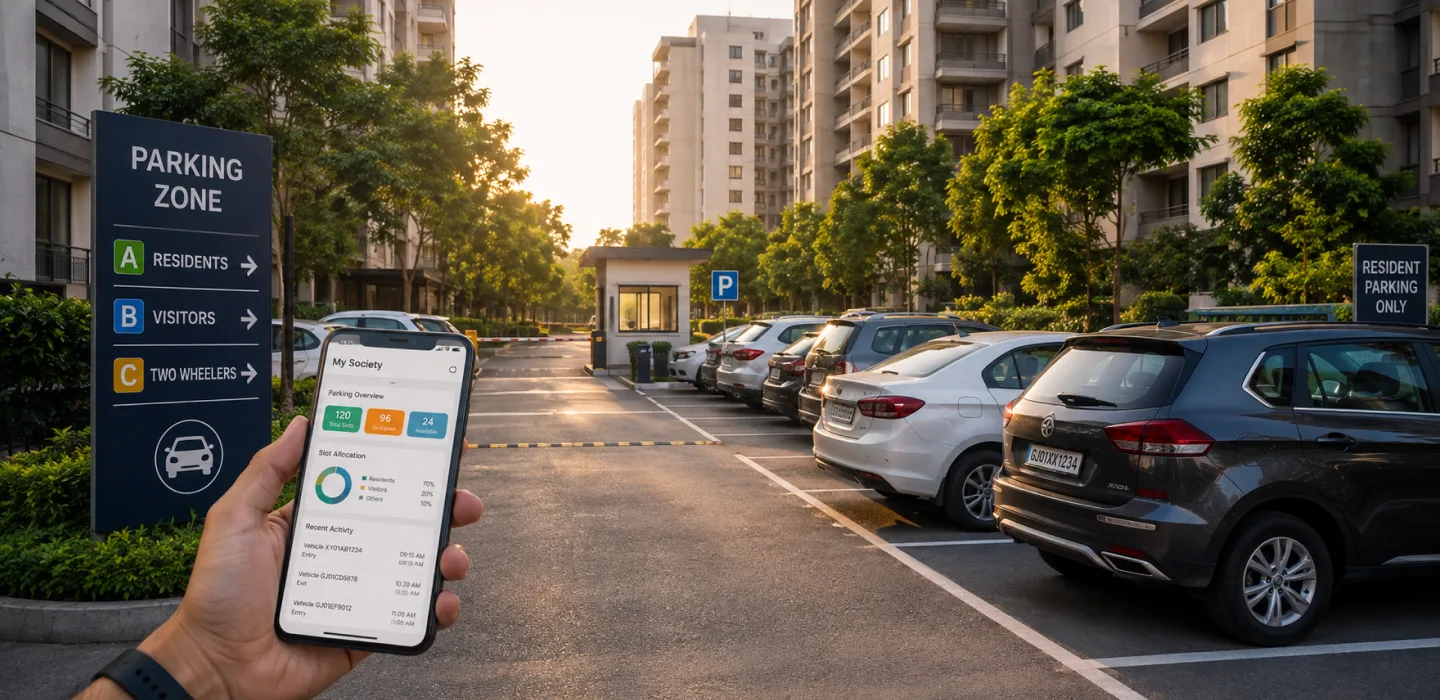
The ParkingSlot feature is a pivotal tool in managing parking spaces effectively. It allows management to create, edit, and allocate parking slots to residents with ease. The visual interface facilitates the tracking of available slots and helps in planning for peak usage times. By maintaining a real-time record of slot occupancy, management can quickly identify and address any discrepancies or unauthorized usage.
ParkingAllocation further enhances the process by enabling automated assignment of parking slots based on predefined rules and resident preferences. This automation reduces the potential for human error and ensures that the allocation process is both fair and efficient. By aligning with resident preferences where possible, MyKutir contributes to higher satisfaction levels and a smoother parking experience for everyone involved.
Tracking vehicle movements is another critical aspect of parking management that MyKutir excels at. Through its ParkingVehicleHistory feature, MyKutir records detailed logs of vehicle entry and exit times. This historical data is invaluable for resolving disputes, monitoring usage patterns, and optimizing future parking strategies. By having access to accurate and comprehensive movement history, management can make informed decisions that enhance security and operational efficiency.
Moreover, MyKutir's integration capabilities allow for seamless interaction with existing systems, ensuring that communities do not face compatibility issues or require significant overhauls of their current infrastructure. This ease of integration minimizes disruption during implementation and facilitates a swift transition to digital parking management.
Overall, MyKutir equips residential communities with the tools needed to transform their parking management approach. By leveraging technology, communities can achieve better resource utilization, greater operational transparency, and enhanced resident satisfaction.
Scenario: Implementing Digital Parking Solutions in a Society
Imagine a residential society plagued by typical parking challenges: limited spaces, unauthorized usage, and constant disputes over allocation. The management committee decides to tackle these issues by implementing MyKutir's digital parking management tools.
The first step involves a comprehensive assessment of the current parking situation. Management conducts a survey to understand resident needs and identifies areas of improvement via MyKutir's platform. This initial evaluation sets the stage for informed decision-making and effective tool deployment.
Next, MyKutir's ParkingSlot feature is initiated. Management begins by digitizing all parking slots, creating a centralized database accessible to both management and residents. This visibility into parking availability immediately mitigates confusion and reduces unauthorized parking incidents.
With ParkingAllocation, the society automates the assignment of slots based on resident profiles and preferences. This reduces manual errors and ensures fairness in distribution. Residents receive notifications of their assigned slots, eliminating the need for constant back-and-forth with management.
As the system becomes operational, ParkingVehicleHistory comes into play. It records all vehicle movements, providing management with real-time data to monitor parking usage and anticipate future needs. This historical data proves invaluable in resolving disputes, as management can refer to objective logs to clarify any misunderstandings.
Within weeks, the residential society observes significant improvements. Resident complaints about parking have drastically reduced, and the overall satisfaction level has increased. Management notes a sharp decline in unauthorized parking, attributed to better slot visibility and automated control systems preventing unauthorized vehicle entry.
This hypothetical scenario illustrates how MyKutir’s digital solutions can transform parking management, showcasing the benefits of reduced manual intervention, increased satisfaction, and optimized resource usage.
Common Mistakes in Adopting Digital Parking Solutions
While the benefits of digital parking management are clear, societies can face several challenges during implementation. Recognizing and addressing these common pitfalls is crucial for a successful transition.
One frequent mistake is insufficient training for staff and residents. Digital systems, while user-friendly, require an understanding of functionalities to ensure smooth operation. Without adequate training, both management and residents may struggle to utilize the system effectively, leading to frustration and resistance. Therefore, investing in comprehensive training sessions is essential to familiarize users with the new tools and their benefits.
Lack of integration with existing systems is another common issue. Societies often have established workflows and systems in place, and introducing a new digital solution can disrupt these processes if not properly integrated. MyKutir, for instance, offers strong integration capabilities, but success depends on thorough planning and coordination to ensure seamless interaction between old and new systems.
Overlooking resident involvement can also hinder successful implementation. Residents are the end-users of parking solutions, and their input is valuable in shaping a system that meets their needs. Failing to engage residents during the planning and implementation phases can lead to dissatisfaction and low adoption rates. Involving residents early on, through surveys or feedback sessions, ensures that the solution aligns with their expectations and enhances satisfaction.
Lastly, neglecting to establish clear processes and guidelines for the digital system can lead to confusion and misuse. Clearly defined rules and responsibilities are vital in maintaining order and ensuring that the benefits of digital parking management are fully realized. Documentation and communication of these processes help set expectations and facilitate compliance.
By being aware of these common mistakes and proactively addressing them, societies can ensure a smoother transition to digital parking management and reap the full benefits of advanced technological solutions.
Comparison of Traditional vs. Digital Parking Management
| Aspect | Traditional Parking Management | Digital Parking Management |
|---|---|---|
| Time Efficiency | Manual allocation is time-consuming, often leading to delays and errors. | Automated systems handle allocation quickly and accurately, saving time. |
| Error Rates | Higher likelihood of human error in manual processes. | Reduced errors due to automation and real-time updates. |
| Resident Satisfaction | Frequent complaints due to lack of transparency and inefficiency. | Improved satisfaction with transparent processes and real-time data. |
| Real-Time Monitoring | Limited or no capability for real-time monitoring. | Offers real-time updates and monitoring of parking spaces. |
| Resource Utilization | Often inefficient, leading to wasted or underutilized spaces. | Optimized utilization through data-driven allocation. |
| Security | Challenges in controlling unauthorized access and parking. | Enhanced security with automated access control. |
This comparison highlights the transformative impact of digital parking management over traditional methods. Digital tools not only improve operational efficiency but also elevate the resident experience by addressing common frustrations associated with manual systems.
Step-by-Step Guide to Implementing Digital Parking Management
Implementing digital parking management in a residential community involves careful planning and execution. Here’s a step-by-step guide to help societies transition effectively:
- Evaluate Current Systems: Begin by assessing the current parking management practices. Identify inefficiencies, common resident complaints, and areas for improvement. This evaluation lays the foundation for a successful digital transformation.
- Choose the Right Tools: Select a digital parking management system that aligns with the community’s needs. MyKutir, for instance, offers features like ParkingSlot, ParkingAllocation, and ParkingVehicleHistory that cater to various parking management challenges.
- Engage Stakeholders: Involve residents and other stakeholders in the planning process. Gather feedback through surveys or forums to ensure the chosen solution meets their needs and expectations, fostering higher adoption rates.
- Set Up Infrastructure: Ensure the necessary infrastructure is in place for digital implementation. This includes reliable internet connectivity, compatible devices for monitoring, and secure data storage solutions.
- Conduct Training Sessions: Provide comprehensive training for management staff and residents. Familiarize them with the functionalities, benefits, and operational procedures of the new system to ensure smooth adoption.
- Integrate with Existing Systems: Plan for effective integration with any existing systems to ensure seamless operation. MyKutir offers robust integration capabilities, but coordination and planning are key to minimizing disruption.
- Launch and Monitor: Roll out the digital system in phases, if needed, to allow for adjustments and refinements. Monitor the system closely during the initial period to identify any issues or areas for improvement.
- Gather Feedback and Refine: Continuously collect feedback from users to identify any challenges or additional needs. Use this feedback to refine processes and enhance the system’s effectiveness.
By following these steps, societies can successfully implement digital parking management solutions, paving the way for improved efficiency, security, and resident satisfaction.
Frequently Asked Questions about Digital Parking Management
What are the key benefits of digital parking management?
Digital parking management offers numerous benefits, including enhanced efficiency, reduced manual errors, and improved resource utilization. By automating processes like parking slot allocation and vehicle tracking, societies can save time and reduce the potential for human error. Additionally, the use of real-time data provides transparency for residents, leading to higher satisfaction levels. Enhanced security features, such as automated access control, also contribute to safer environments by preventing unauthorized parking and ensuring only authorized vehicles enter the community.
How does MyKutir facilitate parking management?
MyKutir facilitates efficient parking management through features like ParkingSlot, ParkingAllocation, and ParkingVehicleHistory. These tools streamline the allocation process, track vehicle movements, and provide real-time data to ensure optimized usage of parking resources. MyKutir's integration capabilities allow for seamless interaction with existing systems, mitigating potential compatibility issues during implementation. Overall, MyKutir’s comprehensive suite of tools equips societies with the technology needed to transform their parking management approach.
What challenges do societies face when implementing digital parking solutions?
Common challenges include insufficient training, lack of integration with existing systems, and inadequate resident involvement. Without proper training, users may struggle to utilize the new tools effectively, leading to resistance and frustration. Societies also face difficulties when digital solutions do not integrate smoothly with their current infrastructure, disrupting established workflows. Involving residents early in the process through feedback and engagement helps align the solution with their needs, ensuring higher adoption rates and satisfaction.
How can digital tools reduce unauthorized parking?
Digital tools reduce unauthorized parking by providing real-time visibility of available slots, automating access control, and tracking vehicle movements. Automated systems restrict entry to authorized vehicles, eliminating unauthorized usage. Management can monitor parking patterns and identify unauthorized activity through detailed logs, enabling swift intervention. By offering transparency and control, digital tools significantly reduce the incidence of unauthorized parking and enhance security within the community.
What are the costs associated with digital parking management?
The costs associated with digital parking management can vary depending on the size of the community, the chosen system, and specific requirements. While upfront costs may include software licenses, hardware installations, and training, these are often offset by savings in time, reduced errors, and improved resource utilization. Over time, the efficiency and satisfaction gains from a digital system can result in a favorable return on investment. Communities should conduct a cost-benefit analysis to ensure the chosen solution aligns with their budget and goals.
Is digital parking management compatible with existing society systems?
Most digital parking management solutions, like MyKutir, are designed to integrate smoothly with existing society systems. However, successful integration requires careful planning and coordination. Societies should evaluate compatibility with their current infrastructure and plan for any necessary adjustments or upgrades. By ensuring seamless integration, societies can minimize disruption and enjoy the benefits of digital parking management without overhauling their existing systems completely.
How does real-time data improve parking efficiency?
Real-time data improves parking efficiency by providing immediate insights into parking space availability and usage patterns. This transparency allows residents to make informed decisions, reducing the time spent searching for parking. Management can use this data to anticipate peak usage times, optimize allocation, and address issues proactively. Real-time monitoring enhances the overall efficiency of parking management, ensuring that resources are utilized effectively and reducing resident frustration.
Conclusion: The Future of Parking Management in Residential Communities
As residential communities continue to evolve, the need for efficient and effective parking management becomes increasingly critical. Digital transformation offers a pathway to meet these demands by providing tools and systems that streamline operations, enhance security, and improve resident satisfaction.
By adopting digital parking management solutions, societies can transition from traditional, manual processes to automated systems that offer real-time data, transparency, and optimized resource utilization. The benefits extend beyond operational efficiency, positively impacting resident experience by addressing common frustrations associated with parking challenges.
For communities looking to stay ahead in the ever-evolving landscape, embracing digital transformation in parking management is a strategic decision that positions them for future growth and success. While the implementation process requires careful planning and consideration, the long-term benefits far outweigh the initial challenges.
In conclusion, the future of parking management in residential communities lies in digital solutions like MyKutir, which offer comprehensive tools to tackle common parking issues. As more societies recognize the advantages of these technologies, the standard for parking management is set to rise, creating future-ready communities that prioritize efficiency, security, and resident satisfaction.
- Understanding parking challenges in residential communities is crucial for effective management.
- Digital transformation offers a robust framework for tackling traditional parking problems.
- MyKutir's parking management tools provide streamlined and efficient solutions.
- Implementing digital parking solutions requires careful planning and stakeholder engagement.
- Avoiding common mistakes ensures a smoother transition to digital management.
- Digital systems significantly improve efficiency, satisfaction, and security over traditional methods.
- Successful adoption involves evaluating current systems, training, and integration.
- Real-time data and transparency are key benefits of digital parking management.
- The future of parking management in residential communities is digital, offering numerous advantages.