Harnessing Automation for Efficient Society Management
By MyKutir Editorial Team — 2026-08-13
Discover the impact of automation in society management, improving efficiency from billing to visitor services.
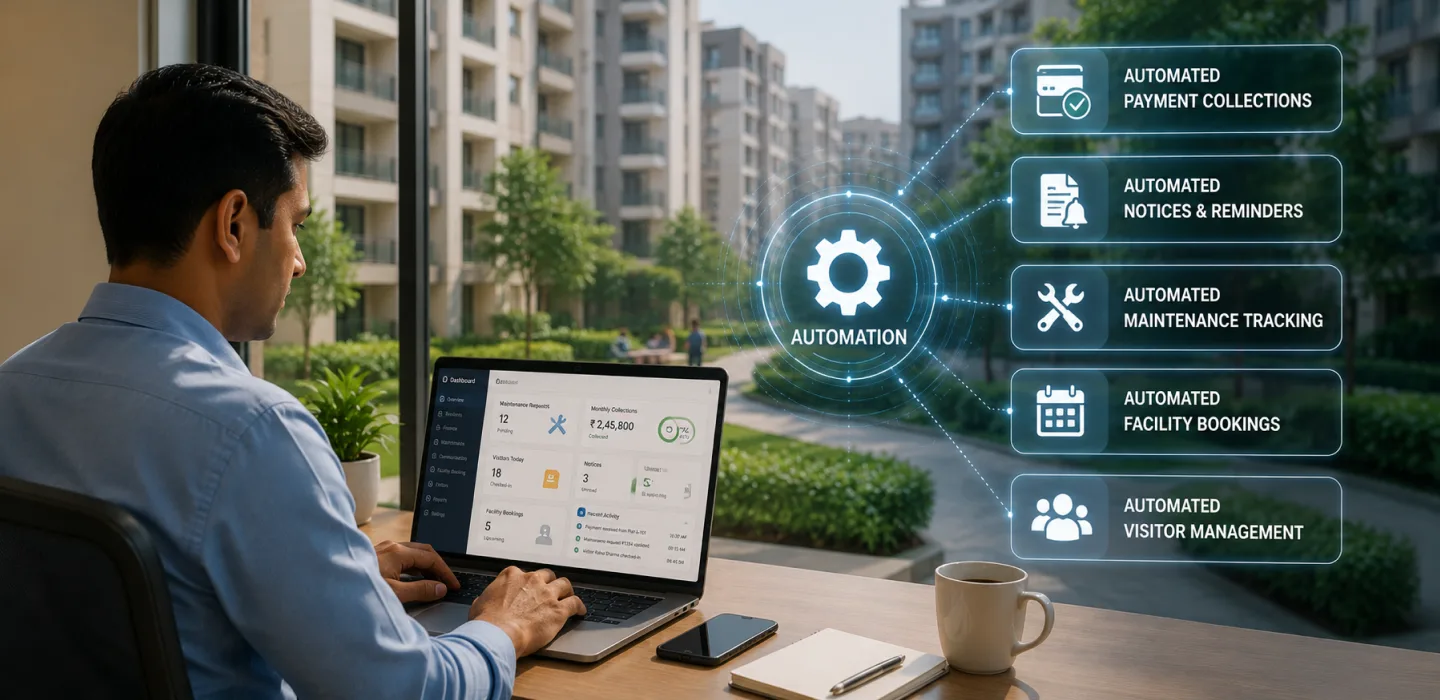
Managing housing societies efficiently can be a daunting task, considering the multitude of responsibilities involved, such as billing, visitor tracking, and handling member complaints. Traditionally, these tasks have been managed manually, often resulting in inefficiencies and errors. However, the advent of automation technology has paved the way for a significant transformation in society management. Automation in society management involves the use of advanced software solutions that streamline various processes, enabling smoother operations and enhancing efficiency.
Introduction to Society Management Automation
The role of automation in society management has become increasingly important as housing societies look for ways to operate more efficiently. Manual processes, which might include maintaining physical ledgers for billing or manually tracking visitor entries, are not only time-consuming but also prone to human error. The transition to automated systems can significantly enhance operational efficiency by reducing the time and effort required for routine tasks, allowing management committees to focus on more strategic activities.
Automation can streamline several areas within society management. Billing processes, for example, can be automated to ensure timely invoicing and payment collection, reducing the administrative burden on society staff. Visitor tracking is another area where automation can bring substantial benefits. Digital visitor management systems can replace traditional logbooks, providing real-time tracking and alerts for better security. Similarly, complaint handling can be automated to ensure that issues are logged, tracked, and resolved promptly.
By shifting to automated systems, societies can also improve communication with residents. Automated notifications via SMS or WhatsApp can keep residents informed about important announcements or pending dues. Moreover, automation facilitates better data management, enabling societies to maintain accurate records and generate detailed reports for analysis and decision-making.
Ultimately, the shift from manual processes to automated systems represents a transformative step for housing societies. It not only enhances efficiency but also improves the overall resident experience by ensuring that society operations run smoothly and transparently. As more societies recognize the potential of automation, it is poised to become a standard approach in society management across India.
How Automation Works in Society Management
Automation in society management is driven by a combination of intelligent software solutions and a robust technology infrastructure. MyKutir, as an example, leverages cutting-edge technology to enhance society operations through automation. This platform integrates AI-first features that streamline various processes, making management more efficient and less labor-intensive.
One of the key features of MyKutir is its complaint draft assist, which uses AI to help staff draft responses to resident complaints quickly and accurately. By analyzing previous complaints and responses, the system suggests drafts that can be customized and sent to residents, reducing the time taken to address issues. Similarly, the notice authoring feature uses AI to help create professional and coherent notices for residents, ensuring effective communication.
These AI-powered features are supported by a robust technology stack that includes backend services designed to handle large volumes of data. The AI code paths are integrated into the platform, allowing seamless interaction between automated features and user interfaces. This integration is crucial for delivering a unified experience to users, ensuring that all aspects of society management are streamlined and efficient.
Furthermore, the platform's architecture enables the integration of other essential services, such as payment gateways and messaging services. This ensures that tasks like billing and notifications can be automated and managed from a single platform. By tying these features into the overarching platform, MyKutir offers a comprehensive solution that addresses multiple facets of society management.
Overall, automation in society management, exemplified by MyKutir, demonstrates how technology can revolutionize traditional processes. By integrating AI and leveraging a robust technology stack, societies can achieve greater efficiency, reduce manual workloads, and enhance the overall management experience for both staff and residents.
Billing and Financial Management Automation
Billing and financial management are critical components of society management that can greatly benefit from automation. Automating these processes not only ensures accuracy and efficiency but also provides real-time insights into the society's financial health. MyKutir’s platform offers several features that streamline these tasks, making financial management more effective.
One of the standout features is the integration with Razorpay, a payment gateway that facilitates automatic billing and payment collection. Through this integration, societies can generate invoices, send them to residents, and track payments seamlessly. This reduces the manual effort involved in issuing bills and chasing payments, allowing society staff to focus on other important tasks.
In addition to payment gateway integration, MyKutir offers SMS and WhatsApp notifications that remind residents of pending payments. These automated notifications ensure timely reminders, reducing the chances of missed payments and improving cash flow for the society. This feature is particularly beneficial in ensuring that all residents are on the same page regarding their financial obligations.
Another critical feature is bank CSV matching, which simplifies financial reconciliation processes. By matching bank statements with recorded transactions, the system identifies discrepancies and helps resolve them quickly. This automation reduces human errors and ensures that the society's financial records are accurate and up-to-date.
Furthermore, automated financial management provides societies with real-time insights into their financial status. Detailed reports and analytics allow management to track revenue and expenses, monitor budget adherence, and make informed financial decisions. This level of insight is challenging to achieve with manual processes, where data collection and analysis are time-consuming and prone to errors.
Overall, the automation of billing and financial management processes offers significant advantages for housing societies. By reducing manual workloads, minimizing errors, and providing real-time financial visibility, societies can operate more efficiently and ensure financial stability.
The Role of AI in Complaint and Notice Management
AI technologies are transforming how societies handle complaints and notices, enhancing communication and improving response times. In society management, efficient complaint and notice management is crucial for maintaining resident satisfaction and ensuring smooth operations. MyKutir incorporates AI-driven features that streamline these processes, providing tangible benefits to both management and residents.
The complaint draft assist feature of MyKutir utilizes AI to streamline the process of addressing resident complaints. By analyzing previous complaint data and identifying common themes and responses, the AI suggests draft responses that can be quickly customized. This reduces the time staff spend on drafting responses, allowing for faster resolution of issues and enhancing resident satisfaction.
Similarly, the notice authoring assist feature leverages AI to help management create effective and professional notices. The system uses algorithms to ensure that notices are well-structured and clear, minimizing misunderstandings. This feature is particularly useful for communicating important information to residents, such as policy changes or maintenance schedules.
The RAG search over notices is another AI-powered feature that aids in efficient information retrieval. By categorizing notices as Red, Amber, or Green, based on priority and relevance, residents and management can quickly access the information most pertinent to them. This ensures that critical notices receive the attention they deserve, while less urgent information is still readily available.
AI-driven automation in complaint and notice management provides several benefits. Firstly, it significantly reduces response times, ensuring that resident issues are addressed promptly. Secondly, it improves communication by providing clear and consistent messages, minimizing confusion and misunderstandings. Finally, AI helps streamline processes, reducing the workload on management staff and allowing them to focus on more strategic tasks.
In summary, AI-powered complaint and notice management features offered by MyKutir enhance the efficiency and effectiveness of society management. By leveraging AI, societies can improve communication, reduce response times, and ensure resident satisfaction.
Case Scenario: Automating Visitor Management
Consider a typical day in a housing society where visitor management is automated. Rohan, a resident of the society, has invited a friend over for lunch. Instead of the traditional logbook entry at the gate, the visitor management system sends a digital pass to Rohan's friend. Upon arrival, the security personnel at the gate scan the digital pass, automatically logging the visitor's entry without manual paperwork.
This automated system offers several advantages. Firstly, it enhances security by ensuring that all visitor entries and exits are recorded accurately and promptly. The system can instantly notify Rohan of his friend's arrival via a WhatsApp message, offering real-time updates on visitor flow. This not only improves security but also enhances convenience for both residents and visitors.
As the visitor enters, the system keeps track of the duration of the visit. In the event that a visitor overstays, the system can automatically send alerts to residents or security personnel, ensuring that all visits adhere to society regulations. Upon exit, the digital pass is scanned again, marking the visit as complete and updating the system in real-time.
The benefits of automating visitor management are significant. The process streamlines visitor tracking, reducing the administrative burden on security staff. It also ensures that records are maintained accurately, which is crucial for security audits and compliance checks. Additionally, the real-time notifications and digital passes improve resident convenience, as they can manage visitor entries from the comfort of their homes.
This scenario illustrates how automating visitor management can make a noticeable difference in the day-to-day operations of a housing society. By embracing technology, societies can enhance security, improve operational efficiency, and provide a better experience for both residents and visitors.
Common Mistakes in Implementing Automation
While automation offers numerous benefits for housing societies, the implementation process is not without challenges. One common mistake is inadequate staff training. Without proper training, staff may struggle to use new systems effectively, leading to frustration and decreased efficiency. It's essential for societies to invest in comprehensive training programs to ensure that all personnel are comfortable with the new technology.
Another pitfall is underestimating the need for data security. As societies transition to digital systems, they often handle sensitive resident information. Failing to implement robust security measures can lead to data breaches and compromise resident privacy. Societies must ensure that their chosen automation platform provides strong data encryption and access controls to protect sensitive information.
Over-reliance on technology without contingency plans is also a common issue. While automation can streamline operations, systems can occasionally fail due to technical issues or connectivity problems. Societies should have backup procedures in place to ensure continuity of operations during such disruptions. This might include maintaining manual records or having a support system ready to address any technical glitches.
Moreover, some societies make the mistake of not customizing the automation solution to their specific needs. Every society has unique requirements, and a one-size-fits-all approach may not be effective. It’s crucial for societies to carefully assess their needs and work with vendors to tailor the solution accordingly.
Lastly, societies should avoid rushing the implementation process. Taking the time to plan and execute the transition carefully ensures that all aspects of the new system are fully functional and meet the society's needs. Societies should also regularly review and update their systems to ensure ongoing efficiency and compliance with changing regulations.
By being aware of these common mistakes and taking proactive measures to address them, housing societies can ensure a successful and seamless transition to automated systems.
Automation vs. Traditional Methods: A Comparison
The benefits of automated systems over traditional methods in society management are evident in various aspects. The following table provides a comparison between these two approaches:
| Aspect | Traditional Methods | Automated Systems |
|---|---|---|
| Complaint Handling | Manual logs, delayed responses | AI-driven drafting, faster resolution times |
| Visitor Management | Physical logbooks, manual entry | Digital passes, real-time notifications |
| Billing | Paper invoices, manual tracking | Automated billing, Razorpay integration |
| Communication | Notice boards, manual distribution | Automated SMS/WhatsApp notifications |
| Financial Management | Manual reconciliation, error-prone | Bank CSV matching, real-time insights |
As illustrated in the table, automated systems offer significant efficiencies over traditional methods. For example, automated billing reduces errors and ensures timely invoice generation and collection. Meanwhile, digital visitor management systems enhance security and ease of tracking.
Automated systems also offer superior communication capabilities. Automated notifications keep residents informed and engaged, reducing the chances of missed messages or miscommunication. Similarly, automated complaint handling features streamline issue resolution, enhancing resident satisfaction.
Overall, the comparison highlights the undeniable advantages of automation in society management. Automated systems offer improved efficiency, accuracy, and resident engagement compared to traditional, manual methods.
Step-by-Step Guide to Implementing Automation
Transitioning from manual processes to automated systems in society management requires careful planning and execution. Here is a step-by-step guide to help housing societies implement automation effectively:
- Conduct an Initial Assessment: Begin by evaluating the current processes and identifying areas that would benefit from automation. Assess the society's specific needs, challenges, and goals to determine which features are most relevant.
- Choose the Right Platform: Based on the assessment, research and select a platform that offers the required features. Consider factors such as scalability, integration capabilities, user-friendliness, and vendor support.
- Plan a Data Migration Strategy: Develop a plan to migrate existing data into the new system. This includes resident information, financial records, and complaint logs. Ensure data accuracy and integrity throughout the migration process.
- Train Staff and Residents: Organize comprehensive training sessions for staff and residents. Ensure that everyone understands how to use the new system, highlighting the benefits and addressing any concerns.
- Implement the System in Phases: Consider rolling out the system in phases rather than one big launch. This allows for adjustments and refinements based on initial feedback, ensuring a smoother transition.
- Monitor and Measure Success: After implementation, regularly monitor the system's performance and gather feedback from users. Use metrics and reports to evaluate the success of automation and identify areas for improvement.
- Iterate and Improve: Based on feedback and performance metrics, make necessary adjustments to the system. Keep abreast of technological advancements and update the system regularly to enhance efficiency and compliance.
By following these steps, housing societies can effectively transition to automated systems, ensuring improved efficiency and resident satisfaction.
FAQs on Society Management Automation
What are the key benefits of automating society management?
Automating society management offers numerous benefits such as enhanced efficiency by reducing manual workloads, minimizing errors, and streamlining processes. Automation provides real-time insights into the society's operations, allowing for more informed decision-making. Additionally, it improves communication with residents through automated notifications and ensures timely resolution of complaints.
How does automation enhance visitor management in housing societies?
Automation enhances visitor management by replacing traditional logbooks with digital systems that track entries and exits in real-time. This boosts security and provides residents with instant notifications of visitor arrivals. It also reduces the administrative burden on security staff and ensures accurate record-keeping for security audits.
What should societies consider before transitioning to automation?
Before transitioning to automation, societies should conduct a thorough needs assessment to identify specific areas for improvement. They should consider factors such as the platform's scalability, integration capabilities, and user-friendliness. It's also important to plan for staff and resident training, ensuring everyone is comfortable with the new system.
Is automation cost-effective for small housing societies?
Automation can be cost-effective for small housing societies by reducing manual labor costs and minimizing errors that can lead to financial losses. While there may be an initial investment in technology, the long-term savings in operational efficiency and improved resident satisfaction often outweigh these costs.
How does MyKutir support automation in society management?
MyKutir supports automation in society management by offering AI-driven features such as complaint draft assist and notice authoring. The platform integrates with payment gateways like Razorpay for automated billing and provides real-time notifications via SMS and WhatsApp, enhancing communication and efficiency in society operations.
Can automation improve complaint resolution times?
Yes, automation can significantly improve complaint resolution times by streamlining the process of logging, tracking, and resolving issues. AI-driven features like complaint draft assist help staff respond quickly and accurately, ensuring that resident issues are addressed promptly.
What role does AI play in society management automation?
AI plays a crucial role in society management automation by enhancing decision-making, streamlining processes, and improving communication. It powers features like complaint draft assist and notice authoring, which save time and reduce manual workloads. AI also helps in categorizing and prioritizing tasks, ensuring that critical issues receive immediate attention.
How secure is automated society management data?
Automated society management platforms like MyKutir prioritize data security by implementing strong encryption and access controls. However, societies should ensure that their chosen platform adheres to best practices in data protection and regularly update their systems to safeguard against potential threats.
Key Takeaways
- Automation enhances operational efficiency in society management by streamlining billing, visitor tracking, and complaint handling.
- AI-driven features improve communication and reduce response times, benefiting both management and residents.
- Careful planning, staff training, and robust security measures are critical to successful implementation of automation.
- Automated systems provide real-time insights and reduce errors, making them a worthwhile investment for societies of all sizes.
- Transitioning to automation requires a step-by-step approach to ensure a smooth and effective implementation.