AI-Driven Visitor Management in Housing Societies: A Detailed Examination
By MyKutir Editorial Team — 2026-08-24
Discover the transformative impact of AI on visitor management in housing societies, enhancing security and operational efficiency.
Managing visitors efficiently and securely is a crucial aspect of maintaining order and safety in housing societies. With technological advancements, Artificial Intelligence (AI) is playing an increasingly transformative role in this domain, offering capabilities that go beyond traditional methods. AI-driven visitor management systems leverage smart technologies to streamline processes, enhance security, and improve overall management efficiency. This comprehensive article examines the role of AI in visitor management and how it is shaping the future of housing societies.
Understanding AI in Visitor Management
AI in visitor management is revolutionizing how housing societies handle guest access, security protocols, and data management. At its core, AI involves the use of algorithms and machine learning to predict and optimize visitor-related processes. Key technologies include facial recognition for seamless identity verification, predictive analytics to anticipate visitor patterns, and natural language processing to automate and enhance communication.
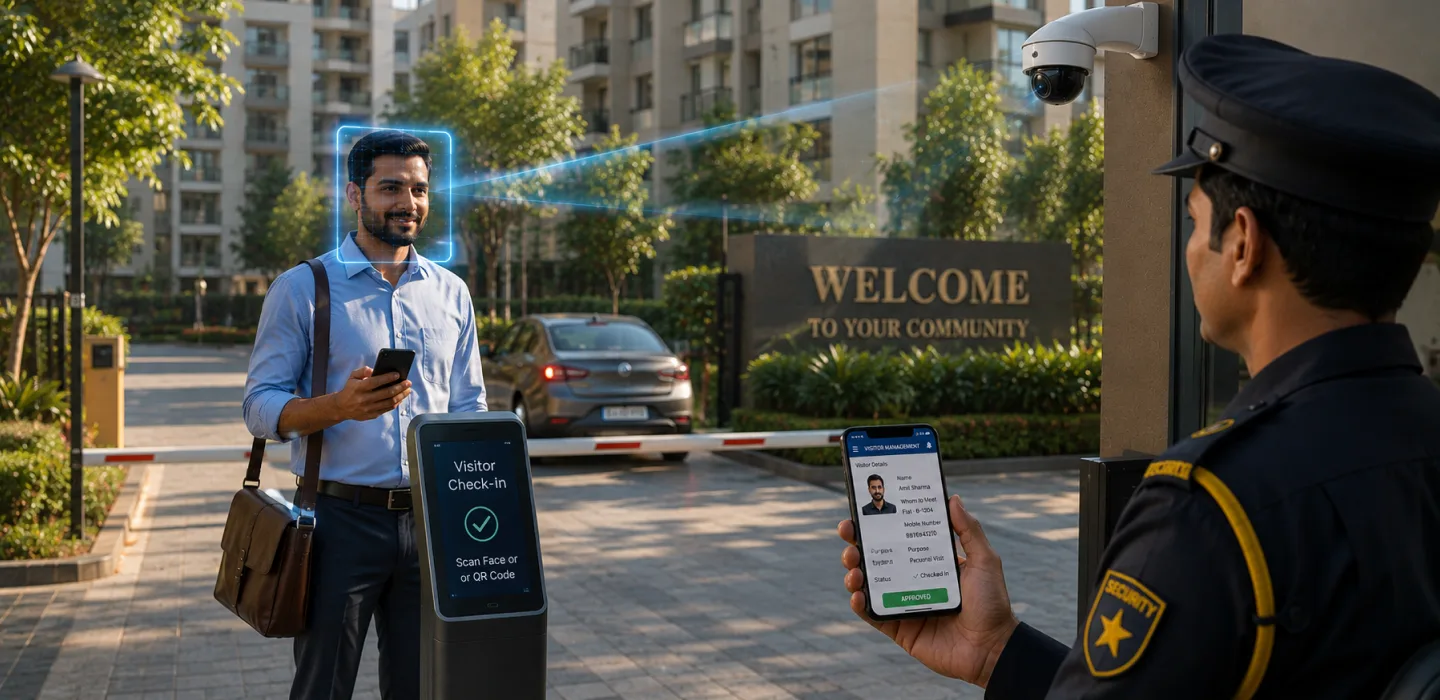
These technologies enable societies to automate visitor entry processes, reducing the need for manual intervention. Systems equipped with AI can recognize and verify visitors through facial recognition, streamlining entry processes and significantly reducing waiting times. This not only increases security by ensuring that only authorized individuals gain access but also enhances the convenience for residents and guests alike.
Another significant feature of AI in visitor management is automated data logging. AI systems can maintain detailed records of all visitors, including time of entry and exit, photographs, and purpose of visit. This data can be invaluable for conducting audits, optimizing security protocols, and providing insights into visitor trends.
AI-driven systems also offer real-time notifications and alerts. For instance, if a guest arrives at the gate, residents can receive instant alerts on their mobile devices, allowing them to approve or deny entry remotely. This feature not only enhances security by giving residents more control but also adds a layer of convenience.
Overall, AI's integration into visitor management represents a significant leap forward from manual systems, where registers and manual checks were the norms. AI's capabilities in automating processes, improving accuracy, and providing actionable insights make it an invaluable tool for modern housing societies.
How MyKutir Facilitates AI-Powered Visitor Management
MyKutir leverages cutting-edge AI technologies to offer a robust visitor management solution tailored for housing societies. With features like automated gate flows, comprehensive visitor logs, face-recognition attendance, and AI-enabled notifications, MyKutir stands out as a sophisticated system designed to enhance both security and convenience.
Gate Flows: One of MyKutir's standout features is its automated gate flow management. Instead of relying on traditional security personnel to manually verify each visitor, MyKutir uses AI to scan and verify visitor identities efficiently. The system automatically cross-checks visitor details with pre-approved visitor lists, streamlining the entry process and reducing bottlenecks at the gate.
Visitor Logs: MyKutir maintains detailed visitor logs that capture essential data points, including visitor identity, time of entry and exit, and the purpose of the visit. The data model for visitor logs ensures that every visit is recorded in a structured format, readily accessible for audits and security reviews through paths like /visitor-logs. This feature is a significant improvement over traditional logbooks, which can be prone to errors and difficult to analyze.
Face-Recognition Attendance: Utilizing advanced facial recognition technology, MyKutir allows for quick and secure identity verification of visitors. This feature minimizes the chances of unauthorized access and speeds up the verification process, offering a smooth and secure experience for both residents and their guests.
AI-Enabled Notifications: The MyKutir system is equipped with AI-enabled notifications that alert residents about visitor arrivals in real-time. These notifications can be configured to provide alerts through different channels, ensuring residents are always informed and in control. This feature can be accessed and managed via the /notifications route, offering flexibility and convenience.
By integrating these features, MyKutir not only enhances security but also improves the efficiency of visitor management, making it a critical component for any modern housing society.
Scenario: A Day in the Life of a Society with AI-Driven Visitor Management
Imagine a typical day in an urban housing society equipped with AI-driven visitor management. Residents are going about their daily routines, secure in the knowledge that their community's visitor management system is running smoothly and efficiently in the background.
The day starts with early morning joggers heading out. As they pass through the main gate, the AI system recognizes their profiles, logging their movements and ensuring they have the required permissions. No manual intervention is needed; the system is seamlessly logging each entry and exit.
At mid-morning, a delivery person arrives with parcels for residents. Instead of waiting at the gate for manual verification, the security personnel uses the MyKutir app to quickly check the delivery person's credentials against pre-approved lists. The AI system verifies the details and sends a notification to the respective resident. With a single tap on their mobile device, the resident approves entry, and the delivery is made without unnecessary delays.
In the afternoon, a visitor arrives for a resident's scheduled event. The visitor's details have been pre-registered, and upon arrival, the facial recognition technology at the gate verifies their identity instantly. This ensures that only authorized guests have access, maintaining security and convenience.
As evening approaches, domestic staff arrive for their shifts. The AI-powered system records their attendance through facial recognition, ensuring accurate logs and reducing the chances of manual errors. Residents receive real-time updates on their staff's arrival and departure, adding an extra layer of trust and transparency.
Throughout the day, the system continuously updates visitor logs, available for residents and management to review at any time via the /visitor-logs route. The AI system’s efficiency and reliability mean that security personnel can focus on other critical tasks rather than managing cumbersome logs.
This scenario illustrates how AI-driven visitor management systems like MyKutir create a harmonious balance of security, convenience, and efficiency, enhancing the overall living experience in housing societies.
Common Mistakes in Implementing AI Visitor Management
Implementing an AI-driven visitor management system in a housing society is a strategic initiative that can significantly enhance security and efficiency. However, societies often face common pitfalls during implementation. Recognizing these challenges early can help in devising effective strategies to avoid them.
Underestimating Training Needs: One of the most prevalent mistakes is underestimating the training required for security staff and residents. AI systems, while user-friendly, come with new processes and interfaces that users must be familiar with. Societies should invest time in comprehensive training programs to ensure all stakeholders are comfortable using the system. This includes hands-on tutorials, user manuals, and regular refresher courses.
Lack of Clear Objectives: Societies often install AI systems without clearly defining what they aim to achieve. Whether it’s reducing entry times, enhancing security, or improving data tracking, having clear objectives ensures that the system is configured and utilized effectively. Without these goals, societies may not fully realize the benefits of AI implementation.
Ignoring Privacy Concerns: Privacy is a critical consideration that is often overlooked. Societies must ensure that data collected by AI systems is stored securely and that access is restricted to authorized personnel only. Transparent communication with residents about how their data is used and protected is essential to maintain trust.
Inadequate Technical Support: AI systems require ongoing technical support to address issues, updates, and optimizations. Societies should ensure that they have access to reliable technical support, either in-house or through the solution provider, to keep the system running smoothly.
To avoid these pitfalls, societies should establish a detailed implementation plan, including stakeholder engagement, regular training, clear communication, and a focus on privacy and security. By doing so, they can ensure the successful adoption of AI-driven visitor management systems.
Benefits of AI Over Traditional Visitor Management Methods
Housing societies transitioning from traditional visitor management systems to AI-driven solutions can experience a wide range of benefits. The following table provides a comparison between AI systems and traditional methods such as manual registers or simple digital logs:
| Feature | Traditional Methods | AI-Driven Systems |
|---|---|---|
| Data Accuracy | Prone to human error; difficult to track and audit. | Highly accurate; automated data entry minimizes errors and improves auditability. |
| Security | Limited verification; manual checks are less secure. | Enhanced security with facial recognition and real-time approvals. |
| Efficiency | Time-consuming manual entry; slower processes. | Quick processing with automated entry approvals; streamlined gate flows. |
| User Convenience | Inconvenient; often requires physical presence for approvals. | Remote approvals and real-time notifications enhance user convenience. |
| Scalability | Limited scalability; difficult to manage large numbers of visitors. | Scalable; easily handles high volume of visitor entries and logs. |
AI-driven visitor management systems provide substantial improvements over traditional methods, facilitating smoother operations, heightened security, and better scalability. As societies grow, the need for efficient and reliable visitor management systems becomes even more critical, positioning AI as a preferred solution.
Step-by-Step Guide to Setting Up AI Visitor Management
Implementing an AI-driven visitor management system like MyKutir involves systematic planning and execution. Here’s a step-by-step guide to help housing societies set up their system effectively:
- Assessment of Needs: Begin by assessing the specific needs of your society. Identify pain points in your existing visitor management process, such as slow entry times or inadequate security.
- Selecting the Right Features: Choose features that align with your objectives. MyKutir offers options like face-recognition attendance, AI-enabled notifications, and detailed visitor logs, which can be tailored to meet your society's requirements.
- Software Setup: Once features are selected, proceed with the installation of the MyKutir software. Ensure compatibility with existing systems and infrastructure. Follow the setup instructions provided by MyKutir to connect your system to the network.
- Configuring User Access: Set up user access levels to ensure security. Establish permissions for residents, security personnel, and management to access different features and data points as necessary.
- Training: Conduct thorough training sessions for all stakeholders, including security staff and residents. Utilize user manuals, workshops, and hands-on sessions to ensure everyone can operate the system confidently.
- Testing: Before fully launching the system, conduct tests to ensure all components are working as intended. Identify and rectify any issues in the setup phase.
- Go Live: Transition to live operations and encourage feedback from users to refine and improve the system. Regularly update the system to incorporate enhancements and new features.
Implementing AI visitor management requires commitment and coordination, but with the right approach and tools, societies can achieve a significant uplift in their security and operational efficiency.
Real-World Success Stories and Case Studies
Several housing societies have successfully implemented MyKutir’s AI-driven visitor management system, showcasing impressive improvements in security and efficiency. Here are a few illustrative scenarios:
Case Study 1: The Oasis Residency
Located in a bustling metropolitan area, The Oasis Residency faced challenges with visitor verification and manual entry management. After implementing MyKutir, they experienced a 60% reduction in entry processing times. The society's security personnel reported higher efficiency and satisfaction due to automated workflows, and residents appreciated the system's ease of use, especially the real-time notifications.
Case Study 2: Green Meadows Complex
Previously reliant on paper logs, Green Meadows transitioned to MyKutir to enhance their visitor management protocols. The switch led to a drastic reduction in unauthorized entries, thanks to the face-recognition technology. The system's detailed visitor logs provided management with valuable insights into visitor patterns, which aided in refining their security strategy.
These success stories highlight the tangible benefits societies gain from adopting AI-driven visitor management systems. From improved security to enhanced user experience, MyKutir helps societies overcome traditional management challenges, paving the way for a more secure and efficient environment.
Addressing Privacy and Compliance Concerns
With AI-driven visitor management systems, privacy and compliance concerns are paramount. Housing societies must ensure that they handle personal data responsibly and comply with pertinent regulations. Here’s how MyKutir addresses these key issues:
Data Protection: MyKutir implements robust data encryption and storage protocols to protect sensitive information. Access to data is restricted to authorized personnel, and systems are regularly audited to ensure compliance with best practices.
Consent Management: Residents and visitors are informed about data collection practices, and their consent is obtained prior to data collection. MyKutir ensures that all data handling aligns with consent agreements, providing transparency to users.
Compliance with Indian Laws: MyKutir remains informed about Indian laws, such as the Information Technology Act, which governs data protection and privacy. The platform is designed to comply with these regulations, ensuring that societies using MyKutir can be confident in their compliance efforts.
By addressing these concerns preemptively, MyKutir provides housing societies with a visitor management solution that respects privacy while enhancing security and efficiency.
Future Trends in AI and Visitor Management
As technology continues to evolve, the future of AI-driven visitor management holds exciting possibilities. Housing societies can expect advancements that further enhance security and user experience:
Improved Facial Recognition: Future iterations of facial recognition technology will be more accurate and capable of recognizing individuals in diverse conditions, such as low-light environments or when wearing masks. These enhancements will further streamline entry processes and improve security.
Predictive Analytics: AI systems will increasingly leverage predictive analytics to anticipate visitor patterns, potentially flagging unusual activities or suggesting optimal times for visitor scheduling to avoid congestion.
IoT Integrations: The integration of IoT devices with AI visitor management systems will enable more seamless experiences. For example, smart cameras and sensors could work in tandem with AI systems to automate entries and exits, providing a truly contactless experience.
These trends will likely lead to even more effective and efficient visitor management solutions, further enhancing the value AI brings to housing societies.
Frequently Asked Questions
How does AI improve visitor management in housing societies?
AI improves visitor management by automating and streamlining the entry and exit processes, increasing security, and reducing the need for manual checks. By employing technologies such as facial recognition and predictive analytics, AI systems can quickly verify visitor identities and provide real-time notifications to residents. This not only enhances security by ensuring that only authorized visitors gain access but also improves efficiency by reducing wait times at the gate. AI-driven systems also maintain comprehensive visitor logs, which are essential for audits and security reviews.
What features does MyKutir offer for AI-driven visitor management?
MyKutir offers a comprehensive suite of features designed to streamline visitor management for housing societies. Key features include automated gate flows, which use AI to verify visitor identities quickly and efficiently; detailed visitor logs that capture essential data for audits and security reviews; face-recognition attendance for seamless and secure identity verification; and AI-enabled notifications that alert residents in real-time about visitor arrivals, allowing them to approve or deny entry remotely. These features collectively enhance both the security and convenience of visitor management.
Are there privacy concerns with using AI for visitor management?
Yes, privacy is a significant concern when using AI for visitor management, as these systems collect and store personal data. It is crucial for housing societies to ensure data protection through robust encryption and secure storage protocols. Residents and visitors should be informed about data collection practices, and consent should be obtained. MyKutir addresses these concerns by implementing strong data protection measures and ensuring compliance with relevant Indian privacy laws, providing transparency and maintaining trust with users.
What are the benefits of AI over traditional methods?
AI-driven systems offer numerous advantages over traditional visitor management methods. They provide greater data accuracy by minimizing human error, enhance security with advanced verification technologies like facial recognition, and significantly improve efficiency by automating entry and exit processes. AI systems also offer real-time notifications and remote approvals, adding to user convenience. Furthermore, they are scalable, capable of handling high volumes of visitors with ease, making them ideal for modernizing housing societies as they grow.
How can societies implement AI-based visitor management effectively?
Societies can implement AI-based visitor management effectively by starting with an assessment of their specific needs and selecting features that align with those objectives. It is essential to conduct thorough training for security personnel and residents to ensure that all users are comfortable and familiar with the system. Societies should also establish clear objectives and configure the system to meet those goals. Regular testing, ongoing technical support, and a focus on privacy and consent will further ensure smooth implementation and operation of AI-driven visitor management systems.
Key Takeaways
- AI plays a transformative role in modernizing visitor management in housing societies, enhancing both security and efficiency.
- MyKutir offers a comprehensive AI-driven visitor management system with features like gate flows, visitor logs, and face-recognition attendance.
- Implementing AI systems requires careful planning, training, and a focus on privacy and compliance to realize their full potential.
- Future advancements in AI and IoT integrations will continue to enhance visitor management solutions, making them even more effective.